
This piece will probably be the last in-depth study of an intelligence topic that I shall undertake. The subject itself was somewhat accidental, but the exercise turned out to be a fascinating one: during it I encountered most of the now familiar elements of dubious memoir, evasive history, and misleading archives. Moreover, the research process uncovered a completely fresh phenomenon in the guise of an outrageous performance by the editors of a distinguished intelligence ‘journal’. While my story contains a few ‘A’ (Advanced) passages, I have given it an overall ‘B’ (Businesslike) classification.
A warning, however: my account is choppy. An ideal story would integrate material from different sources into a coherent narrative. The problem is that every source I used is highly flawed in some way: a traditional account would include too many qualifications. Moreover, two archival files arrived very late in the research process, and it would have been difficult weaving my findings from them into the established narrative. I therefore decided to dissect each separately, as I have done with the other material. My attempt at synthesis appears in the Conclusions. Yet there will never be a definitive history of the Swedish Section of SOE: as John Lukacs constantly reminded us: ‘The purpose of history is not the establishment of truth, but the reduction of untruth.’
Now read on . . .
Contents:
Preface
Journal of Intelligence and National Security
Other Sources
Tennant: ‘Touchlines of War’
Atkin: ‘Section D for Destruction, Forerunner of SOE’
Lundberg: ‘“Karlsson”, The Amiable Spy’
Official Histories
Charles Cruickshank
West: ‘Secret War: The Story of SOE’
Cruickshank: ‘SOE in Scandinavia’
Archival Sources
The History of the Stockholm Mission, 1940-1945 (HS 7/190)
Directive for SOE in Sweden (HS 2/260)
The Draft Directive (CAB 84/4/111)
HS 2/260 (reprise)
Reports of SOE Situation in Sweden December 1942-November 1943 (HS 2/259)
SOE Office and Staff Organisation in Stockholm (HS 2/262)
SOE/Scandinavia 10: SOE Policy in Peace and in War (HS 2/10)
Late News
Pia Molander – a Reprise
Conclusions
The Swedish Section
The Historiography
* * * * * * * * * * * *
Preface
This report is something of a ramble, reflecting the tortuous paths I had to follow when attempting to answer a fairly simple research question that was not even of close relevance to my primary target of Soviet espionage – what was the purpose of the Swedish Section of SOE, the Special Operations Executive? Yet the exercise shows how difficult it can be to extract a reliable account of what happened in a particular domain. The same lessons emerge. Memoirs are normally unreliable, self-aggrandizing, and often contradictory. The official histories are inadequate, combining an element of bluff with a literary style that frequently opts to conceal who initiated what actions, or who took responsibility. The archival material is frequently obtuse, often redacted, and the keepers of the material do not always contribute to a reconstruction of an accurate chronology by certain practices, such as their masking the date when an item was declassified. In this particular case, documents have been categorized incorrectly by The National Archives, breaking obvious chronological rules. In addition, it seems that carelessly constructed articles can be accepted and published by the ‘scholarly’ intelligence journals without any clear oversight or critical attention. I am reminded that, in the Introduction to his Britain and European Resistance 1940-1945, David Stafford emphasized the hazards of trying to reconstruct an accurate account of SOE activities from the spattering of archival material and memoirs that was available. I was about to experience that challenge most intensely.
What was my topic of interest? Ever since I first dipped a toe in the Skaggerak, investigating the JOSEPHINE case, I have been puzzled by the existence of a Swedish Section of the Special Operations Executive in World War II, and by the fact that its reputed head was Peter Tennant, more a boulevardier than a dynamitard. My main cause of bewilderment was that SOE had been set up in July 1940 to stir subversion, and arm potential guerrilla groups, in countries that had been occupied by the Nazis. Yet Sweden was a neutral country whose leading politicians expected (at least until 1943) that the Germans would win the war – and who were, incidentally, overall much more alarmed by the possibility of Soviet incursions than any by the Germans. Offensive acts by the British that might have threatened Sweden’s perceived neutrality could have tipped the Nazis over the brink, and prompted them to occupy the country, as they had done so with Sweden’s neighbours, Denmark and Norway. What was going on?
Journal of Intelligence and National Security
I believe now that I have sorted out most of the main threads, but the confusion has not been helped by an irresponsible publication in the intelligence press. As part of my preliminary research, I looked around for scholarly papers that might have been published after the regular historical volumes had appeared. One especially looked promising. In the October 2007 issue of the Journal of Intelligence and National Security (Volume 22, no 5) appeared an article by Pia Molander – a person undescribed, but who seems to have been a lecturer in the Department of Military History at the Swedish Defence University – titled ‘Intelligence, Diplomacy and the Swedish: Dilemma: The Special Operations Executive in Neutral Sweden, 1939-45’. Yet I was automatically alarmed by that title, since SOE, established in July 1940, could incontrovertibly not have initiated any operations in Sweden until late 1940, at the earliest, even if it had been considered by its minister responsible, Hugh Dalton, and its chief, Frank Nelson, that installing a station in Stockholm should be among its leading priorities. Perhaps it was a just a careless revision by some editor, however, and the article merited further exploration.
Yet, a few paragraphs into the article, I came across the following sentences:
The purpose of the Special Operations Executive, as envisaged by the Prime Minister, Winston Churchill, was to ‘organise, arm and control the European underground movement on a large scale’ so as to be of assistance to British military aims. The SOE Division, Section D, responsible for Sweden, was created in 1939, as part of mapping out the Swedish iron-ore fields, to assist the movements of SOE agents and Norwegian and Danish resistance figures across Scandinavia into occupied Europe.
More of this nonsense follows. Molander, claiming to have inspected the archives, again asserts that, as part of the planned activities for SOE in Sweden, in 1939 ‘plans were made for mapping out the Swedish iron-ore deposits’, and that it claimed some success in ‘attacking lines of communications, destroying strategic objectives and engaging in industrial espionage’ until Ambassador Victor Mallet effectively closed it down, forcing it to concentrate on intelligence gathering. Before that, Section D had reportedly envisaged that a neutral Sweden ‘could be used as a base from which to smuggle significant quantities of arms and personnel to Norway and Denmark’, and SOE was thus issued with a set of directives. Molander then goes on to describe some of the activities resulting from such decrees. SOE planners carved up Sweden into regional sectors, and identified principal targets for sabotage. Yet changes to priorities and political delays in allocating funds meant that successes were few. “The German occupations of Denmark and Norway in April 1940 resulted in the German naval Blockade of the Baltic Sea and Skaggerak and precipitated a dramatic decline in Swedish trade with the west,” she writes, before smoothly moving on to Operation Rubble, in January 1941.
While I was somewhat astonished that a Swedish student could misunderstand the sequence of events so badly, I detected a possible explanation for some of her confusion. I note that the error originates with some truly undisciplined categorization at the National Archives, where many source files describing events preceding July 1940 are organized under the generic HS (SOE) classification. If the institution is so careless in guiding researchers, it is no wonder that the less experienced would not notice the anomaly, and instead faithfully echo the structures imposed. (Early in September 2026 I drew the attention of the archivists at Kew to these errors, and I trust that corrections will be made. I have since had a dialogue with officers at Kew, and I shall report fully on the matter in my Year-End Round-up.)
Yet I was amazed that a reputable journal could allow this gross distortion of the facts to be published, at the time clearly unreviewed by anybody with any historical knowledge, and apparently unnoticed since. For Section D was a unit within SIS (MI6), created in April 1938, and dedicated to guerilla warfare and sabotage (‘D’ for ‘Destruction’) as preparation for Hitler’s increasingly aggressive military threats. It operated for two years, and had a large presence in Sweden, until SOE was founded in July 1940. SOE took over control of Section D (as well as two other units, MR/I and Electra House) the following month, and it was absorbed into the sabotage section of SOE (SO2) in October, after its head Colonel Laurence Grand had been dismissed. There was no such entity as SOE in the period highlighted by Ms. Molander. Churchill became Prime Minister only in May 1940. The remainder of the article has some pertinent observations, but the whole story is built out of straw.
Other Sources
I shall return to the matter of the irresponsibility of this intelligence journal later, but I first move to analyzing some of the other sources for the period, as well as the archival material. The major point to be borne in mind, however, is that, when SOE was originally set up, it consisted of two units, SO1, dealing with propaganda, and SO2, responsible for sabotage and ‘secret armies’. SO1 derived mainly from Electra House (a unit reporting to Prime Minister Chamberlain, responsible for propaganda to enemy countries), while SO2 incorporated most of Section D. (A third unit, SO3, charged with research, was soon absorbed into SO2.) Yet rivalries between the Ministry of Information and the Ministry of Economic Warfare, to whose Minister, Hugh Dalton, SOE reported, in August 1941 caused SO1 to be removed from SOE and set up as a new organisation, the Political Warfare Executive (PWE). Thus, for a year, SOE indeed had responsibility for propaganda. In this context, the arrival of Peter Tennant in Stockholm in September 1939, and his role between then and August 1941, have to be seen with very keen attention. He may well have become an important SOE officer without ever having been involved in the blood and thunder of sabotage and subversion.
Tennant: ‘Touchlines of War’
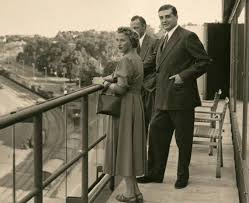
So how does Tennant himself represent his career at this time? According to his memoir Touchlines of War, he had an academic post at Cambridge University, specializing in Scandinavian languages, before the war. He visited Iceland in the summer of 1938, and submitted a report on German activity there to the Admiralty, who forwarded it to the Secretary of State at the Foreign Office, where it was apparently buried and ignored. In March 1939, his old friend from Marlborough College, Gordon Welchmann, who would later achieve greatness at Bletchley Park, summoned him to a code-breaking class under the head of the Government Code and Cypher School, Alistair Denniston, at Broadway Buildings, the home of MI6. (This factoid incidentally proves that, despite rumours to the contrary, GC&CS did at times act as a ‘school’.) Tennant spent several weeks there, but apparently showed no great aptitude for cryptanalysis.
When war broke out, he was summoned to Broadway again, but the Foreign Office had decided that it needed him for something else. Somewhat anachronistically, Tennant states that he reported to Chesham Place on May 25, 1939, where he was invited to join the planning staff for a future propaganda ministry, under Lord Perth. This was a confused period, when multiple agencies were vying to control propaganda, including the British Council, the BBC, and the Foreign Office News Department. Tennant was instructed to report to the last of these, in the person of Rowland Kenny. Tennant’s task was to go to Stockholm to report on the state of the Swedish media, and other matters. Taking instructions from the ambitious Rex Leeper (who, known for his empire-building behaviour, was appointed to lead SO1 in August 1940), Tennant set off or Sweden on June 24 (thus again undermining the integrity of his chronology), wrote reports that were sent by diplomatic bag, and returned to London before war broke out. His reports to Kenny had never arrived, so he had to re-create them.
On September 3, when war did indeed break out, he wound up his affairs in Cambridge having been told that he was no longer the responsibility of the Foreign Office, and reported for duty. He was, however, to be moved to the new Ministry of Information. He was ‘whisked’ off to Sweden shortly thereafter, arriving in Stockholm on September 25. He states in his memoir that he did not return to Britain until the autumn of 1941. The impression Tennant gives is that he was an employee of neither Section D nor MI6 at the time. He was described as a Press Attaché at the British Legation, and was provided with the papers to support this role. In the first years of the war, Tennant affected to know little about Section D, making only a parenthetical reference to it when offering a profile of Victor Mallet. He writes (page 109): “In 1940 Sir Charles Hambro asked me to help in the setting up of a new organisation to replace ‘D’ section which had been in charge of subversive activity and sabotage in the early days of the war.” This is a very vague and elusive declaration. For some reason, Tennant completely misrepresents the state of the game: Section D was also responsible for propaganda, which was, of course, Tennant’s mission in Stockholm. At the start of its existence, SOE took over these tasks in SO1, so it would have been quite natural for Tennant to be absorbed into SO1 when it was created, and quite a stretch for him to be charged by Hambro with establishing a new organisation.
Section D for Destruction, Forerunner of SOE
Other works confirm Tennant’s disingenuousness. In his 2017 history of Section D, Section D for Destruction, Forerunner of SOE, Malcom Atkin describes Tennant’s close involvement with Section D. On page 151, he writes: “Despite denying all knowledge of Section D in his 1992 autobiography, Tennant met with *Fraser and *Holdsworth during April [1940] to discuss the production of propaganda by *Biggs and *Rickman, and urged them to increase the volume of production.” Further, on page 164, he adds: “Despite the evidence of being in Section D once strewn in front of him, years later Peter Tennant maintained an air of innocent bewilderment over the operations of Section D in Sweden. That Section D might have been involved in funding some of his propaganda work apparently came as a revelation.” In his study of SOE in Scandinavia (to be covered later in this piece) Charles Cruickshank even classified Tennant as an ‘honorary member’ of Section D.
[* Ingram Fraser, head of Section D’s Scandinavia section
Gerard Holdsworth, head of Section D’s sea transport service
Alfred Rickman, Section D’s lead agent in Sweden
Ernest Biggs, aide to Rickman, recruited locally]
The reason for Tennant’s coyness was surely due to the fact that he wanted to disassociate himself from some of the disasters that beset Section D, which not only completely mismanaged its relationship with the British Legation in Stockholm, but also engaged in some highly clumsy practices. Rickman had been responsible for some poorly concealed attempts at sabotage on Swedish soil, and had also failed to obey essential security measures. The Swedes rumbled him, and his incompetence allowed him to become a convenient scapegoat for the errors of British administration. As Atkin tersely reports: “On 28 June 1940 Rickman was sentenced to eight years’ hard labour but was released in 1944 on health grounds.” In his Chapter IX, ‘The Rickman Affair’, Tennant claims that he met Rickman only once (after the latter had been released), and that he, Tennant, was ‘blissfully ignorant of this conspiracy’. Tennant further claims that he learned of the whole fiasco only in 1985, when Craig McKay of Uppsala University, told him the whole story based on his detailed knowledge of the Swedish archives.
The problem is that, as one reads on in Tennant’s memoir, he turns out to be more and more an unreliable witness. He claims that, after Hambro’s approach, he ‘knocked together the beginnings of SOE with Malcolm Munthe’. The clear impression he gives is that Hambro was in Stockholm when he gave him the invitation (probably correct), but he betrays himself when he writes that Hambro ‘was marooned in Sweden owing to the invasion of Norway and Denmark’. The invasion of Norway and Denmark took place in April 1940, before Churchill had been appointed Prime Minister. Tennant then describes a visit to London at the end of 1940 (having previously written that he did not return to London until 1941), during which Hambro introduced him to Brendan Bracken, Churchill’s right-hand man at the time, and later Minister of Information. Tennant writes that, before the Hambro approach, ‘the whole affair [Rickman] had bewildered me with names of organisations and people of whom I had never heard, such as Electra House and ‘D’ section’. Moreover, in Chapter X, he makes the foolish boast that Hambro had recruited him into SOE before it was started in July 1940. None of this may matter that much – are not most war memoirs constructed to emphasize the heroism of the subject, and to bury his or her embarrassing mistakes and misjudgments? Only it tends to reinforce the suggestion that what Tennant wrote about the JOSEPHINE business was likewise a mixture of fantasy and deception.
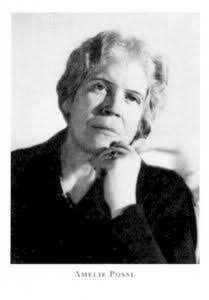
Tennant did indicate that he had cultivated several Swedes who were sympathetic to the Allies, most notably Countess Amelie Posse, who openly told him about the friends of hers who were prepared to throw over the Nazis should they invade. Posse was even in contact with evolving sabotage groups. But she was notoriously loose-lipped, and Tennant probably underestimated the risks that her circles might have been infiltrated, and that news of his associations with such groups would get back to hostile Swedes and their Nazi acquaintances, thus provoking the invasion that SOE Sweden was trying to avert.
‘Karlsson’, The Amiable Spy by Victor Lundberg
A Swedish perspective on Tennant’s contribution was provided in 2016 by Doctor Victor Lundberg of Lund University, the subtitle of his article being ‘Swedish experiences of Allied espionage and sabotage during World War II’. Lundberg introduces his article by stating that it ‘primarily uses previously confidential archival sources from the civil Swedish counter-espionage [sic]’, yet he later observes, very equivocally, when raising the topic of what Tennant actually got up to: “Due to the incomplete and fragmentary archival situation around S.O.E. in Sweden it is thought [by whom?] impossible to reach any kind of definitive answer to these questions”. In his conclusion, he adds: “In Sweden, the detailed traces of S.O.E.’s and Peter Tennant’s activities seem to be fairly well cleaned out from the national archives.”
Lund explains how a mighty counter-espionage apparatus was mobilized in response to the influx of foreigners with questionable motives at the beginning of the war. This was the Allmänna Säkerhetsjänsten, or General Security Service, known as the A.S., primarily directed at detecting communist misdeeds and influences. Its existence was not revealed until 1943, but, up till then, it had employed over one thousand people to open items of mail, intercept phone calls, censor and block telegrams, and register over 80,000 ‘politically unreliable’ Swedes and foreigners. One of these was Tennant, and he was closely surveilled throughout the war. The A.S. tracked his success in pervading Swedish social circles, and spotted how he was engaged in ‘more confidential boyish pranks from the current spy handbook’. Yet Tennant also developed more serious contacts, such as his relationship with Harry Södermann, a criminal investigator who, rather alarmingly, was responsible for training Norwegian resistance troops on Swedish soul during the war.
Other friends were the business-man and weapons-dealer John Walter (who in 1943 was sentenced to penal servitude for espionage), and the aforementioned Amelie Posse (here identified as Posse-Brázdová), who shared Tennant’s enthusiasm for plotting dangerous and dubious deeds behind the scenes, and gave him the cryptonym ‘Karlsson’. Lund links the name of Tennant (and the names of his colleagues, Munthe, Binney and Threlfall) to various acts of sabotage in 1941, after Tennant had been given his appointment of heading SOE in Sweden, but stresses that their responsibility for the crimes has never been proven. Other plans, however, were scuppered when AS agents were able to overhear Tennant and Threlfall discussing subversive plans over dinner on February 23, 1942. Tennant was also almost caught red-handed in the case of the social democrat identified solely by K.E.G.J., who was arrested in April 1943 in possession of a briefcase that included encryption keys in Tennant’s hand. Posse later revealed that she and Tennant had discussed the deployment of a stay-behind organization supplied with radio transmitters in 1941, and Tennant had promised financial and technical support for this venture.
According to Lund, Tennant probably escaped because his subversive actions did not involve any communist troublemakers, although Lund does emphasize that his collaborators were, on the other hand, ‘syndicalists and political refugees’. ‘Syndicalist’ is a vague term: I am not sure why traditional trade-union strongholds would not be seen as much less of a threat than communists, and it is difficult to picture the epicurean bon vivant Tennant fitting into that mould. Lund makes much of David Stafford’s assertion that anti-communism ‘became an increasingly important part of S.O.E.’s guiding principes’, but that, again, is debatable. Dalton’s original vision for SOE was for it to assist a post-war revolution of sorts across Europe. SOE had several notorious communist sympathizers in its ranks – most notably James Klugmann – and favored Tito’s partisans over Mihailović’s cetniks. It also appeared not to mind that much of its weaponry dropped in France ended up in the hands of communists. Lund’s explanation as to why Tennant escaped closer attention is not convincing. He expected to gain fresh insights from the British archives, but I suspect he would be disappointed.
Official Histories
It is time to turn to the ‘official’ histories, and those written by ‘respectable’ historians. Yet, first, I make some important distinctions between the organisations involved. In London, SOE maintained a Scandinavian section HQ, at first led by Charles Hambro, which was almost exclusively responsible for Norway and Denmark. The administration of that section gradually moved to Sweden, however, since the country was a convenient base for dealing with Norway (at least while the air route was available: when not, travel to Stockholm could take over a year), since the two countries shared a long, common border, over which Norwegian escapees could be smuggled, and through which material could be delivered. That entity came to be known as the Stockholm ‘Mission’. Lastly, there was the SOE Swedish Section, at its outset nominally led by Tennant, which rather incongruously also involved responsibility for a diminutive SOE Germany office.
Professor William Mackenzie’s Secret History of SOE 1940-1945, completed in 1948 but not published until 2000, reflects some of this confusion. Apart from a brief aside, he provides no account of SOE Sweden’s existence, concentrating heavily on events in Norway and Denmark. Yet he refers to the ‘Stockholm Mission’, re-established after it had effectively been destroyed by Section D’s disaster there in April 1940. He writes (p 200), in the only passage in his book that mentions Tennant:
This arrangement was put on a more formal basis in October, when Mr Charles Hambro, then head of SO2’s Scandinavian Section, visited Sweden for the purpose. The arrangement then reached was that Mr Peter Tennant (the Press Attaché) should be responsible for SOE’s work in Sweden and into Germany, Captain Munthe for Norway, and an additional officer (Mr Turnbull) for Denmark. These arrangements stood through the war with minor personal modifications, the most important of which was the withdrawal of Captain Munthe in July 1941, in face of heavy diplomatic pressure from the Swedes.
Apart from the apparent confirmation of Hambro’s presence in Stockholm in October, this extract hints at an anomalous situation. Hambro would have been responsible for SO1 and SO2 until August 1941, when SO1 was peeled off as part of the Political Warfare Executive. The implication is that Tennant maintained both propaganda and sabotage roles after that date, and thus reported to both Harry Sporborg, the SOE Scandinavian chief in early 1941 (who barely gains a mention in Tennant’s memoir) as well as to SO1. Moreover, as I shall show, Mackenzie’s suggestion that Tennant’s appointment endured through the war will turn out to be far from accurate.
Yet by whose authority did Hambro implement a SOE station to commit sabotage and subversion in Sweden, a neutral country – and even in Germany? Apart from his facility with the Swedish language, and his extensive contacts, Tennant would appear to have been singularly unqualified to perform such a role. Indeed, undertaking subversive activities while maintaining diplomatic ties would have been very stressful and dangerous. Moreover, when SO1 was separated in 1941, what charter could realistically have been given to Tennant?
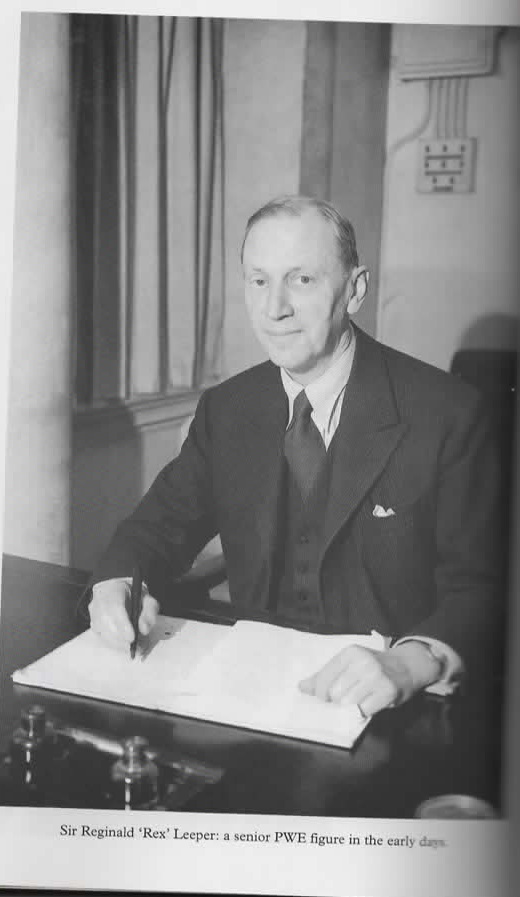
The key to Tennant’s initial acceptance in a dual role must have been due to the fact that his boss in SO1 was none other than Rex Leeper, from whom he had received instructions back in 1939. In his history of the PWE available for inspection at CAB 102/610, and published by St Ermin’s Press in 2002 under the title The Secret History of PWE, David Garnett explains (p 36) that Leeper retained his position as head of the Political Intelligence Department of the Foreign Office when he was appointed head of SO1. Leeper immediately threw fuel on the turf-wars that were already consuming several government departments, which Andrew Roberts describes in his Introduction to the work, Leeper challenging Duff Coooper, the Minister of Information, who wanted to control both ‘black’ (clandestine) and ‘white’ (official) propaganda. And then Dalton lost out in 1941, when he attempted to take all propaganda under his wing, and SO1 was taken away from him. Tennant survived all the wasteful wrangling that went on.
It will thus probably not surprise readers that M. R. D. Foot’s 1984 work SOE: The Special Operations Executive 1940-1946 – written in a private capacity, not as an authorized history – has nothing to say about SOE in Sweden, except for commenting on operations carried out in Sweden on behalf of Norway, concerning Norwegian and British ships interned in ports of south-west Sweden. He left behind a typically elliptic sentence: “Affairs in Sweden were much trickier, because Sweden remained neutral all through the war, and in the early years was (as many of her staff remained) frankly pro-German.” Thus an opportunity to add insight was cavalierly overlooked. Tennant does not appear in Foot’s index: Foot’s coverage of Hambro is sparse (although he gives a good account of his demise and sacking), and the end-result is rather feeble.
Charles Cruickshank
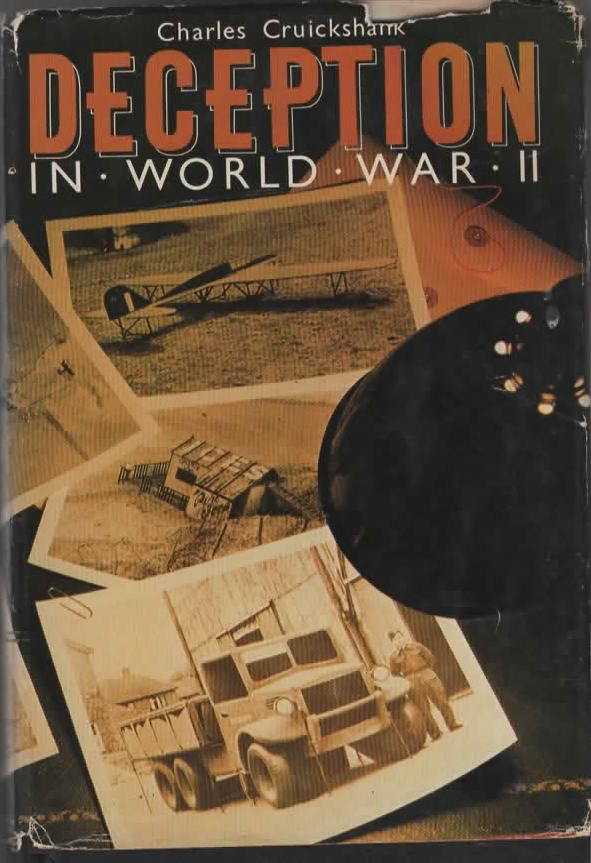
A historian whose work is frequently mentioned in the literature is someone called Charles Cruickshank, who wrote what should be a seminal contribution to the debate, SOE in Scandinavia, described as an ‘official’ history of the section, which was published in 1986. The conventional rubric can be seen: “The author of this as of other official histories has been given free access to official documents. He alone is responsible for the statements made and the views expressed.” But who was Charles Cruickshank? It astonished me that MI6 and the Foreign Office (which must have been responsible for commissioning the work) could not explain who this character was, what his career and credentials consisted of, and why he had been selected. Information on him (e.g. via Google) is sparse, although I did notice that Cruickshank had also written SOE in the Far East, likewise an ‘official’ history, which appeared in 1983, as well as Deception in WW2, published in 1980. The latter is quite an impressive compilation, while his Preface to SOE in the Far East contains some wry and accurate observations concerning the tribulations of trying to write history from dubious memoirs, archival records and oral testimony.
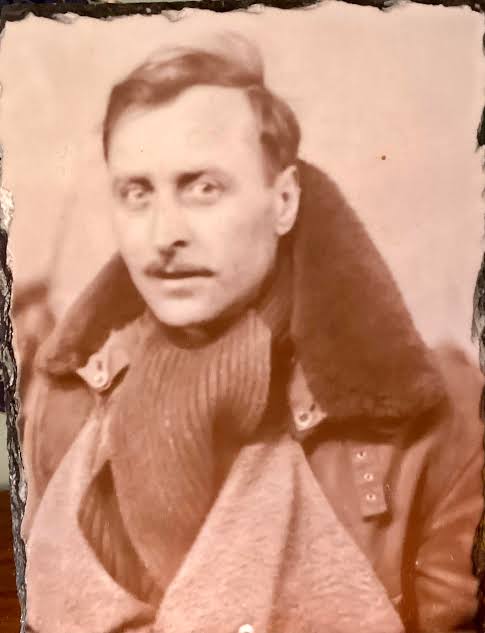
Fortunately, the resources of the on-line SOE chat-group were able to provide some vital information, primarily from Martin Briscoe in Fort William, who managed to retrieve a Who’s Who entry on Cruickshank. Since this information will probably never be gathered anywhere else, I decided to summarize his life here. He was born in 1914, educated at Aberdeen Grammar School, and at Hertford College, Oxford. At some later stage he apparently took a D. Phil., probably at Edinburgh University. During the war, he worked at the Ministry of Supply, which was responsible for providing equipment to the armed forces. Thereafter he held a variety of government jobs, including one of Trade Commissioner to Ceylon from 1951 to 1955, culminating in a role as Inspector in the Foreign and Commonwealth Office, and Assistant Secretary at the Department of Trade and Industry in 1973. It was not a career that pointed unerringly at showing expertise in intelligence matters.
Yet he had started writing historical works before he retired, and at some point became a fellow of the Royal Historical Society. He parlayed what must have been an enthusiastic hobby, making contributions to several historical journals as well as to the Dictionary of National Biography, into an appointment as official historian. A quick search of the (O)DNB shows that he wrote the entries for SOE officer Bickham Sweet-Escott (author of Baker Street Irregular) and for Dudley Clarke (the WW2 deception specialist known for his cross-dressing adventure). Both these pieces appeared in print only in September 2004, and are described, obviously, as being revisions of original Cruickshank work. Another SOE-group contact, Simon Fowler, recalls working with Cruickshank when he carried out that role at the Public Records Office in the early 1980s. Cruickshank died on February 19, 1989.
‘Secret War: The Story of SOE’ by Nigel West
Before tackling Cruickshank’s work, I turned to Nigel West’s history of SOE, recalling vaguely that it contained some good organizational charts on SOE. I was greatly disappointed. My edition is the 2019 Frontline version, a re-print of the original 1992 work. It has not been updated. Endnotes refer to events (such as an imminent forthcoming publication) that had been well superseded by then. West quotes from works such as Cruickshank’s in his Endnotes, not bothering to go back to the original archival material. The charts are bewildering, containing undecipherable abbreviations and a mish-mash of defined units. Names are haphazardly entered against country organizations: no precise dates are given. West makes no distinction between the Swedish Mission and the Swedish Section. He presents the succession of heads of the Mission illogically. He has no index entries for Larden or Tennant, but mistakenly describes the latter as having been in charge of the Denmark section. He has only a fleeting reference to the highly significant person of Henry Sporborg. While the book contains many sparkling descriptions of SOE operations, it is highly unreliable as a compendium or guide to the structures of the service.
‘SOE in Scandinavia’
I thus moved on to Cruickshank’s official history of SOE in Scandinavia. It is a workmanlike compilation – some of my informants tell me that it contains many errors (such as in the account of Malcolm Munthe, and the incident of the Polish submarines), but that would be no surprise in any history of SOE. It is not a very professional undertaking, nor is it a scholarly one. It contains only a page of meagre Endnotes. The index has been carelessly put together. For instance, it has only four entries for Peter Tennant: I uncovered at least six more references in the text. Too often, Cruickshank refers metonymically to ‘London’ or ‘Stockholm’, without bothering to explain which particular actor was involved. Dates are frequently missing. His text contains multiple examples of the waffle characteristic of much official history. For example, one encounters such sentences as “The need for Section D to lend a hand on overt propaganda diminished when Peter Tennant was appointed Press attaché, although it was believed there might still be occasions when his official position would make it difficult for him to do certain things.” No fellow of the Royal Historical Society should allow himself to deploy the passive voice so vaguely, and to leave the nature of ‘certain things’ so gloriously unfulfilled. Like Tennant, Cruickshank skates very quickly over important matters, such as the controversial appointment of Colonel Larden to head the Stockholm Mission in 1942, a tenure in which Larden’s attempts to instill military discipline on the SOE contingent did not go down well. Worst of all, however, is that he does not understand the use of the subjunctive in conditional clauses.
Moreover, some of his editorializing has the whiff of propaganda, such as when he makes dubious assertions, unsupported by any evidence, about the value of SOE activities to the morale of the local citizenry. As an example, his judgments are occasionally tasteless, even immoral. In a commentary on Norway and Denmark (p 169), he writes:
With the benefit of hindsight it is clear that both countries would have made a more effective contribution to the Allied effort had all the resources of their resistance movements been thrown into sabotage, at the expense of their secret armies. This would certainly have led to even fiercer retaliation and reprisal; but wars are not won without casualties. The secret armies in Norway and Denmark were primarily intended to control the occupying forces if they refused to surrender when the war was won in Germany. Unlike the sabotage groups, they were not part of the war of attrition in enemy-occupied countries; but at least in Norway the secret army provided a means of keeping patriotism alive during the years of occupation.
‘Wars are not won without casualties’. Indeed. Yet to make an equivalence between the predictable execution of innocent hostages as reprisals for terrorist activity, and the death of troops in action, or even civilians killed in bombing raids, shows appalling judgment, in my mind. Yet that was the perennial problem for SOE. Most inhabitants of German-occupied territory probably did not want their country ‘set ablaze’. They hoped to survive the war with dignity. SOE was supposed to be restraining direct action until invasion was imminent, but it never knew how many years ahead that might be. After the assassination of Heydrich in Czechoslovakia by SOE agents, and the horrific reprisals the Nazis took at Lidice, sabotage and subversion were essentially shut down in that country. Reprisals were an item of great controversy in Norway. Cruickshank’s observations represent a highly questionable defence of a dubious counter-strategy. He ineffectively tries to refute the logic behind the instructions that the Chiefs of Staff gave to SOE, since he never explains what the outcome of more extensive sabotage would have been.
In his article in JINS of 2005, ‘A Glass Half Full – Some Thoughts on the Evolution of the Study of the Special Operations Executive’, Mark Seaman criticized Cruickshank for the shallow research and parochial perspective evident in his work on Scandinavia. He cited a Norwegian historian, Olaf Riste, who characterized Cruickshank’s compilation as ‘a haphazard collection of cloak and dagger stories that are often seriously at variance with the painstakingly researched studies already available’. A Dane, Knud Jespersen, echoed Riste’s complaint. What exactly those ‘painstakingly researched studies’ were is not clear, and I detect a whiff of sophistry in Seaman’s offensive. (I have several times criticized Seaman on this site for his lack of objectivity and his unscholarly approach to SOE history.) After all, he was a representative of the government that both engaged Foot, and then turned against him when his account began to have unfortunate political implications.
That process continued with Cruickshank. A very recent article in the Historical Journal by Christopher J. Murphy and Christopher R. Moran, on the fallout from Foot’s initial work on France (see https://www.cambridge.org/core/journals/historical-journal/article/un-livre-problematique-official-history-anglofrench-relations-and-the-fallout-from-m-r-d-foots-soe-in-france/3A94055E201836441AAFBABA56610EDA), points out that the authorities restricted Cruickshank to working from the SOE archive, and that the author ‘spent a grand total of eight days in Oslo, Stockholm and Copenhagen’. The saga again reinforces the idea that ‘official’ history is not ‘history’ but propaganda. It also highlights the fact that these ‘official’ historians were all very naïve in not requiring a contract being signed that outlined such aspects as scope, access, process, and royalties to the satisfaction of each author commissioned to perform the work. Instead they appear to have regarded the project as a career-enhancing exercise.
While the promotional emphasis of his book is very much on Norway and Denmark, Cruickshank does dedicate Chapter 3 to the SOE Swedish section in Stockholm. He dances around the topic of SOE (i.e. SO2) intervention in neutral Sweden on page 60, listing rhetorical questions about what the service should do to forestall German occupation, without explaining whether these were indeed issues discussed by the War Cabinet. Several ideas for greater activity were discussed, but Minister Victor Mallet was constantly a restraining force, and some of Tennant’s ideas were rejected by ‘London’. In 1941, Dalton became increasingly enthusiastic with the notion of increasing infiltration of agents into non-belligerent countries, but he was a man on the way out. Tennant was encouraged by ‘London’ to set up an organization for making and deploying wireless-telegraph sets, but it was not until July 1942 that the Chiefs of Staff (CoS) provided a formal directive for SOE in Sweden. In Cruickshank’s words: “It confirmed that it should continue to build a clandestine organization to go into action if Sweden was [sic: ‘were’] occupied, or came under indirect German control”. ‘Stockholm’ accordingly responded enthusiastically to the call, and identified targets to be attacked in such circumstances, such as shipyards, railway communications, and engineering industry. Yet SOE in Sweden then received discouragement. The CoS carefully qualified its previous instructions, Cruickshank representing them in his easily imitable prose:
As it was thought unlikely that the Germans would attack before the spring of 1943, no more than this programme should be contemplated for the time being [=?]; and there must on no account be any attempt at pre-occupational demolitions of the sort expected [??] from the Rickman organization.
Whether this text appears as such in the original, or is Cruickshank’s paraphrasing, has to be determined. One of the frustrations of trying to track Cruickshank’s few references is that many end up in a black hole. In this chapter on SOE Sweden he gives CAB 80/56 (25.11.40, which provided an early outline as to how SOE’s subversive activities should be connected to strategy, but made no mention of Sweden under ‘neutral countries’), CAB 80/63 (27.7.42, the SOE Sweden directive approved by the CoS), and CAB 79/22 (8.8.42, approval of the directive) as sole sources. Yet the rubric for sn. 215 in CAB 80/63 states: “The copy of C.O.S. (42) 215 (0) omitted from this volume will not be opened to public inspection before 1993.” The potentially informative minute item in CAB 79/22 notes merely that the directive has been circulated to each Vice-Chief of Staff, ‘whose concurrence with the terms of the Directive has now been received’. A following passage has been excised. So what was Cruickshank able to read, and where? And why all the secrecy? And what happened in 1993? Was the directive released elsewhere? (I shall return to this item below.)
Yet shortly after this directive was able to be absorbed, the tide turned. Here Cruickshank mixes up the operation of the Swedish Section with that of the Stockholm Mission (possibly echoing a confusion in the minds of the Chiefs of Staff). He skates over the controversial tenure of Colonel Larden as head of the Mission. His Introduction had stated that Larden ‘was specially recruited’ by SOE in May 1942 to replace Montagu-Pollock, but Larden’s first appearance in Cruickshank’s narrative occurs when, in October 1942 he requests Captain T. F. O’Reilly ‘to finalize plans for special operations in the event of a German occupation’, presumably interpreting the directive as a call for greater action. O’Reilly briefly replaced Larden as head of Mission, and then discovered that Swedish public opinion was now more confident of an Allied victory. O’Reilly’s conclusion?
He believed the Swedes now had the intention and ability to offer formidable resistance to Germany, should it become necessary; and that the key to their continued neutrality was Allied success on the battle fronts, which would pay off much better than anything special operations might accomplish.
The message was clear: SOE was now largely redundant. And all this occurred before August 1943, when O’Reilly returned to Britain.
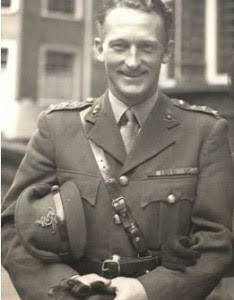
The Ministry of Economic Warfare and the Foreign Office both insisted on soft-pedalling SOE Sweden’s activities, since anything else would hinder intelligence-gathering – the domain of MI6. The focus turned to wireless-telegraph capabilities, and Cruickshank concentrates on how these developed. By June 1943, ‘it was finally accepted’ (the passive voice again) that the threat of a German invasion need no longer be taken seriously. The next directive ‘virtually ended special operations in Sweden’, although it led to a clash between the chiefs of SOE and MI6. Menzies considered the training of wireless agents a highly risky operation for no set purpose, one that might jeopardize his existing networks. Eventually, in November 1943, Sporborg (now Gubbins’s deputy) agreed with Menzies, while John Wilson, described now as being in charge of Sweden at headquarters in London, wanted his remote team kept occupied with routine activities that surely could – and should – have been carried out by MI6. (Lieutenant-Colonel John Skinner Wilson – better known for his involvement with the Boy Scout movement – is described elsewhere by Cruickshank as being the head of SOE Norway at this time, but Mackenzie and others indicate that he was by 1944 in charge of all of SOE Scandinavia.) To conclude, Cruickshank writes that, from that time, ‘SOE staff in Stockholm’ (again vague – he probably means staff of the Swedish Section) concentrated on supporting activities in Norway and Denmark for the remainder of the war.
As a coda, I refer to a bizarre entry by Cruickshank in his book Deception in World War II. Citing FO 188/466, he claims that, as part of Operation GRAFFHAM (itself a constituent of the BODYGUARD deception exercise), the planning of which was started in February 1944, SOE was asked ‘to study the possibility of solving the ball-bearing problem’ in Sweden by means of sabotage. The ‘problem’ was how to reduce the supply of such material to the Germans without reducing delivery to the British. The idea was foolish on multiple counts, and was soon abandoned. The fact that Cruickshank omitted any mention of it in his Scandinavia history is perhaps emblematic of an overall desire to bury the story. No mention of it appears in the Wikipedia entry for GRAFFHAM, for instance.
I now turn to the archival records. First, the history of the Mission:
The History of the Stockholm Mission, 1940-1945 (HS 7/190)
On the sub-division of the former Scandinavian Section at the beginning of 1942, the Swedish Section remained in the charge of Mr. George Whiskeman [sic]. He also controlled the Danish sub-section and was responsible for S.O.E.’s assistance to P.W.E. for Scandinavia as a whole. When Major Threlfall had hurriedly to leave Stockholm, he joined Mr. Wiskeman at Headquarters and helped to build up the increasing supplies of material to Stockholm.
The re-creation of the Scandinavian Region in 1943, together with the new directive banning any active preparations in Sweden itself, entailed considerable changes. Major Thompson in effect acted as Staff Officer to the Regional Head in so far as the supervision of the Stockholm Mission and the provision of supplies on behalf of the Danish and Norwegian Sections were concerned.
While this somewhat elliptic commentary does not reveal anything sparkling, it does shed some useful light on organizational matters. Wiskeman is paid very brief homage by Cruickshank, and appears in Tennant’s book in an ungrammatical and irrelevant aside. Why would his presence and influence have been so studiously ignored? Wilson appears to have taken the 1943 directive seriously, although his conclusions appear illogical. What happened to Wiskeman?
The History itself provides much detail on the politicking that occurred at the Swedish Mission, with ‘London’ trying to influence Mallet to help SOE to set up a ‘post-occupation organisation’, and Mallet refusing. In June 1941, Tennant was encouraged to make contact with subversive groups. Yet his influence appeared to be waning. In November 1941, ‘it was suggested’ [by whom?] that the Counsellor of the Legation, Mr. Montagu-Pollock, should ‘co-ordinate and supervise all S.O.E. activity for Scandinavia and that preparations should be made for a skeleton organization in Sweden itself’. This would appear to be the starting-point for setting up a more formal ‘Swedish Mission’, since Stockholm had already been used to support SOE activities in Norway and Denmark by then. Tennant’s role had been strictly confined to Swedish affairs, but now he was going to come under closer control by fresh management.
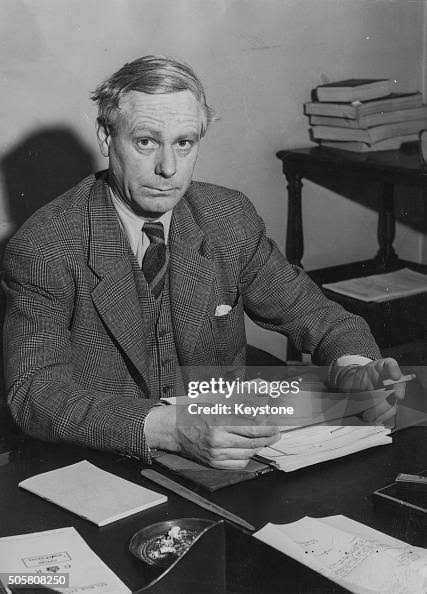
Montagu-Pollock then proposed, however, that Roger Hinks, who was at that time visiting Stockholm for the P.W.E., should ‘act as his deputy in co-ordinating S.O.E. activities with Foreign Office policy and to relieve Tennant of increasing pressure of P.W.E. work’. Was this something that Leeper was recommending? Tennant provides an interesting sketch of Hinks (an art historian), but claims that he knew nothing at the time concerning the fact that Hinks had been installed to keep an eye on his activities. Montagu-Pollock wanted Hinks to take charge of all SOE activities in Scandinavia: not surprisingly, given his background experience, ‘he was not considered suitable’. Moreover, it would have caused managerial problems back in London, with Wiskeman left adrift.
By early 1942, further tensions surfaced. Tennant was recorded as being pre-occupied with SOE work, and with neglecting the Press Department. A further shake-up was called for. In another anonymous attribution, “Major (later Lt. Col.) George Larden was proposed as S.O.E. director and co-ordinator in Stockholm.” Larden was a full-time army officer (something antithetical to the spirit of SOE from the start, but an appointment probably engineered by the martial Gubbins), and Mallet regretted the suggestion of his appointment. Yet London informed Mallet that ‘owing to the expansion of S.O.E. work’, the change was necessary: Mallet had to succumb. Montagu-Pollock also objected. Hinks came back to England with a permanent posting as Second Secretary. In March, Larden’s appointment was approved by the Swedish authorities: he arrived in May with cover of Assistant Military Attaché. Tennant (rather predictably) had known Larden’s ‘tall blonde FANY assistant’ from his Cambridge days. All he had to write about Larden’s tenure was: “His efforts to subject local SOE personnel to military discipline did not appeal to the undisciplined individualists he found under his command”.
In fact, in April 1942, Tennant had returned to the UK to discuss post-occupational work, and went back to Stockholm the next month ‘fully briefed’. That same month Larden arrived, and soon recommended that Tennant be relieved of his responsibility for the Swedish Section, instead recommending that Mr. Hingly should take over. ‘London’ (the same ‘London’ that had just taken pains to brief Tennant?) counter-proposed that Croft, whose return to active service had been requested by the War Office, should take up the post, but the War Office would not agree to his release. And then, in July, the shocking Directive for Sweden arrived, ostensibly drawn up by the War Cabinet Chiefs of Staff Committee, and approved by the Foreign Office. “In this directive it was laid down that there should be set up without the knowledge of the Swedish authorities, as complete an organisation as possible, only to operate if Sweden was [sic: ‘were’] invaded by Germany, or otherwise came under German control.” What was this? The new pseudo-military policy, supported by Larden? Had Tennant been briefed on it? Nothing is stated. As I shall show later, matters were slightly more complicated.
For whatever reason, Larden did not last long. As soon as October ‘it was suggested’ – again, the infuriating passive voice – that Larden be recalled for active service. Montagu-Pollock took back control, Larden left Sweden in December, and T. J. O’Reilly arrived to take over control of the Swedish section with the assistance of Latham and advice of Tennant. As I explained above, according to Cruickshank, O’Reilly had been invited to Stockholm by Larden himself, to finalize plans for the execution of the July directive, but he took over from Larden when the latter fell out of favour. Tennant has no mention of O’Reilly in his index. All in all, these proceedings suggest an almighty muddle, with doves and hawks arguing in London, no clear directives reaching Stockholm, and impetuous appointment changes being made.
Succeeding events probably reinforce the reason why the Chiefs of Staff wanted to bury the August 1942 Directive. In January 1943, the Mission responded, and a new version of SOE plans was received from Stockholm, although the historian does not state what that document contained, or to whom it was sent. Tennant became active again, trying to gain approval for an approach to Ehrensyärd, the Deputy Chief of the Swedish General Staff, ‘for the legalization of the S.O.E. Swedish organization from the Swedish point of view’. This was a bold move, probably made in the belief that the General Staff now understood the way the war was going. The outcome of this idea is not declared, but a new directive for Sweden was drawn up, indicating the inadvisability of any extension of SOE activities in Sweden. Primarily to safeguard MI6 interests, ‘Stockholm was not to extend the existing W/T organization without further instructions from London, and was to cut out the word ‘sabotage’ and instead substitute the term ‘surreptitious economic measures and propaganda’. The fangs were declawed.
In November, it was decided that the Swedish wireless-telegraph and internal organisations should be liquidated and that the Swedish Section should devote itself to obtaining intelligence for SOE operations into other countries. O’Reilly completed his spell in Stockholm, and returned to London. In January 1944, Tennant (still head of the Press Department) was instructed to shift his propaganda efforts from Sweden to Germany. The Foreign Office advised Tennant not to show too much enthusiasm for the Norwegian or Danish troops in Sweden, lest it upset the Russians – a typical FO stance for the time. Tennant then had to witness the emasculated Swedish section being taken over by Hopkinson: Tennant offers some background information to Mallet’s manoeuvres in Touchlines of War. This essentially consisted of the winding-down of the Swedish Section. The author signed off by lamenting the absence of clear directives for work in Stockholm. After all, if SOE were to be restricted merely to intelligence-gathering, was that not the defined charter of MI6? Wilson took time to defend the bureaucracy in London, and to highlight the demands of negotiating with multiple bodies.
There follow further observations on the operation of the Mission before a chapter titled ‘Swedish Section’ appears. It confirms that Tennant started out as head of the section, but that his contacts established from his role as Press Secretary impeded his ability to have direct contact with agents. He thus worked more in an advisory role. Meanwhile, most efforts were spent on wireless communications infrastructure, although some shadier work in the area of sabotage did take place. This section covers the vacillations that drove Swedish policy, and leads again up to the bolder August 1942 directive. Again, no details of the directive are offered. The report states only: “It was decided to set up without the knowledge of the Swedish authorities as complete a post-occupational organization as possible, only to operate if Sweden were [sic!] invaded by Germany or otherwise came under German control”, and it continues by citing a letter from Hambro to Sutton-Pratt, the Military Attaché, emphasizing that no SOE activity should provoke an attack by Germany. Yet the account goes on to provide a rich summary of the proposals that the Swedish Mission sent to London in November 1942 (presumably corresponding to the January 1943 response identified above). These included plans for sabotaging a variety of targets, from iron-ore traffic, power-stations and sub-stations, locomotive rolling-stock, etc. etc. – a truly shocking roster that was presumably part of the Larden doctrine.
It took the Chiefs of Staff a few months to respond, with a more guarded outlook. In April 1943, they emphasized setting up wireless-telegraph groups capable of communicating with the UK, and stressed that it was essential that these activities not be disclosed to the Swedish government. A clear preference for letting the Swedes proceed with their own subversive arrangements was voiced, and on April 28, the following significant advice was issued, described as follows:
On April 28th a letter from Mr. Warner of the Foreign Office to Colonel Wilson of S.O.E. HQ stressed that the risks of German invasion of Sweden were now so remote that it was not worth running the risk of having our S.O.E. activities detected by the Swedes. This letter was written at a time when practically the whole of the Swedish Organisation had been discovered by the Swedish police (as described in the chapter on wireless).
On May 12, a new directive essentially put a stop to any new initiatives. Sporborg wrote to Mockler-Ferryman (ADE, Director of the London Group) on November 17 that the Swedish organization was now superfluous. (The chapter on wireless offers a sanguine account of some embarrassing mishaps.) There follow some interesting accounts of Air Operations, and the relationship with the American WESTFIELD mission, but the story ends there.
I now turn to the infamous 1942 ‘Directive’ to the Swedish Section.
Directive for SOE in Sweden (HS 2/260)
I was delighted to find this item, although a little alarmed that its title referred to the directive ‘for SOE in Sweden’, and covered the period January 1942 to November 1943. Was this directive targeted at the Mission, or at the Swedish Section itself? Moreover, I expected a small file (how could there be much material relating to a simple directive?), but then discovered there were 113 pages to peruse. There had clearly been some controversy, and the directive had obviously undergone some substantial changes in the twenty-three months covered by the file
My first impression was that Henry Sporborg was very closely involved with the negotiations. That surprised me, as Sporborg was nominally AD/S, that is head of Northern European Operations, at the time. (It is a nightmare trying to sort out the various symbols and codenames used for the departments of SOE, since their deployment does not suggest any firm logic, and many of the charts that have been issued are undated.) Yet in HS 8/965 (a register of SOE symbols and organization charts, outwardly describing 1940-1943, which cannot be a very useful guide, given the changes that occurred during that period), AD/S is clearly described as having that role: reporting to him are ‘D/R’ (France, Holland and Belgium), ‘S’ (or D/S, unidentified, but certainly Scandinavia), ‘X’ (which was Germany) and ‘J’ (which I determined was the strange assortment of Switzerland, Italy, Sicily, Corsica and Sardinia). Elsewhere, I learned that under ‘S’ was ‘SD’ (Denmark) and ‘SN’ (Norway). Sweden does not merit an entry, since apparently there was at that time no dedicated HQ entity looking after the interests of the Swedish Section. Yet, in Appendix 1 of his book, Nigel West lists Sporborg as AD/S as well as being ‘PPS to SO’, namely Personal Private Secretary to the Minister (if one trusts Mackenzie’s nomenclature, where Dalton is given as ‘SO’). By 1943, however, when Sporborg was promoted, it seems that he was actually an important liaison between Hambro (then CD, head of SOE) and Dalton’s replacement, Lord Selborne. The chart in HS8/965 actually identifies him as V/CD, i.e. Hambro’s deputy, which could not have taken place until later in 1943.
What seems clear to me is that Sporborg continued to involve himself closely with Scandinavian affairs despite his promotions. (He and Hambro had both started with Sweden.) What is also astonishing is the absence of G. O. Wiskeman in the negotiations over the directive. For Wiskeman is clearly listed as being the head of the Scandinavian Section in multiple places, over several years. According to HS 8/965, he was replaced as D/S by Lt.-Col. Wilson, who, soon after July 1943, was promoted from his leadership of Norway (SN) which he had held since January 1942, to take over the whole Scandinavian section. One might quickly conclude that Wiskeman was not a very effective manager or leader. Perhaps that is why Cruickshank’s sole reference to Wiskeman in his book is to write that ‘in 1941 a Sweden and Baltic subsection developed, with George Wiskeman as head de jure, and Sporborg de facto . . . ’. If Sporborg had to dive down from his lofty perch to deal with Swedish matters, maybe he did not trust Wiskeman on much else. Yet another chart (also undated) in HS 8/965 shows Sporborg as A/DS, with France and Scandinavia reporting to him, while he is also directly responsible for Scandinavia, with Wiskeman handling Sweden (probably the Mission, not the Service), and Finland. On this chart, Hambro appears as A/DA, a symbol that is not listed elsewhere (and is probably not the same as AD/A), but Hambro is indicated as being responsible for all European activities, and is clearly deputy to Frank Nelson (CD), the chief.
The action really started early in 1942, at a time of turmoil. Dalton was replaced by Selborne in February. In April Frank Nelson (CD) retired because of ill health and Hambro was appointed to replace him. Thus the characters behind the symbols invisibly change. E. H. Cookridge wrote (in Inside SOE): “By May 1942 there was a great shake-up in SOE directorates and many section chiefs were replaced.” He adds that Sporborg had taken over the entire Western Directorate in 1941, and records that Selborne asked him, at the end of 1942, to replace Gladwyn Jebb at the Ministry of Economic Warfare as one of his chief advisers (PPS to SO). Cookridge also stated that ‘it was fortunate that Sporborg continued to exercise considerable influence on SOE matters’, thus appearing to confirm that he combined his AD/S role with that of PPS to SO, and later with that of V/CD. (Is that quite clear?)
Thus, when the earliest entry in the file appears, dated January 2, 1942, we have to note that it is written by D/CD, and is to be circulated to CD, AD/REG, AD, M and AD/S. According to M. R. D. Foot, D/CD was allocated to a deputy to CD who concentrated on administrative matters (a Mr M. P. Murray, but who is someone who turns out to wield more clout than might at first appear). CD was obviously Nelson, AD/REG is unidentifiable, AD is Hambro, M is Gubbins (in charge of Operations), and AD/S is Sporborg. D/CD makes some uncontroversial remarks about the inadvisability of trying to introduce ‘toys’ (i.e. ‘explosives’) and arms to the Swedes. Yet, by April 4, Tennant (aka ‘4401’) is being recalled to discuss exactly that – post-occupational work in Sweden, and a few days later AD/L (Guinness in Intelligence) informs L (Intelligence – possibly Air Commodore Boyle, but who in fact was known as A/CD) that CD wishes to get out a directive to the Swedish Country section ‘so that they can prepare a country plan for post-occupational activity’. It sounds very much as if the new broom is already making his mark. Hambro picks up Dalton’s thrust for more action in neutral countries, and strikes before Selborne gets settled, in anticipation of Nelson’s imminent retirement. That streak of subterfuge and secrecy was to be what caused Selborne eventually to fire Hambro.
Work began on a paper to be submitted to the Foreign Office, titled ‘Preparation for Post-Occupational Work in Sweden’, in which the claim was made that ‘the Swedish authorities had been informed that any subversive activity being carried on in Sweden was directed against Norway, Denmark or other occupied territory – not Sweden’. Sweden did not want to collaborate on talks concerning possible German aggression. Gubbins was very enthusiastic about getting his subversive activities underway in Sweden, but noted to Sporborg: “If ever we undertake the work of organizing resistance in Sweden, we must make absolutely sure that it is done entirely unofficially with no contact whatsoever between any General Staff or Foreign Office officials.” Thus a dangerous initiative was being started, in which Hambro’s plans were to be concealed both from his domestic masters as well as from the Swedish authorities.
Frederick Warner (friend of Guy Burgess, familiar to coldspur readers) in the Foreign Office met Sporborg on May 15 1942, and tried to put a damper on things, in homage to the necessarily cautious opinions of his boss, Orme Sargent, and of the Minister of State, Anthony Eden. Sporborg responded with his own account of the meeting, correcting Warner on a point concerning wireless activities that were not yet complete. Next, however, he threw out a disturbing comment, namely that ‘the impending arrival of Larden will be very useful’, adding that he would direct the operation properly, and that he was about to leave for Stockholm. Readers will recall that the history of the Mission noted that Larden’s appointment had been approved by the Swedes back in March 1942, so Hambro had obviously been plotting his course for some months.
Yet the anomaly in Larden’s appointment was that he took over the role of head of the Stockholm Mission, not just the Swedish Section. Sporborg’s comments indicate that Tennant was surely destined to come under Larden’s control, with his overt claim about ‘proper’ direction of the operation. Had Sporborg told Tennant, during his recent visit to London, that he would soon be directed by Larden, not by HQ? Moreover, the history above clearly states that Larden, soon after he arrived, wanted to relieve Tennant of his position as head of the Swedish section, presumably because he did not submit to the military discipline that Larden demanded. This was a monumental gaffe by Hambro and Sporborg: Tennant was Hambro’s man, Tennant had been brought back to London for briefings, and then Hambro appointed someone singularly unsuitable to take over not just the Mission, but Tennant’s skeleton unit as well. Larden’s short tenure was terminated in October, and he returned to ‘active service’ in December, with Montagu-Pollock taking over again. Meanwhile, negotiations over the directive continued. On June 2, Lt.-Col. D. R. Guinness (D/L) sent a new version to the secretary of the Joint Planning Staff. The document has a fresh ‘Object’: “The object of S.O.E. in Sweden is to prepare, without the knowledge of the Swedish authorities, as complete an organisation as possible. This organisation will only operate if Sweden is invaded by Germany or otherwise comes under complete German control”.
The Draft Directive (CAB 84/4/111)
For the record, the original text of the June 3 1942 Draft Directive can be found in CAB 84/4/111. It refers to the directive prepared by SOE ‘for its operation in Sweden’, but the details indicate that it concerns the Swedish Section. The distinctions may however have eluded the members of the Joint Planning Staff. Initially, the JPS seemed a bit nervous about any commitment, and tried to pass the buck back to the Foreign Office:
The view was expressed that the right course was for S.O.E. to agree with the Foreign Office the terms of a Directive to their organization in Sweden: it should not then be necessary to submit this Directive to the Chiefs of Staff Committee for approval.
What is significant, however, is the fact that the draft Directive had been created by the staff in Sweden, and then submitted to the JPS for approval! Readers may agree with me that this process has an irregular aspect to it, since one would expect that those in control would be in adequate command of the situation to be able to dispense orders to dependent bodies off their own bat.
Moreover, SOE reported through a different Ministry: procedurally, this was an odd policy to adopt, as if the Foreign Office could override whatever charter the Ministry of Economic Warfare had been working under. The Foreign Office had obviously given themselves cover, too. In an Annex to the Directive, a note from SOE stated:
The directive has also been discussed with the Foreign Office who, though approving it in principle, feel that the present moment is not an opportune one for implementing it in full. They have therefore asked S.O.E. to obtain direction as to the earliest date by which the Axis might be in a position to invade Sweden. This information will enable the Foreign Office to estimate the date by which restrictions must be raised if S.O.E. are to complete their preparations in time.
Thus the instructions appear to be: Ensure that your subversive groups are ready for anything when the Germans invade, but be careful not to let the Swedes know anything about what you are up to beforehand – an impossible task.
For the Directive continues with specific assignments:
Preparations should be aimed at finding organisers in each district who should: –
- Be provided with trained operators and W/T sets capable of communicating to Great Britain.
- Reconnoitre and prepare plans for attacking the targets in their districts. For this purpose each organiser must be given a clear directive.
- Recruit suitable resistance groups and agents to implement these plans.
- Reconnoitre suitable reception points for airborne stores and personnel.
- Prepare plans for collecting or seizing local arms or stores of demolition material.
This wording (carefully crafted by the SOE Swedish Section, of course) clearly places safeguards around the activities, indicating the instruction that no actions could take place until the Germans invaded, but it then lists subversive preparations to be made by anointed Swedish citizens, directed by the British, which could surely not remain undetected by any self-regarding domestic security service. Such conflicts would condemn the whole plan.
HS 2/260 (reprise)
I return to the SOE in-house history. Echoing the JPS minutes, it records that the secretary of the JPS wanted nothing to do with the directive, and therefore advised Sporborg that SOE should seek approval from the Foreign Office for its proposal. Moreover, by now SOE had indeed sought guidance on when it thought that the Germans would invade Sweden. The Joint Intelligence Staff responded that the Axis could not undertake operations against Sweden unless they had defeated Russia, thus not before spring 1943. Even then, it would be an unlikely event unless it were forced upon them by any British operation in Norway. This was probably not what Sporborg and Hambro wanted to hear. Warner continued to point out that the Swedes were bound to learn of any subversive plans, which might have deleterious results, but Hambro was, in July, still warning of the danger of delay.
Thus matters dragged on into 1943. The Soviet victory over the Germans at Stalingrad in January 1943 made an invasion of Sweden much less likely: this was the turning-point of the war. A new version of the directive was issued on April 4, now addressed to ‘the Head of the Swedish Country Section’ (as if the Mission had been taken out of the loop after the Larden fiasco). It does not reflect many changes, although the Object has been watered down to “The object of S.O.E. activities in Sweden is to minimize the benefits which might accrue to the enemy, through his control, established by whatever means, over Swedish industries and services.” The clause ‘without the knowledge of the Swedish authorities’ remains, with a whiff of desperation perhaps. Wiskeman is now involved again, possibly because Sporborg has taken on his new role with Selborne. By the end of April, the War Cabinet had got wind of SOE’s plans, and expressed its dismay.
Stewart Menzies, the MI6 (SIS) chief, had now become involved, and his influence is apparent. The War Cabinet Secretary wrote to Group-Captain Grierson, the SOE Liaison Officer, making admonitory points, namely that SIS should have priority over SOE; that the FO & SIS stated that it was impossible to carry out tasks without knowledge of Swedish authorities; that detection of such by the Swedes would curtail valuable SIS activities not just in Sweden, but also in Norway, Germany and Denmark. The only reason for running the risk would be if the likelihood of German invasion of Sweden – now an improbable event – rapidly increased. Nothing beyond the provision of W/T capabilities should be considered desirable. SOE should therefore review its directive with FO and SIS. Menzies, predictably, even took offence at the more modest objectives of the directive in setting up wireless-telegraph networks. He was understandably concerned as to how such activity might undermine his own structures.
The directive was dying. By June, Peter Tennant was reporting that Swedish civil defence was now an item of public debate. The Swedes were self-sufficient. Boheman even told Hambro that they could manage on their own. Some feeble attempts were made to create an even more watered-down directive, but the diehards in SOE now had to accept the arguments of the FO and SIS. On November 17, Sporborg issued a memorandum that pointed out that there was no longer any reason to have an organization in Sweden (presumably ‘a Swedish section’) at all. Later that month it was liquidated. That Tennant remained in Sweden, and found useful things to do, is not questionable. But that is not the story of the Swedish Section.
Reports of SOE Situation in Sweden December 1942-November 1943 (HS 2/259)
To illustrate how the archival material frequently is in contradiction with itself, I offer a synopsis of the above file (that I discovered late in the research cycle), which consists essentially of Captain T. F. O’Reilly’s report when he completed his term in Stockholm in August 1943. I realize now that Cruickshank must have had access to this, but it appears that he only skimmed it, and did not cross-check much in it, since several of the statements of his that I reproduced earlier can now be seen to be erroneous (as are some in HS 7/190). On the other hand, one cannot trust O’Reilly for absolute accuracy or compete honesty, either, since he fails to comment on the demise of Larden, who had specifically requested that O’Reilly be sent out to Sweden to draw up plans for the Swedish Section. It was supposed to be an assignment lasting three months, but O’Reilly ended up as head of the Mission, and was there for over ten months, longer than Larden lasted.
The bulk of the file is taken up by a report, titled simply ‘Swedish Section Report’, first dated 3 December 1942, sent by D/S to D/CD (0) and AD/S. (The signature below the submission is undecipherable, but it does not look like the initials of Wilson or Wiskeman. From the wording, it may well be that of his assistant.) A commentary on the report, issued by ‘6216’ (verifiable in HS 8-978 as T.G. Hopkinson) states: “Although its content was mainly the work of 6216, its scope and lay-out were partly determined by 6201.” The symbolization used here is very difficult to track. For instance, in 1944, according to HS 8-978, Tennant was allocated ‘6203’, whereas he had been ‘4401’ earlier in the war. Wiskeman, the nominal S, is still identified as ‘6200’, but the entry for ‘6201’ has actually been redacted in the file. ‘6201’ could have described the hapless Larden (since O’Reilly would not yet have been up to speed), and then O’Reilly himself, and have been left blank after Reilly returned (as indeed it was, according to the records). It is indeed clear that O’Reilly is one of the officers who was assigned ‘6201’. In his report (see below), having re-affirmed that the section’s activity should be restricted to exploratory activities, he refers to the ‘the revised version of Part II of my [my italics] paper ‘S.O.E. and Sweden’, dated 6th January 1943 . . .’, thus claiming authorship while diminishing the contribution that Hopkinson had made. The issue of authorship of the report is a bit murky in other regards, as I shall show later. Tennant’s apparent failure to contribute anything to the report is bizarre.
The text is cautious, emphasizing the fact that the Foreign Office has banned any but ‘exploratory’ activities in Sweden, so as not to disturb the neutrality status. Yet it reflects a deep understanding of the opportunities for sabotage and disruption should the Germans try to occupy the country. It offers a comprehensive analysis of why the German might invade – or why they might refrain, because of the twenty to thirty divisions required to stay in control of such a large country, for instance. Yet the report must have been edited after its author completed it, since Hopkinson’s annotations of April 1943 state that he wished to ‘correct the impression that the Swedish organization is better organized and impressive than it actually is’, adding that ‘in reality the Swedish organisation is a skeleton rather than a body and progress is slow’. (Here, I believe he is referring to the body of Swedes collected by SOE rather than the Swedish section itself.) Hopkinson’s report contains a lot of detail on W/T matters, and on dropping-points, but nothing much of significance. It was forwarded by Wiskeman (S) to M/GD (one of the General Staff) on April 30, 1943. Wiskeman records the distressing fact that two or three members of the organization (again, Swedes) have since been arrested.
The last major entry is O’Reilly’s report, as highlighted in the file’s description (above). His comments concerning the members of the Swedish Section are puzzling. First of all, he declares that he was sent to Stockholm at Larden’s request, but says nothing about the latter’s being recalled the same month. He states that Croft, Tennant and Latham were the only members of the Swedish Section, unaccountably overlooking Hopkinson, who had clearly been heavily involved with it. He states that Tennant’s ‘expert knowledge of Sweden’ was not exploited properly since, he could spend little time on SOE affairs on account of his other duties. (Readers may recall that the Official History of the Stockholm Mission claimed that it was the other way around. Perhaps Tennant was playing one against the other while pursuing his social engagements.) Latham was the W/T expert; Croft was interested in Norwegian affairs, a strange admission when SOE in Norway was presumably being handled by the Mission. In any event, Croft returned to England before Christmas 1942. It left a threadbare set-up.
O’Reilly then reveals more about his achievements. In referring to the earlier report, O’Reilly states that his personal views on SOE activities were expressed in the revised version of the report dated 6 January, 1943, which would suggest that a more robust line had been taken by someone else in the report’s first draft – presumably by Larden. O’ Reilly took the opportunity to tone it down after Larden’s recall. His was clearly an advocate of a hands-off approach: the Swedes were quite capable of looking after themselves. He wrote:
The best way for the Allies to ensure Swedish neutrality and to strengthen Sweden’s will to resist German pressure or aggression was not by S.O.E. taking action in Sweden but by the Allis winning victories on the battlefronts.
This was not the thrustful and aggressive doctrine that Gubbins, Sporborg and Larden had encouraged. O’Reilly was more cautious, and much more sensible. He was shocked when he found that many of the ‘Swedish members of the organisation’ (as they were dubbed) were more enthusiastic dynamitards than passive wireless operators, and he clashed with Tennant over the issuance of sabotage tips to such groups.
The Swedish government was now becoming much more confident in defending itself. Colonel Ehrensvärd, Deputy Chief of the Swedish General Staff, even published a book on the subject of Total Resistance in Total Warfare. O’Reilly and Tennant wanted to approach Ehrensvärd with offers of help, but they were overruled by a lukewarm Foreign Office and a solidly oppositionist War Office. O’Reilly’s report concluded on that point, and when Wilson (D/S) sent on the report to AD/E on 4 November, he noted that the account of his mission ‘is in a sense only of academic interest’. He was correct. SOE Swedish Section had reached the end of its usefulness – if it can be claimed that it achieved anything of much utility at all.
SOE Office and Staff Organisation in Stockholm (HS 2/262)
This file is in many ways a goldmine – a trove of utterly absorbing correspondence, mainly between SOE staff in Stockholm and London, covering the period November 1941 to September 1945. It contains well over two-hundred and fifty pages. Yet it is also very daunting: it is bespattered with such an alphanumeric soup of codewords, symbols, aliases and keys that any researcher will have to keep an accurate, time-dependent concordance at hand in order to be able to identify the players accurately. On the other hand, it is not comprehensive: especially after the initial negotiations, as the status of SOE in Sweden in 1942 becomes more controversial, it omits some major happenings, and overlooks the contribution of figures whose presence has been revealed by other archival material.
The records start soon after SO1 (propaganda) was split off from SOE, and given to the new PWE organization, and three months before Dalton’s ouster as Minister responsible, in February 1942. They immediately throw up some conflicts that the correspondents seem unable to acknowledge. For example, Peter Tennant, who has the role of Press Secretary, and had been anointed by Hambro as SOE head for the embryonic Swedish Section, is also in charge of PWE work (which is, of course, no longer a responsibility of SOE), and is thus neglecting his Press tasks. In addition, since more responsibilities for neighbouring Scandinavia countries (i.e. Norway and Denmark) are being transferred to Stockholm, a complementary business structure is being developed in the Swedish capital, which raises the probability that local personnel will have their reporting divided between managers in Stockholm, and their true sectional leaders back in London. That is a perennial organizational challenge. Lastly, the chiefs in Baker Street appear to overlook the particular requirements of the Swedish Section, which are subsumed to the needs of the Mission.
The search for an ‘SOE co-ordinator’ starts. Montagu-Pollock, Counsellor at the Legation (also known simply as ‘Pollock’), has designs on the job for himself, but receives discouraging noises from SOE HQ. Instead, he recommends bringing in a friend, the art historian Roger Hinks, who would seem an unlikely choice, since he is a homosexual working at the BBC (and was also infamous for having damaged the Elgin Marbles at the Tate Gallery in the 1930s). It seems hardly the profile to fit in with Colonel Gubbins’s ‘warrior king’ model, although Gubbins’ influence was less strong at this period of the war. Rather astonishingly, Hinks was flown out so that the staff could look him over. He passed muster, but soon after his return to a permanent assignment he was not judged fit for the job, and relegated to PWE work, on which he sat out the war.
The primary tussle was between the naturally cautious Foreign Office, whose man Pollock was, and the more martial minds in SOE, such as Turnbull (who managed Denmark), Gubbins, and Hambro. By the end of the year, Gubbins was pressing for stronger leadership in Stockholm, but Hambro’s administrative deputy, Murray, pointed out to him the problems of inserting a soldier into a high position in the Legation. The Foreign Officer’s Peter Loxley was similarly disenchanted with the idea, but Gubbins insisted that, while Pollock could carry out some administrative tasks, it was vital that an executive head be appointed. Pollock continued to push his case, and he advised London that the attitude of the Swedish government to substantial expansion would be very negative.
The records reflect fresh light on Wiskeman and Tennant. Wiskeman (at the time responsible for all of Scandinavia) is much more prominent in the correspondence, and thus appears to play a much greater role than other archives would suggest. It perhaps indicates that it was his files that were being collected. Yet he appears removed from the realities: he never goes out to visit the Mission himself, and plays a bureaucratic role. Tennant plays a subtle game: he knows he is indispensable to the Press Section and to the PWE group, since his contacts and knowledge of the country are unmatched, but his work habits are not good. He abandons his Press team for days at a time, and he often by-passes the Minister in his dealings with London (he also has a direct friendship with Gubbins, to whom he sends personal letters written by ‘Oscar’). He thus provokes Mallet’s annoyance, who complains about the amount of time that Tennant spends on SOE work during office hours – a resentment shared by Pollock. It seems that Tennant’s preference was for skulduggery and schmoozing: after all, he does appear as head of the Swedish Section in the organization charts. Some letters state that he is overworked, but he may have been playing people off against each other.
The quest for a ‘Big White Chief’ continues, and by the end of January 1942 Gubbins has come up with an artillery man, the experienced Colonel Larden. Gubbins plans to install him as Assistant Military Attaché, as cover, but he provoked the inevitable objection from the existing Military Attaché, Croft. Pollock points out the vanity of the idea if no large-scale operation in northern Europe is yet contemplated. But Gubbins is relentless: the shake-up in February means that he is now responsible for all of Northern Europe, and he plans to throw his weight around. Tennant warns him about the weak cover planned: Gubbins thanks him for his insights but reveals to him his more aggressive policy. He wanted a man in charge who would see that ‘it is conducted efficiently as a military plan’. That was, however, not the type of environment that the Mission was probably hoping for.
And so the summer rolls on, with the conventional gripes: Tennant not doing his job, problems of priority on the BOAC flights (with the NKVD gaining too many seats). There is bad publicity in Stockholm over the yacht that Tennant acquired for secure testing of wireless transmissions. Croft is miffed (about Larden, no doubt), and he wants to return to London. Tennant resists Croft’s planned departure, but the War Office overrules SOE. Now it is Tennant’s turn to be upset: Pollock has recommended that Larden take over Tennant’s responsibilities for post-occupational Sweden, which would appear to be a usurpation of Wiskeman’s and Tennant’s authority. Tennant starts mentioning names to replace himself, namely Hingley (sic: an external businessman) and Butler (the internal candidate), but the former is considered unsuitable, and Butler (6206) rules himself out. Nevertheless, Larden gets his six-weeks’ training, and at some stage (not noted in the file), he leaves to do Gubbins’s bidding in Stockholm. It was probably in late May or early June that he arrived: new symbols for staff appear at the end of July. Larden has been assigned 6201, and Tennant’s 4404 has been replaced by 6203.
Astonishingly, there is nothing more about Larden in the record until a memorandum by Warner in the Foreign Office to Wiskeman, dated October 8, discusses a fellow named Boyes as a replacement for Larden! There is no exchange of correspondence on what went wrong. It is true that the War Office had stated that it could withdraw him at any time if it needed him elsewhere: indeed, a month later, Wiskeman notes that Larden ‘is being withdrawn at the request of the War Office’, but other evidence (from Wiskeman) indicates that life at the Mission was intolerable under him, and that the personnel can’t wait to see the back of him. Wiskeman and Pollock refer to him, sarcastically, as ‘our friend’, and he leaves in mid-December, actually outstaying his welcome. It is telling that Croft jumps right back to Stockholm after his departure.
What is equally surprising is that, on the last day of 1942, Larden submitted a very disciplined report on his ‘Completion of Tour of Duty’, carefully overlooking the fact that it effectively lasted not much more than a few months. In this report, he covered important operational aspects such as security and micro-photography, hinting perhaps that not all was well before he arrived. He did, however, point out that the Head of the Scandinavian department (Wiskeman) had not visited the country, something he obviously viewed as regrettable. Wiskeman meekly agreed with the overall findings of the report, but there is no record of what actions Gubbins and Sporborg took as a result of it. (Maybe Gubbins was too embarrassed at the downfall of his man.) And, apart from one or two desultory letters in the spring, the record goes dark until a flurry at the end of the year. There is no discussion of a replacement: the role of O’Reilly (see above) and his in-depth report are completely ignored, which is really inexplicable.
In early 1944, Tennant had another spat with Mallet over propaganda in Sweden and Germany. And then another Big Cheese enters the scene, a Major Philip Thompson, given the unfortunate symbol of SS. He spent a month auditing the operation, and wrote a long report, mostly about routine administrative matters, although he did point out that Tennant (still officially chief of the Swedish section) did want to do more for SOE than his now allotted task of helping with the training of members of the exiled Norwegian police force. Yet Tennant also recognized that he should concentrate on the extra work imposed on the Press Section by PWE and the Ministry of Information. From other sources, however, we know that, by this time, any role the Swedish Section might have had in the conduct of the war was over. The last page of the file – an organization chart – shows Tennant’s role blanked out.
All in all, a very strange – but fascinating – confection. So much jousting and jockeying and politicking, but all very inconsequential. Did they not know that there was a war on?
SOE/Scandinavia 10: SOE Policy in Peace and in War (HS 2/10)
Lastly, I make a brief mention of a broad historical brush on the development of SOE policy in Scandinavia. It is worth including since this file, HS 2/10, carries some broader lessons about the challenges that SOE faced. To be sure, it adds practically nothing to the detail covered elsewhere (and Sweden is barely touched), but it does reflect how the gung-ho boosterism of 1940 and 1941 gradually dissolved into a more somber assessment of the opportunities. The first entry, a report titled ‘Subversive Operations in Scandinavia’ was written by Hambro on December 16, 1940, for the attention of the Minister, Dalton. Its first paragraph reads:
It is the policy of this organization to put ourselves as rapidly into a position to render active assistance to Allied Military operations against the enemy in Scandinavia and particularly in Norway, and also to create the maximum of interference and diversion in the event of a German invasion or attempted invasion of the United Kingdom.
Thereafter he lists some aggressive plans, apparently ignorant of the fact that all Allied forces had been withdrawn from Norway by June 1940. ‘Assisting Allied Military operations’ was by then an invalid concept.
A short memo on ‘quid pro quos’ with the Swedes follows on March 21, 1941, but, a few days later, Hambro is asking for clearer directives from the Prime Minster himself. Yet the spirit of unjustified optimism endured: another March paper concludes that, with a decisive blockade on Zealand, ‘Norway would incidentally fall like a ripe fruit and Sweden would probably have to join the Allies’. Thereafter, the file is of some considerable historical interest in its assessment of conditions and opinion in all Scandinavian countries (including Finland). After the summer of 1941, however, it is clear that the leaders of SOE are becoming much more sanguine about the SOE’s chances of achieving major sabotage, and how relevant it will be when there are no short-term prospects for Allied forces invading Denmark or Norway.
I noticed one wry passage that pointed to the bureaucratic confusion that reigned at this time. It was written – apparently by Sporborg – in April, 1941, after ‘the disaster of Libya’, and it concerns intelligence about Scandinavia. Sporborg writes, making a plea for a centralized Scandinavian Intelligence System:
The Service Departments all have their own ‘Intelligence’ Sections for Scandinavia, whose privileges are jealously guarded by pundits wrapped in red tape and every new department forms its own ’Intelligence Services’ which are nine time out of ten, even as the Service Departments, staffed by people having no knowledge of the country on which they have to keep watch. The result is an army of ‘Intelligence Officers’ whose various sections haphazardly collect items from other department intelligence services and so the spate of bumph goes circling and circling around.
The irony was that SOE was not primarily an intelligence-gathering service: that role belonged to MI6. Sporborg appears to overlook that fact. Moreover, the growth of rival intelligence groups sounds just like what was happening in Germany.
In December 1941, Hambro was still urging for a more energetic policy for infiltrating agents into countries that were still non-belligerent, but by March 1942 even he started to question how valuable were the agents that SOE has sent in to occupied countries, and whether they could be trusted to carry out what they had been commissioned to do. In June, the Chief of the General Staff, Alan Brooke, has to make a general appeal to military bodies and governments-in-exile to give SOE ‘the closest and most whole-hearted co-operation’, strongly indicating that such assistance had been withheld in the past, and suggesting, perhaps, that he would rather not become involved too closely with a problematic business. One thinks of Bomber Command and MI6, in particular.
By now, the threat of reprisals has caused a more restrained approach to dropping arms in (for instance) Norway, and a reminder is issued that no inhabitants should be encouraged to rise up ‘until there is a certainty that they will be supported by Allied military forces’. In fact, Hambro reports in July 1942 that SOE is receiving a greater degree of recognition by ‘other services’, but that may be because its wings have been clipped. By the end of December of that year, Churchill has authorized the Chief of Combined Operations (Mountbatten) to intensify ‘small-scale raidings’, a move that naturally diminished SOE’s opportunities. And thus 1943 arrives, with the tide of war turning. A formal but undated paper appears, which outlines the role of SOE in terms that should have been obsolete by now, but emphasises the necessity of SOE’s close consultation with other services. A year without any records passes before a November 1944 memorandum appears that informs SOE leaders that the Chiefs of Staff have delegated SOE’s operations to SHAEF.
Late News
On the eve of the day of the posting of this report. I happened to read, in the October 14 issue of the Spectator (which arrived that afternoon) a review of a book by Johan Wennström, titled The Stay Behinds: Sweden’s Cold War Guardians. In describing Sweden’s wartime ‘stay-behind’ organisation, the reviewer, Alan Judd, offered the following:
It originated from several initiatives during the second world war, among them one called the Tuesday Club and another called Homeland Stewardship. The enterprise was formalised in January 1943 by a Swedish government directive instructing the entire population to resist an invader at all costs.
How come I never learned anything of this from the British archival material?
Pia Molander – a Reprise
Returning to Pia Molander’s article, having earlier established its chaotic introduction, I wondered whether she accurately picked up the pieces once SOE actually took shape. Unfortunately, the rest of her article is a mess. Her chronology is utterly haphazard: for instance, in a section ostensibly about Section D, she suddenly inserts a passage that derives from documents dating from 1942 and 1943. She switches backwards and forwards in years quite erratically, so that no proper narrative drift can be detected. A paragraph starts off by describing Tennant’s being sent to London in January 1944, as part of the OVERLORD preparation. A few sentences later, we are told: “Meanwhile in February 1941, Mallet reluctantly agreed to allow SOE representatives to operate inside Sweden . . .” She jumps suddenly from Naval Attaché Denham’s activities to the end of 1943, when the ‘SOE preparations to meet an axis invasion could now be discontinued’.
It is sad that the author ransacked so many different sources without having any methodology by which to address them, and without building any proper time-line, or set of organizational structures, to give the events context, and allow her to write a proper narrative. She does not understand the difference between the Swedish Mission and the Swedish Section. It is even sadder that the Editors of The Journal of Intelligence and Natural Security did not have the wit to reject the article, or, at least, to require it to be re-written from scratch to meet any quality goals. Take a look at the list of members of the Editorial Board at https://www.tandfonline.com/journals/fint20/about-this-journal#aims-and-scope. Many distinguished names. They should be ashamed of themselves.
Conclusions
I provide these in two categories: a) the assessment of the endeavours of the Swedish Section, and b) an appraisal of the state of the historiography.
The Swedish Section:
This story is not a whodunnit. No single character or cabal caused the demise of the Swedish Section. It was created haphazardly, stumbled on without achieving much, and then was folded up. Yet a vast amount of time and energy was spent on trying to resolve poorly-defined problems in an environment where too many institutions had an interest, and a say, in what SOE Sweden was up to. No clear leadership came from the top – which is perhaps why Gubbins moved to bypass the chain of command. Men defended what they were doing, and sometimes misled their bosses on how busy they were, or what exactly they were up to. After all, Stockholm was a more comfortable place than many others in which to spend the war years, even if the threat of German occupation loomed for a while.
In many ways, the travails of the Section are emblematic of the struggles of SOE itself. Several presumably smart men (and men mainly they were), under extreme pressure, conceived some ill thought-out plans and made some poor decisions. Given that SOE had been an insistent part of Winston Churchill’s strategy, it would be hard to resist an implicit call for further action in the campaign to harass the enemy. Yet the dimensions of geography and government demanded a selective and discriminating approach for each country targeted. ‘Setting Europe Ablaze!’ may have been an exciting slogan, but the ramifications of what that meant in practice needed to be closely examined. As I wrote before, most of Europe did not want their house to be set on fire. Moreover, SOE was admittedly in a political jam. It was supposed to have non-military leadership, reporting to the Ministry of Economic Warfare, yet had to seek approval for its ventures from the Chiefs of Staff while the Army and Bomber Command failed to support it. In turn, the CoS wanted the Foreign Office involved, while all the time SOE had to deal with opposition from MI6 for interfering on its intelligence-gathering turf, as well as to negotiate with the Political Warfare Executive and various other bodies.
In a significant passage in SOE’s first directive of 25 November, 1940, appeared the following passage:
On a long view, it should be the particular aim of our subversive organization to prepare the way for the final stage of the war when, by co-ordinated and organised revolts in the occupied countries and by a popular rising against the Nazi party inside Germany, direct and decisive military operations against Germany herself may be possible.
Thus the emphasis was on occupied countries and patriot armies, the latter to be equipped and trained to take action to support conventional military forces. The policy did not encourage general sabotage, or assassination, even though, retrospectively, such activities were justified on the basis that they consumed enemy resources, and prevented their being transferred to more important military fronts. And the biggest unknown was, of course, ‘the final stage of the war’. When would that be? How many years could SOE keep alive a potential patriot army, and conceal its existence and supplies from the eyes of the Germans? In addition lay the awful prospect of reprisals, which soon became a shocking reality from Czechoslovakia to the Netherlands, from France to Norway.
Each country under occupation was different, and demanded individualized treatment. Poland was too far away to receive regular supplies: in any case, the Poles had developed a strong patriot force. Czechoslovakia was essentially shut down after the massacres of Lidice. Norway was under complete Nazi control, while Denmark, much smaller, and with little space for concealment, was allowed by the Nazis to maintain a Danish government in place. Many countries had governments-in-exile, to whose sensitivities homage had to be paid. France was particularly troublesome, because of de Gaulle and the Free French, but it was geographically close, and alongside Belgium and the Netherlands, gained special treatment since the return to the Continent would almost certainly start there. Yet Sweden was a neutral country, overall more inaccessible than Poland, and the mandate for SOE was directed at ‘occupied’ countries. What business did SOE have provoking subversion in Sweden?
SOE overall had problems finding capable persons to fill its ranks (one thinks of the hapless Buckmaster, for instance), yet it managed to build a vast bureaucracy to support a raft of many misguided ventures. Its leaders also showed alarming frailties. Over the Swedish Section, Hambro showed the impetuosity and secrecy that would later cause his downfall. Gubbins, the military man, was too gung-ho, and too disrespectful of the civilian mandarins who wielded strong influence. Hambro initiated a disastrous series of appointments of station chiefs for the Stockholm mission, without apparently explaining what they were supposed to do. Wiskeman was weak, and provided no real leadership, and he was eventually replaced by one of his reports. Sporborg, it seems, was devious in how he treated Tennant, while forcefully encouraging the dispatch of Larden, who quickly showed that he was a misfit. They all utterly misjudged what the implication was for Great Britain’s interfering aggressively in the civil defence of a neutral state that they wished to preserve as an ally, and, based on the testimony of the personnel who worked in Stockholm, they caused confusion and demoralization.
SOE gained several successes, such as the destruction of the heavy-water plant in Vemork in Norway, and the destruction of the Gorgopotamos bridge in Greece, but these accomplishments could have been achieved by special military detachments. Hundreds of brave men and women in the field lost their lives, some purely accidentally, by dint of enemy watchfulness, but many by poor selection criteria, inadequate training, and flawed security procedures – and the inevitable reprisals. Officers in London were largely detached from the slaughter, and looked out for their next medals. Fortunately no lives were lost directly in the Swedish Section, but its launching and follow-up were largely a colossal waste of effort. Sadly, the character who comes out of this saga with most dignity, the Foreign Office’s Peter Loxley, was killed in an aircraft crash on his way to Yalta.
The Historiography:
The Case of SOE at the National Archives may be a unique phenomenon, but it set in place an embarrassing series of blunders. By categorizing files that should have belonged to another classification entirely (primarily the Section D records that antedated the establishment of SOE in July 1940), the archivists at Kew successfully (though unintentionally) misled a researcher whose knowledge of the subject she was investigating was so inadequate that she was unable to spot the error. She consequently wrote an atrocious article that mangled the chronology and structures of the intelligence units in question.
She then submitted her article to one of the supposedly most prestigious journals in the intelligence world, The Journal of Intelligence and National Security (JINS). Who approved her article, or how many revisions were required before sign-off was given, is unknown. Perhaps the person responsible was impressed that it contained seventy-three Endnotes, and thus reflected a rich array of published and archival sources, and the editor simply accepted it as it was. What is certain is that this person was equally as inexpert in the intelligence history of the years leading up to WWII, and through the creation of SOE, to spot that anything was amiss. In this way the article sailed into publication.
What is astonishing, and truly scandalous, is that no one appears to have challenged JINS on the publication of such an undisciplined piece. That may be because no one of influence and authority read it: one would think that if a person had been appointed to the Advisory Board of such a distinguished journal, that expert would assume the duty of reading each issue when it came out. Even if not every member were familiar enough with SOE to judge it, one would think that at least the following names would have leaped out of their armchairs when they encountered such nonsense: Aldrich, Andrew, Cormac, Davies, Dilks, Ferris, Freedman, Glees, Goodman, Phythian and Wark. Yet not a single protestation appears to have emerged. The article has lain untouched for nineteen years.
Yet that negligence extends to the subscribers, too. No one who would presumably have dug out this article for their own research purposes appears to have made a squeak, either. Does anyone read these articles? Does anyone subscribe voluntarily, and pay out of their own pocket? Or is everything bundled under those institutional subscriptions? If anyone noticed something anomalous, were they too idle to write a letter to the Editors, pointing out their cavalier approach to historical truth? It is almost as if this is a factory operation. Ambitious ‘scholars’ need to publish articles. The journals need to fill their pages, and to show enough volume and regular publication in order to justify the expensive fees they charge libraries and academic institutions. But nobody pays much attention to them. Quality goes by the wayside.
JINS was obviously not the sole source for my research into SOE’s Swedish Section, but readers will no doubt understand, from my forays into archival material and memoir, and into ‘official’ histories, that trying to understand complicated matters like the birth and death of such units is difficult enough without the ‘authorities’ conspiring to leave boulders in the path that have to be cleared away before serious work can begin.
(A richer than normal set of Commonplace entries for this month can be seen here.)