[This report follows up my analysis of Verkaik’s book, exploring some of the murky background to which the author refers, but which he fails to assess properly. I draw two lessons from the exercise. The first is that, contrary to how one imagines historiographical accuracy should improve over time, it can deteriorate because of the public actions of potboilers, cranks, and charlatans. The second is that comprehensive histories of such events as Operation MARKET GARDEN require a careful integration of material from multiple spheres: war diaries, military histories (and especially facts concerning the political background and inter-service strifes), personal memoirs, foreign archives – but especially from ‘the missing dimension’, namely intelligence, in the form of the authorized intelligence histories, POW interrogations, disinformation exercises, intercepted wireless traffic, counter-espionage reports, etc. I believe that such a work still is to be written on the Battle of Arnhem.]
Contents:
Introduction and The Story So Far
The Intelligence Histories
FORTITUDE: The D-Day Deception Campaign, by Roger Hesketh (2000)
British Intelligence in the Second World War (official histories: 1990)
MI9: Escape and Evasion 1939-1945 by M. R. D. Foot and J. M. Langley (1979)
Nigel West’s MI6 (1983) and Keith Jeffery’s Secret History of MI6 (2010)
General Histories
The Oxford Companion to World War II (1995)
The Battle of Arnhem by Antony Beevor (2019)
A Bridge Too Far by Cornelius Ryan (1974)
Interim Conclusions
The Peter Baker Story
The Battle of Arnhem by Cornelis Bauer (1966)
Was “Arnhem” Betrayed? (Encounter, June 1981)
London Calling North Pole by Hermann Giskes (1953)
Arnhem 1944 by William F. Buckingham (2016)
Betrayal at Arnhem by Anne Laurens (1969)
Fight Another Day by J. M. Langley (1974)
Peter Tennant
Summary and Conclusions
* * * * * * * * * * * * *
Introduction and The Story So Far
Verkaik has attempted to set up the NKVD as the puppeteer for all anti-Nazi espionage and counter-intelligence in Western Europe in 1944. He builds up an absurd curriculum vitae for Anthony Blunt, whom he identifies as the prime organizer behind Lindemans, the Dutch traitor, in the planning and execution of Operation MARKET GARDEN. He also tries to attribute the vague cryptonym of JOSEPHINE to Blunt himself, accusing him of passing confidential messages to Karl-Heinz Kraemer, an Abwehr officer in Stockholm.
I thus now turn to various histories to ascertain what light they might shed on the matter of possible betrayal of the MARKET GARDEN Operation, especially concerning the contribution of ‘JOSEPHINE’, and who JOSEPHINE might be.
As a guide, I offer the following Military Dramatis Personae involved in MARKET GARDEN:
The Allies:
General Dwight Eisenhower (Supreme Commander, Allied Expeditionary Force)
Lieutenant-General Lewis Brereton (Commander of the 1st Allied Airborne Army)
Field-Marshal Bernard Montgomery (Commander of the 21st Army Group)
Lieutenant-General Frederick Browning (Commander British First Airborne Corps)
Lieutenant-General Brian Horrocks (Commander of XXX Corps)
Brigadier-General James Gavin (Commander 82nd Airborne Division)
Major-General ‘Roy’ Urquhart (Commander British 1st Airborne Division)
Major-General Stanislaw Sosabowski (Commander Polish 1st Parachute Brigade)
The Germans:
Generaloberst Kurt Student (Commander of 1 FallschirmArmee)
Generalfeldmarschall Gerd von Runstedt (Commander [Oberbefehlshaber] West)
Generalfeldmarschall Walter Model (Commander of Heeresgruppe B)
SS-Obergruppenführer Willhelm Bittrich (Commander, II-Panzer-Corps)
General Fredrich Christiansen (Commander of Wehrmacht in Holland)
SS-Brigadeführer Heinz Harmel (Commander of 10. SS-Panzer-Division ‘Frundsberg‘)
SS-Obersturmbannführer Joseph Krafft (Commander, SS training and replacement unit)
Hermann Giskes (head of Abwehr in Holland, then Belgium; head of FAK307)
Ernst Kiesewetter (Abwehr chief in Holland, replacing Giskes)
Wilhelm Wiesekötter (head of Abwehr’s FAK265)
Gerhard Huntemann (Abwehr officer)
Richard Christmann (Abwehr officer)
The Intelligence Histories
“In Hesketh, Hinsley and Howard, horrors hardly ever happen.”
- FORTITUDE: The D-Day Deception Campaign, by Roger Hesketh (2000)
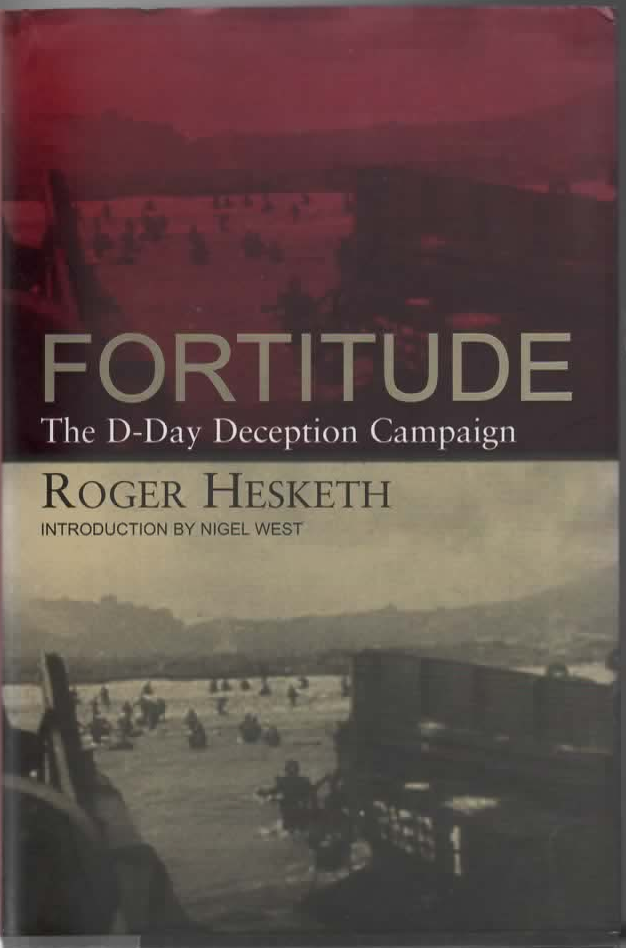
The story behind this publication is extraordinary. Hesketh died in 1987. He was a deception specialist, working for SHAEF in the Ops (B) group, and had been responsible for spreading disinformation about the D-Day landings (OVERLORD) in June 1944 – and also on the assault at Arnhem in September. At the end of the war (so Nigel West informs us in his Foreword), Hesketh wrote an account of the OVERLORD deception campaign (FORTITUDE), intended for internal use. He never considered publishing it until he was shocked to discover, in 1973, that Sefton Delmer had been given access to his text during his development of The Counterfeit Spy, with no acknowledgment at all. Hesketh gained recognition in a new edition of that book, but the availability of the material meant that there was no room for Hesketh’s history, even though up to 1976 he expressed confident hopes that it would be published. When the identities of all the controlled agents had been revealed by the 1980s, there were no longer any security embargoes, and thus the volume appeared under the imprint of the Overlook Press in 2000.
Hesketh has quite a lot to say about JOSEPHINE, but it must be remembered that his account was forged in the immediate aftermath of the war, with narrow access to British or German archives. He first introduces JOSEPHINE in the wake of the arrival of the ‘dummy’ Field-Marshall Montgomery in Gibraltar on May 15, 1944, tantalizingly describing JOSEPHINE as ‘an uncontrolled agent operating in Stockholm’. That ‘uncontrolled agent’, so identified to contrast with the ‘controlled agents’ (the preferred term for what have frequently been dubbed ‘double agents’) strongly suggests that Hesketh believed JOSEPHINE’s allegiances were more to the Allied cause, even though the TWIST committee, which reported to the London Controlling Section, could obviously not exert exclusive control of the intelligence that JOSEPHINE passed on. Hesketh describes how JOSEPHINE had been playing ‘exactly the same game’, and had passed on stories of Montgomery’s presence on the Rock, attributing it to ‘information received from the War Office’. Colonel Krummacher in the Intelligence branch of the OKW (Oberkommando der Wehrmacht) indeed wondered whether it was indeed a deception initiative.
In a later footnote (p 206, concerning the Normandy landings), Hesketh summarizes his understanding of JOSEPHINE:
JOSEPHINE and HECTOR, the two most prolific spies operating in Sweden, were ‘run’ by a certain Dr Kraemer, a German journalist residing in Stockholm. Both agents were, of course, ‘uncontrolled’; indeed, it is not clear that they really existed at all. It seems that Dr Kraemer’s motives were pecuniary and he used these channels alternately to convey spurious intelligence in exchange for money payments. Most important operational messages went to JOSEPHINE, who in consequence enjoyed the higher reputation.
It is difficult to know what to make of this. It certainly is muddled, conceptually. (Did Hesketh really believe that Kraemer was a journalist?) If the nominal prolific spies were ‘run’ by Kraemer, they were providing information, not distributing it, which is the meaning that ‘convey’ suggests. Perhaps Hesketh meant to say that Kraemer, in reporting to his German masters, ascribed his provision of ‘spurious’ intelligence to the pair. Moreover, if ‘more important operational messages’ went to JOSEPHINE, where did they come from? And why call them ‘uncontrolled’? If they were sources, Hesketh would have no idea to what degree they were ‘controlled’ or ‘uncontrolled’. Of course, as with any other informant, Kraemer would have to judge how reliable their intelligence was. One must conclude that Hesketh was mightily confused, or that he was being deliberately obtuse.
Hesketh’s last contribution on FORTITUDE is to conclude that JOSEPHINE had acquired some knowledge of the FORTITUDE story. (He derived his knowledge from ULTRA traffic.) “We know now”, he writes, “that Dr Kraemer had in fact access to German Intelligence documents.” Whether this was authorized, or clandestine, we are not told, but Hesketh claims that Kraemer had read successive instalments of the story ‘and handed them to the Germans a second time with his own embellishments”. ‘To the Germans’? Was Kraemer not a German? That seems a very clumsy way of describing the process. He then adds some very provocative sentences:
The effect, mainly unfortunate, of this practice upon our own efforts to deceive will be considered in greater detail in a later chapter. All that need be said here is that if this particular message of JOSEPHINE contributed in any way to the countermanding order we may perhaps be allowed to claim a part of the credit since he was taking his cue from us and basing his appreciation on the assumed presence of FUSAG [the fictitious army] in the South-East of England, a force which he himself had done nothing to establish in the German mind.
‘Taking his cue from us’? That phrase betrays a lot. What is fascinating is that Hesketh continually presents JOSEPHINE and HECTOR (or HEKTOR, as he is usually presented) as being resident in Stockholm, but offers no explanation as to how they gained their intelligence, even though he quotes one of JOSEPHINE’s reports as deriving from statements made by a (fictitious) Air Marshal Harrison.
Chapter XXXII of the book is dedicated to Arnhem, and JOSEPHINE re-appears in his familiar guise. Again, Hesketh assumes that Kraemer had taken advantage of his access to the report of controlled agent BRUTUS, dated September 10, and out of ‘a desire to fall in line’, on September 15 had told the Germans about the movements of the FUSAG army, this time attributing his insights to the statements of Air Vice-Marshal Trafford that the army would be deployed to Eastern Holland rather than to Norway. In his inspection of Kraemer’s explanations as to why the shift had occurred, Hesketh wryly observes:
Dr Kraemer’s new operation was more detailed than anything we had offered and his airborne drop was now unpleasantly near to Arnhem, but his main FUSAG objective of Eastern Holland and the Heligoland Bight might be said to approximately [sic] to BRUTUS’s Kiel-Bremen target.
He also reports on the bewildering manner by which JOSEPHINE’s message of the 15th had not reached Berlin until the early afternoon of the 17th. The OKW Intelligence Summary of that day includes the vital sentence: “According to our present picture of the battle, the main objective of the airborne operation is the capture of the crossings along the Eindhoven-Arnhem line in order to facilitate a quick thrust by the main forces of the Second English Army through Holland to form a bridgehead at Arnhem.” Hesketh annotates the strange delay by stating that it resulted ‘in a certain amount of enquiry and recrimination’, adding: ‘It is not clear whether it was caused by a failure of communications or whether Dr Kraemer was merely playing the well-known trick of backing the winner after the race was over.” Of course, Hesketh did not have the benefit of learning what Walter Schellenberg said about it. Yet, one vital fact should be noted: the Germans were already expecting a thrust towards Arnhem, to form a bridgehead
In addition, Hesketh provides an Appendix (No. XIV) titled JOSEPHINE and FUSAG. It is dated January 6, 1945, when much of the dust had settled, and consists of a report compiled by the Luftwaffe that assesses JOSEPHINE’s role. By now, the German intelligence officers have clearly concluded that FUSAG was a fiction, and that, during the second half of 1944, ‘reports from the agent JOSEPHINE conform to the enemy’s decoy activities’. Thus JOSEPHINE’s insights concerning the movement of this phantom army have now to be distrusted. The report provides the evidence, and concludes: “ . . . it must be pointed out that JOSEPHINE was thus a participant in the enemy’s decoy plans, which were aimed at holding down strong German forces for as long as possible at various points from Norway to France.’”
It seems to me that Hesketh was writing with his tongue in his cheek in continuing to assert that JOSEPHINE’s sources were much of a mystery, but at the same time showing that he was not really concerned about the leakages from such as the RAF’s Harrison and Trafford, and also not very curious about the sources used by JOSEPHINE and HECTOR. From what we know now, it is not a very convincing account, and we have to read between the lines.
- British Intelligence in the Second World War (official histories)
Kraemer – and, hence, JOSEPHINE – receive comprehensive coverage in two volumes of the above series, in Volume Four (Security and Counter-Intelligence) by F. H. Hinsley and C. A. G. Simkins, and in Volume Five (Strategic Deception) by Michael Howard. Both books were published in 1990, after Hesketh’s death and before the appearance of Fortitude. While the authors must have had access to Hesketh’s text, they are unable to identify it as a reference, and Delmer’s Counterfeit Spy does not appear in the generic bibliography for the series, found in Volume Three, Part 2. Their conclusions, however, are different from those of Hesketh: they exploit some common sources, but they also use items that should have been available to Hesketh, and they bring some new perspectives owing to their access to fresh material, and interviews with German officers, that would not have been available to their predecessor. Of course, both authors were by now aware of Blunt’s treachery, which must have been a cause of great discomfort when they came to write about deception in WWII.
- Volume 4: (Security and Counter-Intelligence)
Hinsley and Simkins (whom I shall abbreviate simply to ‘Hinsley’ hereafter) rather surprisingly introduce the detection of JOSEPHINE and HEKTOR not to ISOS (i.e. ULTRA decrypts) but to the obtaining, in the autumn of 1943, by the Swiss station of the OSS (the American Office of Strategic Services) copies of ‘authentic telegrams sent to the German Foreign Office from the diplomatic mission in Stockholm’. They note that JOSEPHINE and HEKTOR were ‘apparently’ (to whom?) based in England. The Swiss anecdote (which also appears in Jeffery: see below) should surely merit further investigation, but no more is said. Hinsley goes on to describe how JOSEPHINE’s messages were about shipping and naval matters, while HEKTOR delivered confidential material that included claims about conversations between Stafford Cripps (Minister of Aircraft production), Portal (Chief of Air Staff) and Harris (Bomber Command). Thus HEKTOR’s predominance is quickly established, in contrast to how the attributions played out later – a key to the probably fictitious nature of these agents. What is significant, however, is that Hinsley confidently identifies Kraemer as an Abwehr officer, who ‘was known to have been posted to Stockholm under diplomatic cover towards the end of 1943’. Furthermore, he had been identified under three cover-names in ISOS decrypts. No ‘German journalist’, then, as Hesketh had described him. How did Hesketh get that fact wrong?
After analysis, not much credence was given to these surreptitious reports, even though one or two statements gave rise to alarm in the run-up to OVERLORD. Hinsley’s summary for early 1944 is worth reproducing in toto:
But rigorous enquiries failed to identify the source in the Ministry; the dates of the reports ruled out the use of the Swedish diplomatic bag or the Swedish airline; and the RSS was confident that it was missing no illicit transmissions. MI5 accordingly concluded that the Kraemer network was fictitious, and that his habit of attributing items of intelligence to Cripps, Sir Archibald Sinclair, the Secretary of State for Air, Portal and Harris was his way of building up the reputation of his notional agents. The SIS was not so sure.
That final sentence says it all. It is not a very convincing performance by Hinsley. If no obvious leak was detected (suggesting that the intelligence was accurate), how did Kraemer gain his information? And I should like to have learned more about those timetables concerning the diplomatic bag and the flights to Bromma, in order to confirm or discount how any agent in the Swedish Embassy was able to deliver messages to Stockholm.
Hinsley returns to Kraemer in Chapter 16, where he reveals that, in July 1944, the decrypts of signals from the Japanese Military Attaché in Stockholm (unnamed, but certainly Onodera) were found to contain reports that were clearly based on the information that Kraemer was sending to Berlin. Several of these prompted the British (likewise unidentified, but presumably MI5) to revive the suspicion that Kraemer might have a source within the Swedish Embassy in London, ‘and this conjecture was supported in December when an Abwehr officer defected in Sweden’. This defector suggested that Kraemer had been basing some of his order of battle reports already included in German intelligence summaries, and Hinsley adds a footnote that inspection of documents after the war confirmed that an enquiry into Kraemer’s contributions was carried out by the Luftwaffe, since the unit held suspicions that his intelligence was either ‘deception material’ (i.e. disinformation planted by the British), or ‘wholly fraudulent’. Remarkably, Hinsley adds that Schellenberg claimed during his interrogation at Camp020 that he had shielded Kraemer.
A final anecdote concerns the success that MI6 had in recruiting an employee of the German legation in Stockholm, who had been able ‘to supply carbon copies of Kraemer’s teleprinted messages to Berlin’. (This may be a cover-up for ULTRA. While GC&CS had been successful in intercepting and decrypting ENIGMA-based wireless messages, the use of teleprinters – generically named FISH by Bletchley Park – posed challenges. I find it somewhat surprising that the technology was deployed for diplomatic traffic.) While this exercise revealed that most of Kraemer’s information was inaccurate, some forecasts displayed ‘disturbing accuracy’. What is extraordinary is the fact that Hinsley writes nothing about the Arnhem controversy at this stage. Instead he moves straight on to Kraemer’s interrogation at Camp020 in May 1945, where he reproduces the familiar litany of Kraemer’s half-truths, lies, and prevarications. Thus we read about the Japanese Military Attaché, the denial of sources resident in the UK, the use of Fulep [sic] in Madrid., etc. Hinsley is indulgent towards his subject, concluding that ‘it seems probable that in his later statements at Camp020 he was substantially telling the truth with some normal and some tactical lapses of memory’, an essentially overgenerous assessment. Yet he identifies two problems without satisfactory answers.
The first problem is the familiar one of Kraemer’s apparently having access to much of the deception material passed by the double-cross agents. Hinsley is able to dispose of this with the Heskethian thesis that Kraemer had read some of the material from German intelligence reports, had embellished it with his own ideas, and echoed the overall message. A more disciplined inspection of the chronology surrounding these events would have been useful. More troubling to Hinsley was the forecast of the Arnhem landing, which Kraemer originally ascribed to Fulep, but which (as Hinsley notes) was logistically impossible. Hinsley also points out the delay in the receipt of the message because of the ‘technical hitch’ in Berlin (but shows no interest in the causes), and he concludes that Kraemer may simply have stumbled on the Arnhem location through looking at a map closely. He finishes as follows:
Probably because his account was not available until some time after the event and the message had in any case no influence on it, no formal inquiry was carried out. In October 1945 the SHAEF Counter-Intelligence War Room concluded that the forecast was almost certainly ‘an intelligent guess’.
This was overall a weak account by Hinsley (& Simkins). Too much in the passive voice, actors not identified, leads not followed up, questions left unanswered. Whether it was due to their own cautiousness, or whether the authors had some shackles put on them, or whether they were being somewhat disingenuous in behaving in such a blasé fashion in the light of some of the evidence, I cannot say. The short introduction to the book states that the authors of this official history, like all the others, ‘alone are responsible for the statements made and the views expressed’. Well they would say that, wouldn’t they?
Lastly, Hinsley offers a long Appendix 14 on ‘The Case of King Kong’. Rather surprisingly, he acquits Lindemans of abetting the Arnhem debacle, and asserts that his intelligence had no practical consequences, writing:
The Germans were expecting a break-out from the XXX Corps bridgehead at any moment, and were making such preparations as they could to meet it. The possibility that the Allies might employ airborne troops to assist their advance into Holland or Germany was recognized, but the Germans were not expecting an airborne landing at Arnhem. Field Marshal Model, commanding Army Group B, happened to be at a headquarters close to the town and narrowly escaped capture. The presence in the neighbourhood of 9th and 10th Panzer Divisions was accidental – they had been ordered there early in September to re-organise – and they were not alerted before the 1st Airborne Decision landed on 17 September.
Hinsley attributes whatever information King Kong gained to carelessness ‘in the euphoria which prevailed at the time’, which to me represents an over-insouciant attitude to the obvious spy, and a tasteless description of what was becoming a very bitter period of the war.
- Volume 5: (Strategic Deception)
Michael Howard quickly muddies the waters, introducing JOSEPHINE in the context of the Normandy landings in the now familiar guise of an ‘uncontrolled agent’, but naming him unequivocably as ‘a German Abwehr officer in Stockholm, Karl Heinz Kraemer, whose information came largely through Swedish military circles and intelligent study of the press’. Again, an ‘uncontrolled agent’? Does that mean that he was working for the Allies, but was a potentially loose cannon? Why else would an Abwehr officer be described that way? It is all very perplexing. Howard returns to Kraemer when revealing how one of his contacts returned to Sweden in the first week of July 1944 with information that contradicted what one of Garbo’s (fictional) sub-agents had reported, namely that there had been no particular troop concentrations in the north of England and Scotland. Howard does not explain how this insight was gained.
The author’s coverage of MARKET GARDEN is more conventional, although enigmatic as well. “It is also possible that he had learned something about MARKET GARDEN from genuinely uncontrolled and indiscreet rumours conveyed through diplomatic channels in Stockholm”, he writes. What ‘genuinely uncontrolled’ means, I have no idea. Perhaps it reinforces the idea that Kraemer had been loosely engaged by MI6, but the suggestion is that the British did in fact have a measure of authority over the rumours circulating in the Swedish capital, but had to acknowledge that some were emanating from sources they knew nothing about. In any event, Howard goes on to describe the fateful message of September 15, alerting Berlin to the allocation of FUSAG to the 21st Army Group, and to the coming airborne attack in northern Holland and the German frontier.
The fact of the message’s important delay is noted, but Howard downplays the general significance of the intelligence, writing: “ . . . although there were strong German formations in the Arnhem area, of whose presence the British planners had not taken adequate account, their presence was quite fortuitous and the attack still secured total surprise.” Howard’s assessment was that any leakage about Arnhem itself was immaterial to the outcome of the operation, and he asserts that JOSEPHINE’s credibility was maintained, even pairing that remarkable entity with the famed controlled agent BRUTUS. “If JOSEPHINE’s credibility was confirmed, so was that of BRUTUS, and the cover story remained intact.” That is an extraordinary way of representing the value of a declared Abwehr officer alongside the role of the controlled agents: had no one picked that up before? Howard records the continuing confidence in its source expressed in the September 23 report submitted by the FHW (Fremde Heere West), but he says nothing about the more sceptical post-mortem. And that is it.
In summary, these are two very obtuse contributions by the official historians. Whether they were genuinely confused, or just lazy, or were simply directed to be obscure, is not clear to me.
- MI9: Escape and Evasion 1939-1945 by M. R. D. Foot and J. M. Langley (1979)
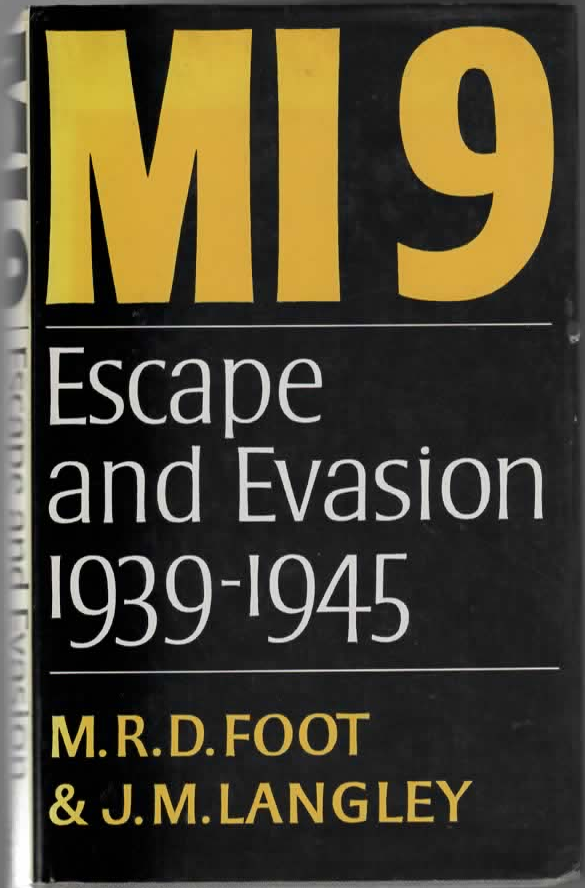
This volume contains an early and rather cautious account of the undisciplined actions that involved both MI9 units in Holland as well as elements of the Dutch Resistance, but it adds details that undermine the case that accuses Lindemans of betraying strategically vital information. Langley was the MI9 officer involved with Lindemans in planning infiltrations into German-controlled territory: he had been warned by Pinto, but the 21st Army Group had given Lindemans full security clearance, and Langley thus went ahead. The authors also point out that the dates do not fit, since Brereton did not make a detailed plan until September 10, ‘by which time two SS armoured divisions were already in process of re-forming in and near Arnhem’. Yet they are perhaps too trusting of what General Student claimed later about the German command’s ignorance of any details of the attack until it happened.
Foot and Langley also describe the disobedience of an agent called ‘Harrier’, who, after the Arnhem debacle, was sent on an expedition authorised by Langley to go behind enemy lines to apply some structure to the evasions of stranded soldiers and airmen. They are scathing about Harrier’s misdemeanours: “Harrier, a jumpy young Englishman who fancied himself as a secret agent but had had no relevant training, disobeyed his orders, and was seen by day in a street in Tiel in plain clothes, recognized as stranger by a Dutch quisling, and shopped to the Gestapo.” He survived, but his Dutch hosts were shot. The authors’ disdain is shown by the fact that they write ‘he is now dead; there is no point in giving his name’. Further scandal followed. The air liaison officer of the group known as IS9 (WEA), ‘Johnny’ Evans, who is also witheringly profiled in the book, informed Harrier’s parents what had happened to their son – a gross breach of security. Norman Crockatt, the head of MI9, ‘was only able with extreme difficulty to avert questions in the House of Commons’.
In fact, ‘Harrier’ appears under his real name a few pages earlier, where his sad career is summarized. The authors do not make the explicit link, but a casual reading exposes it. ‘He was convicted of fraud, was sent to prison and died soon after his release.’ I shall return to ‘Harrier’ later.
- Nigel West’s MI6 (1983) and Keith Jeffery’s Secret History of MI6 (2010)
(primarily concerning the testimony of Peter Falk)
I believe that Nigel West was the first to relate the story of how MI6 officer Peter Falk arrived in March 1943 with the task of penetrating the German intelligence organization, and then described the extraordinary evolution of that project. West writes that Section V of MI6 had been forewarned of Kraemer’s pending arrival in September through analysis of ISOS decrypts. A remarkable piece of good fortune then occurred, by which a disaffected Austrian acquaintance of Falk’s secretary turned out to have a close friend who worked as a maid at the Kraemer residence, and she had been able to pilfer some of the Abwehr officer’s documents. (Falk gave her the identity of Agent 36704, which grants the whole adventure a more official ring.) This project was pursued to the level that the maid was able to take an impression of a key to Kraemer’s locked drawer, by using a pat of butter. When a local locksmith provided the duplicate key, the maid was able to extract a richer trove of documents in successive raids, including Kraemer’s old passports, and pass them to Falk. MI6 concluded that a high percentage of Kraemer’s information had come from newspapers.
Why the whole of this novelistic story should be believed, I have no idea. It probably has a germ of truth, however. West was relying on information from ‘insiders’ who may have wanted to conceal what was going on, or to provide cover for other clandestine activity by the British. Falk was obviously one of that crew. The author provides no sources, of course, yet the story has entered official lore [see below]. It is worth pointing out that McCallum’s report (from the Kraemer PF) gives a rather different account of the matter (p 50). I here transcribe the relevant section:
. . . SIS by a lucky chance had been able, in December 1943, to penetrate his household. This came about when his maid and a friend were searching his bureau for chocolate and discovered a number of what were described as ‘compromising, highly secret, documents’. The friend, an Austrian named Anna ERIKSSEN, was pro-Allied and offered these papers to a representative of SIS who copied them before handing them back to be returned to the desk. The maid, Helen FIEDLER, was unaware of what was being done. In April 1944 MI5 were asked by SIS to have a key cut from a scale drawing; this was done and the result, when handed over, was said to be ‘a great success and fits perfectly’ It was not stated whether the key was for Kramer’s flat or his safe – presumably the latter since bundles of draft telegrams, or notes for telegrams, continued to be passed to MI5 for checking; together with long lists of dollar notes in his possession, and details of innumerable journeys taken from various passports.
Now the ordinary reader might question this narrative. Would a maid and her friend be allowed near Kraemer’s office? Did they seriously expect to find chocolate there? Why was the bureau unlocked? And did Kraemer not notice that documents were missing? Was a lock subsequently applied, and, if had been prompted by Kraemer’s suspicions, why did he not investigate? If the bureau did become lockable, how did the maid obtain the key? If the maid was unaware of what was being done, how and why did she commit to continuing the operation when her friend was not around? How did the maid continue to pass confidential documents on to Falk without Kraemer’s noticing? And why would the official archive register the fact of a key being made in London when Falk had already leaked the fact that one had been made locally?
The Kraemer files do indeed offer some evidence of this exploit. Felix Cowgill of MI6 wrote to Dick White on December 14, 1943, informing him that his representative in Sweden had obtained three scraps of paper ‘borrowed’ from Kraemer’s flat (KV 2/144-02, p 9). They were not of eminent importance (Cowgill attached them, but they were filed elsewhere in a ‘Link’ volume on Sweden, titled S.F. 52), and merely referred to some of Kraemer’s colleagues in Eins Luft, as well as notes on JOSEPHINE. A further note dated February 2, 1944, cites another letter ‘borrowed’ from Kraemer’s flat, which Mary Sherer (working for ‘Tar’ Robertson in B1A) followed up, asking whether the MI6 representative in Stockholm could determine whether the letter was an original, or a copy. On March 29, another note describes how ‘two further messages . . . were found among Kraemer’s effects in Stockholm’. On April 13, gold dust appeared, with Cowgill informing Hart that two further messages have been found in the flat. One of them appears on file, and it lists conversations Kraemer had had in Berlin on March 7.
Yet it was not until April 26, 1944 that Cowgill approached Hart with an urgent request for three copies of a key to be made, with detailed drawings attached, made from impressions and created exactly to scale. Hart passed this request to Major Blunt, and Hart was able to tell Cowgill on May 3 that MI5 has arranged to have the key made. Before the item reached Stockholm, however, Cowgill let Hart know, on May 19, that a number of 10-dollar notes had been found in Kraemer’s possession. Moreover, their numbers were listed. Eight days later, Cowgill reported that a further batch of messages had been obtained ‘from our source in Stockholm’. Lastly, on May 31 Cowgill was glad to let Hart know that the key had been a great success, and that it fitted perfectly. On June 1, MI6 celebrated by trumpeting the fact that it had gained access to several passports in Kraemer’s possession, and it summarized his multitudinous movements between 1939 and 1942.
To return, temporarily, to West’s narrative. His account leads to JOSEPHINE, and West writes that this agent was resident in Stockholm, but enjoyed some useful sources in London, including someone named HEKTOR, who worked in the Foreign Office. He then suggests, rather oddly, that Kraemer himself might have assembled a ring of spies in London (when JOSEPHINE would more accurately have been the controller), and he records that Kraemer’s workload seemed to increase after the bi-weekly arrival of the flights from the UK to Bromma airfield. West then struggles to make a coherent tale out of his information. He points to the alarm when, shortly before MARKET GARDEN, Kraemer passed on information about Arnhem, whereupon MI5 put one of its ablest officers on the job to investigate – namely Anthony Blunt. Blunt concluded that JOSEPHINE was probably one single informant, and that the material came from Colonel Oxenstierna. HEKTOR (he thought) was probably William Strang at the Foreign Office (a character familiar to this parish through the Burgess-Maclean affair). Strang ‘underwent a painful interview’ with MI5, and Oxenstierna was next provided with plausible, but false, information, which he passed on. The result? “Colonel Count Oxenstierna was requested to return home and JOSEFINE [sic] ceased to operate.” It turned out, however, that Oxenstierna was innocent: he had sent his reports to the Foreign Section of the Swedish Defence Staff, where Kraemer had recruited a secretary who provided him with the information. MI5 sent Strang an apology.
West has not been able to construct a proper chronology. The fact is that Oxenstierna had been sent home in 1943, a full year before the MARKET GARDEN fiasco: West had been told an erroneous story. I have no idea where the Strang anecdotes come from. No one told West about Major Cervell, who endured (maybe as HEKTOR, since he was the air attaché) through the Arnhem era, and West’s informants had surely exaggerated the concerns harboured by MI5, who, as it later turned out, were rather blasé about the possible exposure. Blunt was involved – but not in the way West describes it. One can applaud his ground-breaking attempt to make sense of it all in the face of official silence, but these primitive forays tend to get sealed in stone.
I turn to Keith Jeffery. In his authorized history of MI6, written twenty-five years later, Jeffery described how Peter Falk was sent as a ‘trained Section V representative’, that is as a Counter-Espionage officer, and was given the task of running a separate station dedicated to attacking the German intelligence service ‘not only in Sweden but across Scandinavia and elsewhere [my italics]’ (the latter appearing as a very vague and provocative flourish). Falk’s main target was Kraemer, described as the assistant air attaché, but in fact an officer of the Abwehr’s Air Intelligence Section (Luft I). One of the goals was purportedly ‘to help close down any potential [sic] intelligence operation in Britain itself’, which would seem to be a largely superfluous project at that stage of the war, since MI5 was boasting that it had already stifled such an initiative. Yet there was one last possible source of leakage that needed investigation – an apparent network that included JOSEPHINE.
Jeffery presented his description of the purloining of the Kraemer documents as follows: “While MI5 eventually [when? – why no date given?] concluded that the alleged Kraemer network was fictitious[i.e. not a true Abwehr cell], suspicions remained that he was getting information from Swedish diplomatic sources in Britain”. He then commented on the way that luck took a turn, in December 1943. The historian echoed the dubious story about the ‘walk-in’ and the Austrian maid, down to the details of the key impression and the pat of butter, without explaining whether he got his story from West, from Falk, or from some other source. Yet the details vary again. Jeffery wrote that, contrary to West’s story that ‘a disaffected Austrian acquaintance of Falk’s secretary’ had introduced her friend, the woman came to the British legation and asked to speak to someone who spoke German. When comfortable that what she said would not be revealed to SOE or the naval attaché, the woman opened up.
The woman then declared that her best friend, also Austrian, worked as a maid for Krämer and had chanced upon some important-looking documents which she had copied. These appeared to be drafts of telegrams about air intelligence from Britain and included a ‘request to Josefine [sic] for information’. This first contact duly led to a meeting with the friend and to the recruitment of both women. Throughout 1944 the maid supplied more message texts and other papers from Krämer’s desk, waste-paper basket and coat pockets. Moreover, after coolly borrowing the key to his desk drawer which he always kept locked (by taking its impression in a dish of butter), she was able to abstract and copy by hand no fewer than eight current and old passports, which showed his travel movements since 1938.
Can this be serious? That a maid would take that initiative, and exfiltrate documents out of the house in the belief that her employer would not notice? (This initiative contradicts the story as described by Falk/Thomas.) Even papers found in his coat pockets? And that she was able, throughout much of 1944, to carry on retrieving documents from Kraemer’s desk, even though he always kept it locked? And, again, that Kraemer was utterly oblivious to what was going on? From what source did Jeffery gain his information, and why was he so credulous?
For the coverage of the case overall, he cited Hinsley and Simkins, an article by C.G. McKay from Intelligence and National Security (which is very laborious *), and the Kraemer files at KV 2/144-157. The last presumably must therefore have been available at the time of Jeffery’s research – a fact that surprises me: the date of release is not given in the description at TNA. Jeffery surely did not read the files himself, let alone the McCallum Report, and his summing-up was accordingly very sketchy. While asserting that Kraemer did receive ‘information deriving from genuine Swedish attaché reports originating in London’, he wrote nothing about the path they took, whether the sources were identified, or what happened to them. He briefly mentioned MI5’s alarms before OVERLORD, but included nothing about the MARKET GARDEN leakages. As an aside, Jeffery notes that in the summer of 1944 Falk made a proposal to his bosses to ‘buy’ Kraemer (to what purpose is never revealed) but his suggestion was rebuffed, since a senior Section V officer, Cuthbert Bowlby, vetoed any dealings with war criminals. The timing of this is odd: after all that trouble to create a key (concluded at the end of May 1944), Falk wants to abort the process by bringing Kraemer into the Allied cause.
[* McKay’s article, The Krämer case: a study in three dimensions, published in 1989, is a long-winded and rather impenetrable analysis of the Kraemer material. McKay uses West’s dubious narrative as one of his sources. While Jeffery was happy to cite this article, it is obvious that he had never delved into its paradoxes, and it was irresponsible of him to recommend it without such an analysis, while so eagerly reproducing the highly improbable anecdotes spun by Peter Falk.]
As an interesting coda, West – who, it must be said, is an expert on ‘anecdotal’ history – took Max Hastings to task in a 2016 review of The Secret War. He criticized Hastings for claiming that JOSEPHINE was a bogus source, asserting that, contrary to how Kraemer had reported her identity to Berlin, she was the real secretary in the Swedish Foreign Ministry who had passed him information from the air and naval attachés at the London Embassy. He then wrote: “MI5’s investigation of the former, Frank Cervell, and the latter, Count Oxenstierna, had led to their withdrawal and a rumpus”. That statement is simply not true, and to attribute all of the so-called JOSEPHINE reports to that secretary finesses the problem of how the Arnhem information was received by Kraemer so promptly. West cites Jeffery as the source for explaining how Kraemer had tapped into the Swedes’ diplomatic channels, but it is by no means the whole story.
The overall problem, however, is that Peter Falk spun his story to multiple outlets, and did not keep it consistent. For some reason he conspired with Hugh Thomas, the author of The Unlikely Death of Heinrich Himmler (who in turn borrowed largely from the fraudster Martin Allen), to create a fantasy about Schellenberg and Himmler, and peace initiatives towards the British. I believe that this farrago has little to do with the role of wartime JOSEPHINE, except to cast doubt on anything that Falk wrote or said about it, and to emphasize the naivety of Verkaik in being taken in by it. Falk’s overall account sounds like an imaginative embellishment of what Agent CICERO (Elyesa Banza) performed against his employer, Sir Hughe Knatchbull-Hugessen, the British Ambassador to Turkey, in 1943. Banza deployed his locksmithing skills to take copies of his boss’s keys, and then used them to access documents that he photographed and passed on to his German controllers. As I mentioned in Part 1 of this report, Cowgill and Hart cannot implicitly be trusted in their account of the locksmithing, but it appears certain that multiple messages were extracted somehow, and passed on, before the production of the duplicate key.
General Histories
- The Oxford Companion to World War II (1995)
This volume contains a brief entry for MARKET-GARDEN, apparently written by the General Editor I. C. B. Dear, but giving as source material only Cornelius Ryan’s A Bridge Too Far (1974). One might have expected a deeper analysis than appears: Dear annotates Eisenhower’s approval of Montgomery’s plan, but writes little about the plan itself, merely suggesting that speed was essential, and that the initial drop of paratroopers ‘was completed with unprecedented accuracy’. That represents a less insightful observation than one offered in the same volume under ‘airborne warfare’, where Anthony Farrar-Hockley writes that ‘there were insufficient aircraft to lift the corps simultaneously’. Dear continues by stating that ‘from that high point the tactical execution of Montgomery’s bold strategy deteriorated’, without assessing the quality of the strategy in the first place.
Dear lists some contributing factors to the failure: the distance between the landing zones of the 101st US Airborne Division, the 82nd US Airborne Division and the 1st British Airborne Division; the fact that the planners ignored intelligence that pointed to the presence of Panzer divisions in the area; the capture by the Germans of operational orders in the improper possession of a US officer; bad weather preventing the assistance of the Polish Parachute Brigade; the slow progress of the supporting British Army towards the bridges, and the consequent isolation of the Arnhem paratroopers. Overall, however, this is a weak summary of the Operation, and Dear ignores the contribution of the Intelligence histories (however inconsistent and elliptical they may have been) in compiling his entry.
- The Battle of Arnhem by Antony Beevor (2019)
I wanted to study a more modern account of the Operation, and I thought that Beevor would present the most useful account. I expected him to exploit all the research material published in the past fifty years. I have enjoyed some of his other books, he is a serious and dedicated researcher, and he is known for expressing opinions unreservedly. I thus acquired and read his Battle of Arnhem, subtitled The Deadliest Airborne Operation of World War II. It carried, however, a headline blurb from The New York Times Book Review that championed the author as ‘One of the finest military historians now writing’ – perhaps not the most ringing endorsement one could imagine.
I have to admit that I struggle with descriptions of military operations, what with all the salients, bridgeheads, redoubts, lodgements, enfilades, coups de main – even ‘airheads’ – and the like. Moreover, I do not have a strong imagination for the topography of the battle-fields. Place an Ordnance Survey map of any part of the United Kingdom in front of me, and I can pore over it for hours, but the strictly two-dimensional maps of such as Arnhem and Eindhoven fail to arouse my imagination, and I struggle to work out exactly how the engagements are undertaken and how they develop. In addition, all the dense detail about various military units, and who led them, and where they sat in the order of command, and exactly what their role was, frequently leaves me stunned and confused.
Unfortunately Beevor’s book contains many of these characteristics – I shall not call them defects, because the failing is largely mine. I applaud Beevor’s eagerness to record for posterity all that he has discovered in multiple archives, but I wish he had brought more structure to what comes across as a succession of chaotic scenes. In addition, my head starts to spin when I read such passages as:
On 17 September, while the battle continued at Beringen and Hechtel, Dempsey ordered the 50th (Northumbrian) Division to cross the Albert Canal south of Geel. This sector was defended by the Kampfgruppe Dreyer, led by Generalleutnant Chill’s most energetic regimental commander. The 6th Green Howards managed to establish a bridgehead . . . . General Reinhard lost little time. He ordered in a company of the Heavy Panzerjäger Battalion 559, and a battalion of Heydte’s 6th Fallschirmjäger-Regiment to help Dreyer’s Kampfgruppe retake the place.
So was it a bridgehead, or not?
I gained a good insight into Beevor’s assessment of the reasons why MARKET GARDEN failed. It was a poorly designed strategy by Montgomery, which should never have been approved by Eisenhower. Several senior officers picked serious holes in it before it was launched. It relied too much on everything going to plan, with no allowance for surprises. The British did not have good intelligence on the strength and positioning of German forces in the area, or, if they did, they ignored it. The landing areas of the three parachute regiments were too far apart, and the access roads for Army support too narrow and exposed. The terrain was often unsuitable for the landings of the gliders, which were frequently overloaded. The aircraft themselves were not appropriately apportioned to paratroopers and staff, with too many luxuries allowed. The weights that the paratroopers had to carry were excessive. Radio communications rarely worked properly. The weather was bad – especially in the UK, which delayed some flights, and thus left the leading units isolated. Under attack, the Germans were more disciplined in defining priorities.
As far as Arnhem itself was concerned, the Germans maintained a large airfield and barracks to the north and east, and they were able to bring in troops from central Germany with relative ease – however rough and inexperienced they were. Thus it was really no surprise that 10,000 soldiers and airmen were left stranded, with only 2,000 being able to make it back to the western bank of the Rhine. The casualties were enormous. Yet at no stage does Beevor suggest that a leakage of operational plans was a contributory factor to the disaster. He dismisses the Lindemans story as a ‘myth’, although his reasoning is naïve and far from convincing. He writes nothing about the incidents with Captain Baker. He naively trusts what all German sources claimed after the war, namely that they were ‘taken completely unawares’, a contestable opinion which the British authorities have eagerly adopted. Yet it is one that blandly ignores Lindemans’ incriminating behaviour, verifiable from German archives and British intercepts. Of Kraemer and JOSEPHINE Beevor makes no mention, apart from consigning to a Footnote the insight that ‘Schellenberg received information in mid-September predicting [sic!] an Allied airborne landing in Holland to seize a Rhine bridge, but that he took no action in response’. That was not a very distinguished analysis of the whole espionage and counter-espionage business from the historian. ‘The Missing Dimension’ rears its head again.
Overall, I was disappointed. In his keenness to include every possible anecdote and incident of the conflict, Beevor discarded any attempt at a strong narrative thread, and failed to put the events in a clear strategic context. (‘Er konnte den Reichswald vor lauter Bäumen nicht sehen’.) Moreover, he was very sketchy on the intelligence and counter-intelligence aspects of the operation. I needed to explore further, and returned, first, to the seminal work by Cornelius Ryan.
- A Bridge Too Far by Cornelius Ryan (1974)
In my opinion, Ryan’s account, which inspired the movie (that I have not seen), is much better than Beevor’s. It has good narrative drive, it provides clear context for the geography and impulses of the battle, it has better maps, and it does not dwell excessively on the personal dramas and tragedies, which the author treats with both compassion and objectivity. He performed his research thoroughly, to the degree that such depth was possible at the time, although it does mean that he is sketchy on the intelligence aspects, and he is probably too trusting of what ex-combatants (American, British, and German) told him years after the battle. He is also loose in providing references, is often imprecise about dates, and unnecessarily invokes the ahistorical notion of the influence of ‘fate’.
Ryan disposes of Lindemans peremptorily. He describes Lindemans’ capture, and subsequent interrogation by Friedrich Kiesewetter, whose former boss was Hermann Giskes, the Abwehr chief in Holland. Without disclosing what his sources are, Ryan claims that, on September 15, Lindemans told the Germans about the attack two days hence, and added that ‘a parachute drop was planned beyond Eindhoven to help capture the town’. In Ryan’s opinion, Kiesewetter, judging that paratroopers were not necessary for the British Army to reach its objectives, did not take action on Lindemans’ disclosures, and Giskes did not receive his report on the matter until September 17.
Only in a footnote does Ryan approach more controversial territory, for here he refers to ‘a second oft-repeated story that Lindemans was taken to General Student’s HQ at Vught for questioning’, and that an alert was subsequently raised. Instead of investigating the sources of this story, Ryan prefers to trust what Student told him, writing: ‘Student flatly denies this allegation. ‘It is a large fat lie,’ he told me. ‘I never met Lindemans. Indeed I first heard of the whole affair in a prison camp after the war’. The General added that ‘nobody in the German command knew anything about the attack until it happened’. Yet that is a very equivocal statement. Student may not have met Lindemans personally, but the impression of ignorance that he wanted to project when interviewed by Ryan obviously contradicted the fact that Lindemans had indeed passed on information on the assault two days before it happened. Ryan does not comment on this paradox.
Thus returning to Verkaik, with his access to archival records, may shed light on this episode. He claims on page 83 (exploiting an article in Encounter magazine of 1981) that Lindemans first met Student’s intelligence chief ‘and passed on detailed accounts of British armour positions’. He was then passed on to Kiesewetter (now Giskes’s successor), and another Abwehr officer called Richard Christmann, who debriefed Lindemans for the next 36 hours. Verkaik then uses the interrogation of Christmann in December 1946 (available at KV 2/946) to hammer home his point. Verkaik actually paraphrases what appears as a more dramatic text, capitalized in the original. The report states that Christmann said:
“CC” [the cryptonym for Lindemans] further reported that he succeeded in getting American and British officers to talk of a big aerial landing, to take place on the 17th to 18th September 1944. “CC” gave us the exact position of about four hundred heavy cannons. The aerial landing was to take place in the Eindhoven, Nymegen and Arnhem areas. In case of success of this landing, several other landings have been planned in the Ameerspoort, Ostrand and Zuiderzee areas, with the goal to drive a wedge into the German front, to reach Bremen.
Furthermore, Christmann went on to claim that he sent on a full report, to the 1st parachute Company, to S.O.I. XV, to General Christiansen of the Luftwaffe, and by special courier to Berlin. He stated that troops in the Arnhem area were consequently ordered to be ready: “Without the presence of these troops in the Arnhem area the aerial landing on September 17 would have succeeded.” (Verkaik does not cite that statement, as it would no doubt have undermined his Blunt as JOSEPHINE story.) Was Christmann telling the truth? His details sound authentic. But why would British and American officers have given Lindemans such information? On the other hand, simply mentioning ‘the Arnhem area’ would not have been a great surprise, or even betrayal, unless Lindemans had given indication that the landings would be north of the river. Yet how would he have known about that unless he had been briefed since he left Brussels with Baker? By Baker himself? The alerts given to the troops in that area nevertheless sound very suspicious. Overall, however, the main point is undeniable. Arnhem had been identified as a target.
According to Verkaik, this was no surprise at the time. He records (citing an After the Battle article from 2002, whose genuineness may be questionable) that an ULTRA intercept of September 15 had picked up Christmann’s recreation of Lindemans’ initial intelligence report. Yet Christmann stated that he and Kiesewetter interrogated Lindemans through the night of September 15, and that Christmann sent his report on the morning of September 16. Somebody was lying. Verkaik says that Lindemans was interrogated for 36 hours: that datum does not appear in the Christmann testimony, and the length of that interval, taking the actors into the morning of September 17, does not make sense. It again shows how critical it is to build an accurate chronology. Whatever the details of the communications were, Student’s claim to Ryan that he (and everyone else) knew nothing, and were taken by complete surprise by the Arnhem landing can be seen to be a lamentable untruth, presumably made in the intent of boosting the General’s adaptability in a crisis. Verkaik indeed writes that Student, as the expert in airborne operations, should have been the first to be told about the disclosures.
Interim Conclusions
Having read these histories, I developed a thought that is pertinent to the idea of A Bridge Too Far. If the Germans gained the intelligence that an air assault was planned on the towns of Eindhoven, Nijmegen and Arnhem, that would not have come as a major surprise. They had concluded that paratrooper divisions were assembling in England before the assault occurred, and the late addition of the city of Arnhem to those of Eindhoven and Nijmegen would not have been an eye-opener. The 2016 Osprey publication Operation Market-Garden 1944 (2), by Ken Ford, offers, on page 29:
Model’s headquarters issued daily bulletins warning of an imminent attack to be launched in the direction of Nijmegen, Arnhem and Wesel, with the objective of being the area of the Ruhr. The Germans also knew that the Allies had an airborne reserve, which would soon be used against them.
Thus the whole thesis of the ‘Arnhem’ leakage could be a massive misjudgment.
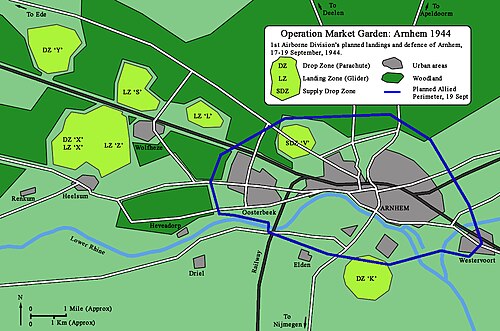
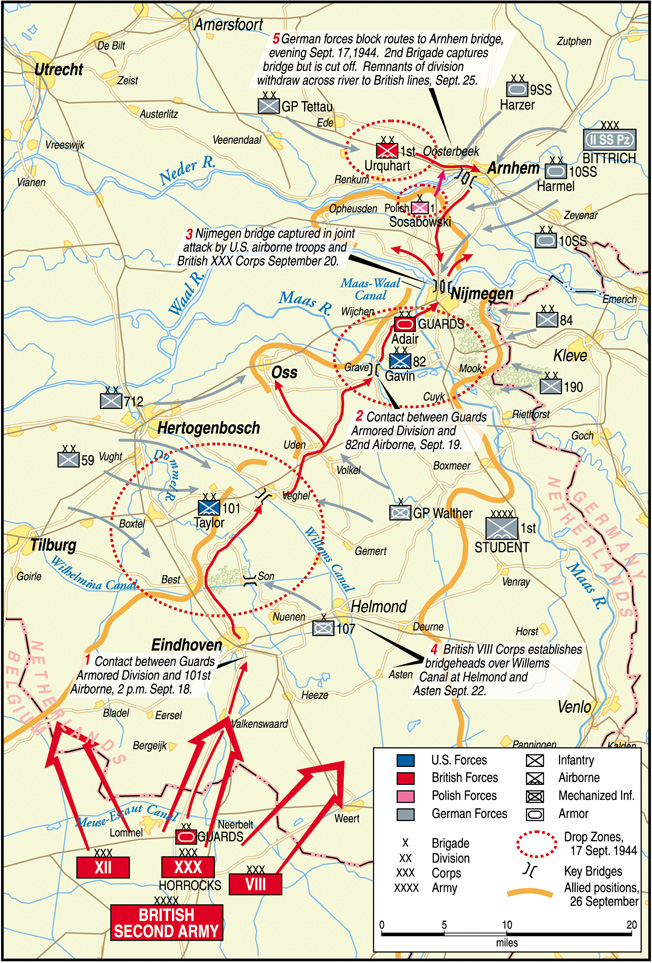
What might have shocked the Germans, however, was the idea that a Parachute Division would land north of the Rhine at Arnhem. The course of the operation was originally planned as a steady advance by Horrocks’Army to support the paratroopers – American, British and Polish divisions – who were chartered with capturing the bridges over the Maas, the Waal and the Rhine. Yet the First British Airborne divisions landed to the north-west of Arnhem, thirty or so miles away from the bridge they were supposed to capture. The Poles were scheduled to land south of the river (see Figure above), but were delayed.
Thus, when Major Frost’s battalion managed to seize the north side of the Arnhem road bridge as a ‘bridgehead’, his team was isolated in deeper German territory, surrounded by hostile forces, and the capture of the southern end of the bridge would rely either on Polish paratroopers to be dropped on the southern side, or the speedy arrival of Horrocks’ XXX Corps. If either of these movements were delayed, the bridgehead would be a bridgehead to nowhere. But that is what happened. The Polish arrival was delayed for days by bad weather in England, vital supplies to the groups that had landed near Arnhem were likewise affected, and Horrocks’ troops were thwarted by determined German defence against the caravan of tanks and infantrymen on the highly exposed main road to Arnhem.
After the battle, the Wehrmacht stated that a landing south of the city would have posed greater threats. Sadly, the Allies had discussed how unsuitable the terrain south of the city was for heavily-laden gliders, and, under pressure from the RAF (which was also concerned about German anti-aircraft flak as they wheeled northwards over Arnhem after the drops), they rejected the idea in favour of the smoother terrain to the north, but at the same time engaging in a more ambitious and riskier operation. Thus a major aspect of MARKET GARDEN still perplexes me, since the histories apparently fail to cover it: given that the logistics of the exercise of capturing the Arnhem road bridge, and then defending it, would be so dramatically different if the attack were made from the north, why did the planners so casually switch the landing-grounds to the north-west of the city (beyond the lower Rhine) from the south-west (where they would have enjoyed stronger links with the ground forces?
This lack of imagination is reflected formally in the report on MARKET GARDEN issued by G (Ops) on November 5, 1944 (available at WO 205/693). Under ‘Use of Airborne Troops’ Item 8, it reads:
The DZ [Dropping Zone] of the 1 Airborne Division was too far from their objective, i.e. eight miles from ARNHEM; this was because the terrain and flak made it impossible to land this Division close to ARNHEM. Information before the operation was also to the effect that landings SOUTH of the River NEDER RIJN were also impossible owing to the terrain. In view of this, it was decided to drop and land the Division on the NORTH bank of the River NEDER RIJN. The net result of these factors was that the leading troops of 1 Airborne Division did not arrive in ARNHEM for four hours, by which time the enemy defence scheme had been put into effect.
In his comments after the war, General Urquhart said that the judgment about the flak and terrain was wrong.
In his report on the operation (available at CAB 106/1054), Lt.-General Horrocks wrote, concerning Lt.-Colonel Frost’s brave effort to hold the bridge: “It had an immense effect on the battle, because had the Germans been able to use the bridge for their reinforcements, we should never have succeeded in capturing Nijmegen.” This seems sophistical to me, with some retrospective justification. When the battle plan was devised, the Allies were not aware of the strength of the German forces north of Arnhem. If they had been, and needed to repulse any thrust from that direction, they would have been better off capturing and then defending the southern side. Frost’s 2nd Battalion captured the north side of the Arnhem bridge on September 17, expecting Army Group XXX to arrive at the south side the following day. The occupation of the Nijmegen bridge, however, was delayed until September 20, and thus the disruptions were independent of any German reinforcements. Yet Horrocks’ text was enshrined in the ‘Important Lessons’ documented in WO 205/693.
One bitter irony was that the unfortunate Poles were sent in (late) on the polders to the south: while the terrain was deemed to have been ‘impossible’ for the British division, the landing areas were considered fit for the Poles! By that time, however, the Germans had secured the south end of the bridge, and the Poles, having been directed to a landing area to the west of the original site close to the bridge, were separated from their colleagues across the now almost unnavigable Rhine. Thus they now had to try to cross the river to help the beleaguered Airborne Division, suffering unimaginable casualties in the process. That decision to build the bridgehead from the north was to define the tragedy of Arnhem. It was General Browning who suggested to Montgomery on September 10 that the operation was ‘a bridge too far’. My conclusion, as someone untrained in military matters, is not that the Arnhem bridge was unreachable, but that it was foolish to assume that the capture of the wrong end of the bridge could be sustainable given the number of variables (weather, communications problems, delay in supplies, unexpected German forces in the area, German resilience, etc.) that existed, and were not accounted for properly in the plan.
Finally, one must pose the question: if JOSEPHINE (or Lindemans) simply passed on the item of intelligence that Arnhem was one of the targets, was that really a ‘betrayal’? (The famous Kraemer message that was delayed simply referred to a landing ‘around Arnhem’.) On the other hand, if Baker/Lindemans had somehow managed to gain more current intelligence, and were able to reveal that the assault was planned for territory north of the city, did that allow (through Student’s agency) the Germans to activate its Panzer corps already there, and move in troops to eliminate the factor of surprise, and torpedo the whole exercise?
The Peter Baker Story
A sub-plot that has not merited the attention it deserves is the role of Peter Baker, whose name I brought up in introducing the first segment of Verkaik’s book. Hitherto, I have examined two theories concerning the Arnhem fiasco. The first is the notion that a deep and disastrous betrayal of information led not just to the failure of MARKET GARDEN but also to Soviet domination of Eastern Europe – the Verkaik hypothesis. The second, that favoured by the various historians, is that a leakage did occur, but that it was irrelevant since the Germans did not act upon it, the disaster being due to dire mistakes in planning and execution – and to some bad luck. A third idea, however, could be what I described above – that a more accurate picture was given by Lindemans via Baker. A fourth notion, however, has been articulated, namely that there was in fact no betrayal at all concerning Arnhem.
This was a very bold – even perverse – stance to take. It was all prompted by the actions of Oreste Pinto, whose testimony Verkaik so blatantly accepted. The controversy blew up in September 1955, when Brigadier H. B. Latham, an Australian in the British Army employed in the Historical Section of the War Office, was approached by Captain A. G. C. Stainforth, whose son, Peter, had served at Arnhem. Stainforth senior had been in contact with a Dutch historian, Colonel Boeree, who had become an authority on the battle, and had interviewed many Germans, including General Bittrich, the commander of the Panzer Corps. Bittrich’s unexpected presence in the area, in Boeree’s view, ‘caused the defeat of this project’. Both Boeree and Stainforth had been vexed by Pinto’s promotion of his recent book, and especially his story about ‘The Traitor of Arnhem’, Pinto having recently delivered a lecture-tour to advertise his views. Latham contacted A. B. Acheson in the Cabinet Office on September 23, writing:
It would appear that the official denial of the rumour that the plan for the Arnhem Operation was disclosed to the Germans must wait until the relevant volumes of the Official Histories is published. At the same time I can fully realise that the persistence of this rumour and its propagation by Colonel Pinto may be causing unnecessary distress to the relatives of those killed in the operation.
Boeree had been so convinced of what Bittrich and other senior Wehrmacht officers had told him that, when he investigated the Lindemans story, the exercise (in his words) ‘proved beyond any doubt that the Germans received no warning of the Airborne drop at Arnhem’. That was a big leap of conjecture. Boeree went too far, since he told Stainforth that he had written a book (in Dutch), and that he ‘originally carried out this research to refute this rumour and to restore the good name of the Dutch underground movement, with which he was connected at the time’. Yet having that objective in mind when he set out on his project was not a wise decision, of course. (The text he produced stated that the assertion that Lindemans had betrayed the Arnhem landings to the Germans had been refuted in the House of Commons in February 1945, but that was not accurate. The spokesperson could only have denied the verity of the claim.) Boeree may well have come across evidence that the Dutch underground did not have a spotless track-record. Thus, however nobly the movement worked, he could not prove once and for all that its performance had been immaculate. In any event, the title of his book was planned to be Arnhem Was Never Betrayed: The Real Story of Christiaan Lindemans. Stainforth had committed to taking Boeree’s rough English draft, and to turning into an acceptable form for publication in the United Kingdom.
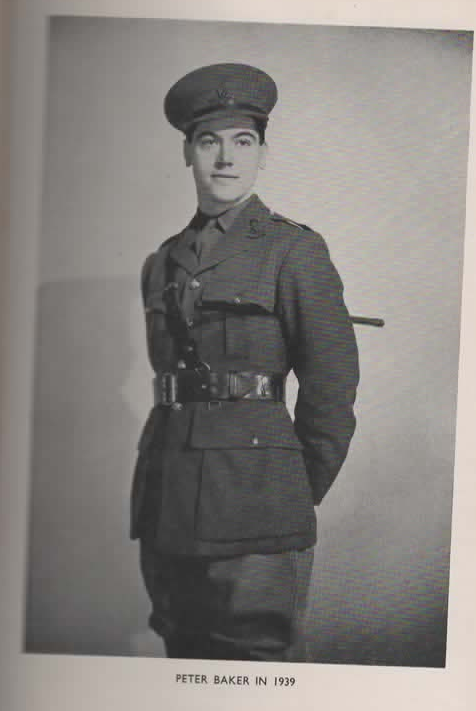
The book never appeared under that title, or under Stainforth’s co-authorship. Boeree eventually gained the assistance of Cornelis Bauer, and the book The Battle of Arnhem (with the subtitle The Betrayal Myth Refuted) appeared in 1967. It may have been because Stainforth had encountered an obstacle. He expressed his opinion that Boeree’s story had too many gaps, and he wrote that he needed to fill them in before committing to his collaboration with Boeree. Critical to his research was an opportunity to interview Captain P. A. D. Baker, late MP for South Norfolk, who had assisted Lindemans’ mission to Eindhoven in 1944, after which Lindemans was reputed to have disclosed the plan for the Arnhem operations to the enemy. Since no war diaries for the Field Security Sections (one of which Baker was commanding) had survived the war, Stainforth wanted to ascertain from Baker what information he had given to Lindemans, and the instructions he passed on to him before dispatching him to Eindhoven. Stainforth was seeking Latham’s help in setting up an interview with Baker.
The problem was that Baker was serving a seven-year prison sentence at the time. Readers will recall my comments about ‘Harrier’ in my analysis of the history of MI9.
Baker was a likeable rogue who got into trouble with various companies he managed that were falling into bankruptcy. In a fit of piety, he admitted guilty to fraud, and was sent to prison in 1954. He wrote a memoir that he completed two days before he admitted his guilt in court, rather pompously titled My Testament, which I have now read. It is a hotch-potch assembled from occasional writings. It says very little about Lindemans, but it does engage in a level of name-dropping that makes both Denis Healey and George Weidenfeld look like hermits. His Wikipedia entry (see https://en.wikipedia.org/wiki/Peter_Baker_(British_politician)) draws fresh attention to his role around Arnhem, since it states that Baker’s actions in the Netherlands in October 1944 incurred official reproof. After swapping their military uniforms for civilian clothes (against specific orders), Baker and his American comrade Bachenheimer took it upon themselves to engage on a private mission, and stayed at the residence of a member of the Dutch underground. “On the night of 16–17 October, the house was raided by German forces who already had a quisling inside surveilling the goings on at the farm. Baker and Bachenheimer were arrested while sleeping and taken away as prisoners of war. Fekko Ebbens, the head of the Ebbens family, was executed some months later as reprisal for an attack on German troops by the Dutch resistance. Baker’s superiors were furious that his disobedience threatened the rescue, Operation Pegasus, of hundreds of British paratroopers stranded in German-controlled territory.” Bachenheimer was shot: Baker tortured. While Antony Beevor describes Bachenheimer’s exploits and eventual execution, he strangely does not feature Baker at all.
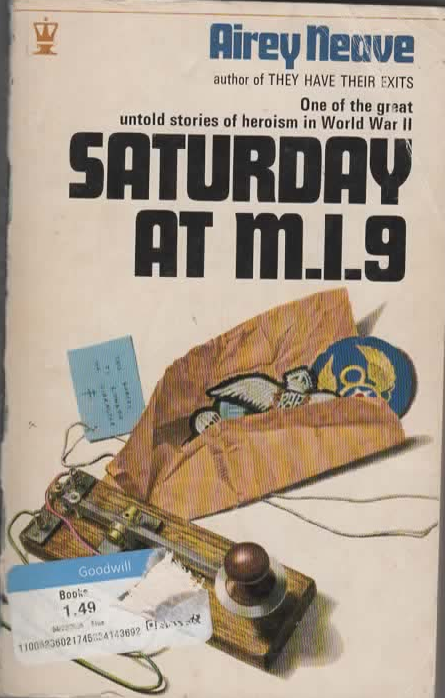
The ignominy of Baker’s actions was reinforced by his boss Airey Neave in his memoir about MI9, titled Saturday at M.I.9. He had introduced Baker earlier in his text, as an enthusiastic officer working for him in I.S.9 (WEA) [Intelligence School 9: Western European Area] but in Chapter 23 he masked Baker’s identity under the codename ‘Harrier’ when describing the officer who disobeyed orders by removing his uniform, going underground, and thus betraying the Ebbens husband-wife pair and other resistance workers, and putting stranded airmen at risk. (Nor did he identify Bachenheimer.) A quisling reported Baker to the Gestapo, and the Ebbens were shot. Neave pointed out that ‘Harrier’ was now dead. He published his book in 1969, three years after Baker died. Yet Baker had been awarded a Military Cross in the autumn of 1944, just as his status as a POW had been confirmed. Why was such a hasty recommendation made, and by whom? Was his disgraceful behavior buried? In his biography of Neave, Public Servant, Secret Agent, Paul Routledge writes (p 153) that the events ‘deeply troubled’ Neave, ‘harmed relations with the Dutch Resistance and prompted a post-war enquiry’. It seems that the outcome of that enquiry was stifled.
In any event, the Prison Governor at Wormwood Scrubs denied any access to Baker, and one could conclude from the file on Stainforth’s correspondence (at CAB 106/1110) that Stainforth might have chosen to withdraw from his collaboration with Boeree. Maybe he could not overcome his doubts and thus could not endorse Boeree’s claims to have ‘refuted’ Pinto’s rumours. He did, however, usefully point out to Latham some examples of Pinto’s distortion of the facts:
Oreste Pinto had, of course, nothing to do with the capture of Lindemans. Lindemans’ arrest on the 28th October 1945 was effected solely at the instigation of Kapitein de Graaf, a Dutch officer serving on H.R.H. Prince Bernhard’s staff at the Chateau Wittouck in Brussels. It was carried out in Kapitein de Graaf’s office in the Chateau Wittouck, where he kept Lindemans talking until the arrival of Major Sainsbury, a British Staff Officer, accompanied by a party of about 15 British Military Police.
The official account of the arrest, in KV 2/231, makes no mention of Pinto – although he was informed of Lindemans’ detention, since he sent a message to Prince Bernhard about it via the latter’s aide de camp. Verkaik ignores the military record, and he chooses to trust Pinto’s statement that he was able to ‘insist’ that he be present at the arrest, a highly unlikely insertion. Verkaik (using the Lindemans file at KV/231) does, however, register that the report sent to MI5 in London recommended that Pinto not be chosen to interrogate Lindemans owing to their ‘personal enmity’.
Thus Boeree replaced Stainforth with Bauer, but the book based on their collaboration was not published in English until 1967. Peter Baker died in November 1966, at the young age of forty-five. What happened in those intervening years has probably been lost to posterity, but did the Cabinet Office regard any deposition of Baker as potentially embarrassing? What were the results of the official enquiry? Were the flaws in Boeree’s analysis as serious as Stainforth suggested they might be? Did he in fact manage to interrogate Baker, and did he discover that the convict had revealed precise details of the planned Arnhem landings to Lindemans? Was it safe to publish only when Baker was dead? Why did the British Government not openly challenge Pinto’s claims? Did it perhaps regard them as a useful distraction from the JOSEPHINE story, which was of course not yet available? Perhaps most significant is the fact that all those persons who had implored Boeree to tell them that the deaths of their relatives had not been caused by a Dutch traitor should have been equally distraught if they had known that the casualties were due to another kind of betrayal – their lives having been sacrificed in a disastrous strategic plan that should never have been set in motion. Trying to ‘refute’ the treacherous behaviour of Lindemans simply distracted observers from the true facts.
I thus decided I had to read Boeree’s account, which came out under Cornelis Bauer’s name in 1966.
‘The Battle of Arnhem’ by Cornelis Bauer (1966)
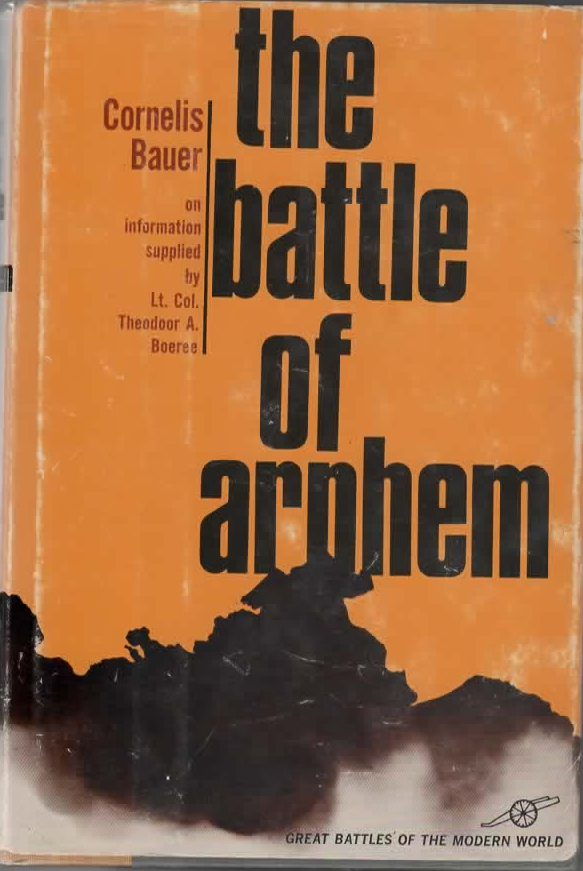
Any direct authorship of the work by Boeree had disappeared by the time of publication. The trace of collaboration with Stainforth had been firmly buried: the book was written in Dutch, published in 1966, and then translated into English by D. R. Welsh. It is introduced as deriving from ‘information supplied by Lieutenant-Colonel Theodoor A. Boeree’. The flyleaf informs us: “The fiasco was not the result of poor planning, but of a combination of circumstances that could not have been foreseen or forestalled.” That is of course nonsense, as Lieutenant-General Horrocks’ rather embarrassed Foreword confirms.
In his Foreword, Horrocks wrote: “I am particularly glad the Authors have proved conclusively that the plans for MARKET GARDEN . . . were not disclosed to the Germans beforehand by a Dutch traitor as was widely believed at one time.” The authors did no such thing: it is impossible to ‘prove’, conclusively or otherwise, that something of that nature did not happen. They in fact qualify that more authoritative claim when they introduce the theme, by writing that the book ‘attempts with the aid of documents to refute the myth that Arnhem was lost as a result of betrayal’. Yet all that Bauer and Boeree do, in fact, is to record the sometimes equivocal statements by German generals that no Dutch agent revealed anything, and that they had been taken in utter surprise. For instance, the dubious Student is quoted in a statement by him saying that the landings at Eindhoven had surprised him: he provides no comment on the Arnhem operation.
Again, the authors are very coy: they never name Lindemans, nor do they explain to the inquisitive reader where all those spurious rumours originated. In order to address the ‘myth’ properly, they should at least have described it in detail, and have delineated its origins, inevitably the outpourings of Oreste Pinto, another Dutchman. Moreover, they never mention the project with Stainforth. Boeree was, by all accounts, very eager to have his book published in English, but it would seem that the doubts that Stainforth expressed about the integrity of Boeree’s original story had not been dissipated, as I suggested earlier. Boeree’s line had consistently been that MARKET GARDEN had not been betrayed because the Germans took no advantage of any leakage. Yet that is akin to saying that Philby and his gang should not be considered traitors because in 1943 the NKVD believed that it was being supplied with disinformation. The framing of the argument of course implies that there had indeed been an agent with intentions hostile to the Allies who had tried to pass on critical information, and a proper analysis would pursue that angle in an effort to ascertain where else the information might have gone.
What Bauer and Boeree do clearly explain is the movement of Field Marshal Model’s HQ to an exposed site near the eventual landings north-west of Arnhem at the beginning of September, a week before Eisenhower had approved Montgomery’s plan. The details of the latter were feverishly worked out in England in conditions of tight security in the following few days: Horrocks did not announce to his commanders the details of the operation until September 16, at a cinema in Leopoldsburg, Belgium. Thus any insider information that Lindemans gained could not have derived from that briefing.
The last conundrum is the role of Oreste Pinto, whose assertions provoked so much frantic denials. Was he on to an important truth, or was he merely engaging in his occasional exaggeration and distortion? Did he expand his odium for Lindemans into something more damaging, but untrue? Did the British authorities pick on him because he was so unpopular? (He was accustomed to self-aggrandizement, and he had gained a reputation as someone with an eye for the ladies – to the extent that he managed to prevent the Abwehr spy Vera Erikson from being executed.) Or did they set out to malign and discredit him because what he claimed in his book and his speeches was deeply uncomfortable for the official story that they wished to promote? In his diary entry of November 5, 1944, Guy Liddell, when commenting on the Verloop incident, refers to Pinto as ‘our old friend’. Was there perhaps a touch of sarcasm in that epithet? And why would Boeree go out of his way to claim that Lindemans was innocent because the Germans had not acted upon his intelligence? Did he merely want to try to absolve the Dutch of any complicity? It is all very mysterious, and warrants further investigation.
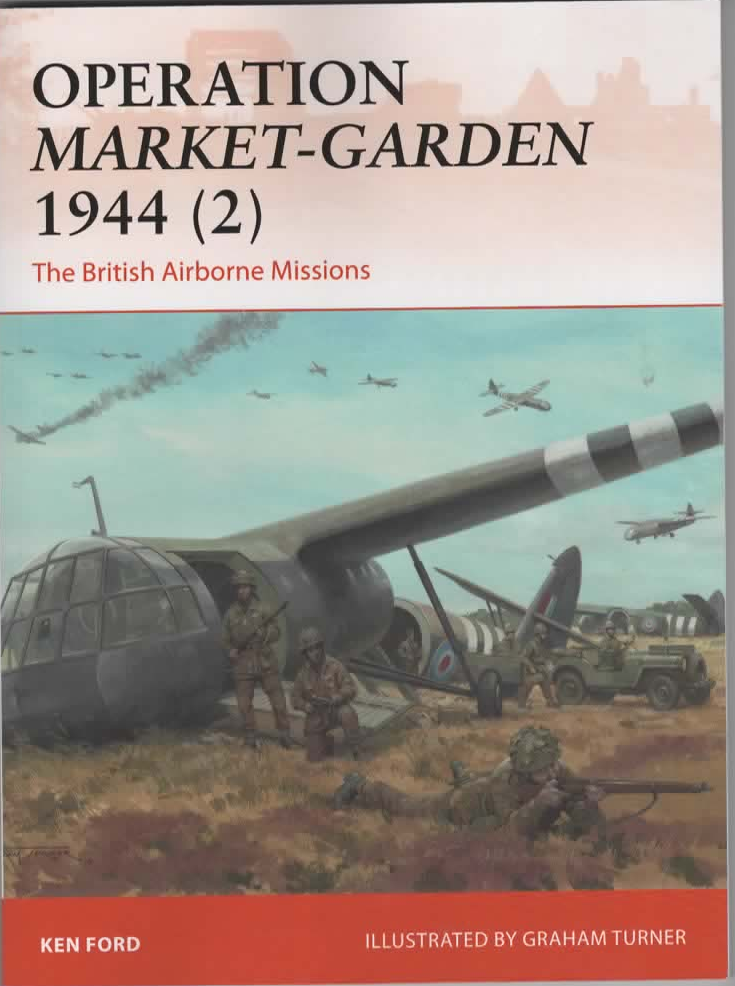
I could spend the rest of my life reading more books on the Arnhem disaster. I decided that, for the purposes of this piece, I had to read three more items that were especially signposted in Ken Ford’s Osprey publication (see above), as well as a memoir by the MI9 historian, J. M. Langley. The first was the article in Encounter magazine of June 1981 by Louis de Jong, titled Was “Arnhem” Betrayed? Verkaik uses this source in his description of Lindemans’ approach to Kiesewetter, but I needed to examine the original. (De Jong wrote the official History of the Kingdom of the Netherlands in the Second World War.) This, in turn, demanded that I read Hermann Giskes’ original account in London Calling North Pole. The second was another general history by William F. Buckingham, published by the History Press in 2016 in its Battles and Campaigns series, simply titled Arnhem 1944. The third was an unusual item by Anne Laurens, a Dutchwoman, but originally written in French and published in 1969, titled Betrayal at Arnhem, which had been cited by Verkaik. I then acquired Fight Another Day by J. M. Langley. I was extremely glad that I had interrupted my research and writing to await the arrival of these four volumes. And then, very late in the day, I received – electronically – some vital new information written by Peter Tennant (the SOE chief in wartime Sweden) and a book on Kraemer by the Norwegian Tore Pryser, gratifyingly translated into English.
Was “Arnhem” Betrayed? [Encounter]
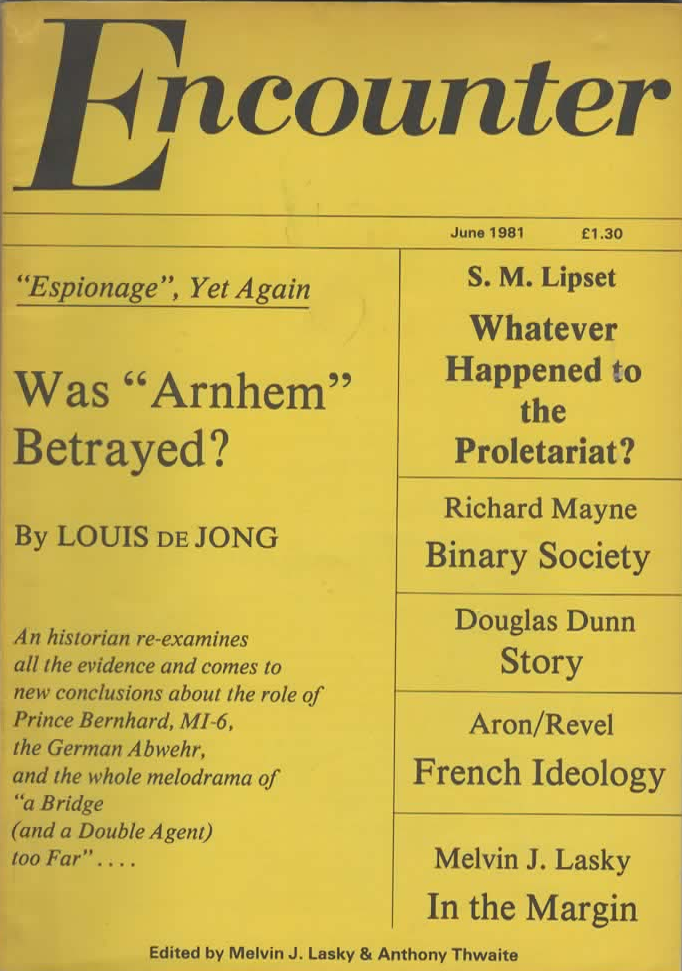
Verkaik does not do justice to de Jong’s article. It has three main threads: i) the details of Lindeman’s exchanges with the Abwehr; ii) the laxity of the Allies in releasing information about the three-pronged assault; and iii) the equivocal response of the Abwehr, the Wehrmacht and the SS. In this dissertation, however, de Jong inserts some alarming clues that point both to dissimulation by the British authorities and self-delusion by the Dutch, as well as leading to the conclusion that Verkaik indulged in some selective extraction of facts.
For instance, de Jong starts off with the astonishing findings by the Netherlands Parliamentary Commission in 1950 that ‘in full conformity with a statement by British intelligence’, Lindemans had not reported to the Germans the impending Allied attack on Arnhem planned for September 15. While the evidence de Jong later shows proves that that claim was patently not true, Verkaik wrote (p 84) that an ULTRA interception had picked up the report that the Abwehr officer Christmann had compiled from Lindemans’ revelations. Christmann had taken Lindemans to Driebergen to see Kiesewetter after Lindemans had already briefed Student’s HQ at Vught. Thus the British, confident in 1950 that their ULTRA secrets would not be published, were able to downplay with confidence any subversive role by Lindemans – and thus engage the ire of Oreste Pinto, who was forced to admit to the Dutch Commission that his evidence was based on hearsay.
While the Germans overall claimed after the war that, while they expected some attack they had been taken geographically by surprise, the facts are more complex. Immediately after Lindemans’ visit to Vught, Student’s HQ reported that tanks were being prepared for an attack on Eindhoven, and it contained the ominous phrase ‘Intelligence Service No. 6 with Captains Baker and Ross also located there’, unwittingly betraying the now-known connection between Lindemans and Baker. Yet de Jong asserts that the whole operation was known to scores of war correspondents, who had been briefed about ‘landings between Eindhoven and Arnhem, with the Zuider Zee as the final objective’, days before the assault began on September 15. The Allies must have been supremely confident that they would not face substantial opposition if they so broadly and cavalierly issued such information. Lindemans was one of the beneficiaries of such intelligence: that forces were advancing from Beeringen towards the Zuider Zee; that airborne forces would be dropped over Renkum and Heelsum villages near Arnhem [i.e. north-west of the city, across the river!]; the password to be used by the Resistance; that the airdrop was planned for September 17.
The other key character is Ernst Kiesewetter, who had replaced Giskes as head of the Abwehr in Holland. De Jong states that, after the events, Kiesewetter wrote a long report that has mysteriously not survived. Kiesewetter did not wholly trust Lindemans, since he knew that he had worked for British Intelligence. He suspected that Lindemans might be bringing disinformation, and he thus held back on passing on the news. Thus, when the Arnhem drop occurred, Kiesewetter must have realized that his failure to react and report accurately – by his neglect endangering Model and his staff, who had moved close to Oosterbeek, near the landing-zones, on September 13 – would be held against him. As de Jong writes: “That is why he made no mention of Lindemans in his report to Giskes, and Giskes likewise said after the war that Lindemans had made no mention of Arnhem”. (Verkaik, apparently trusting Hinsley, offers an alternative explanation: “Kiesewetter, perhaps jealous of his predecessor’s success, didn’t tell Hermann Giskes about the reappearance of Lindemans at Driebergen until after the battle.”)
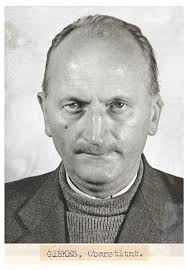
Moreover, de Jong provides crushing evidence. Lindemans visited an escape-line helper on September 16, alerting her to ‘special action the next day probably near Renkum, Heelsum or Oosterbeek’. The information could not have been more precise.
Yet, as further evidence that few of these witnesses can be trusted, I refer to the interrogations of Abwehr officers Giskes and Huntemann that took place at Camp020 in June 1945. Giskes regarded Lindemans as his finest agent, but Giskes was to his regret not at Driebergen when Lindemans was brought there on September 15. Huntemann had been present when a call came through for Kiesewetter at about 4:30 p.m. concerning Lindemans, and Huntemann was able to advise Kiesewetter (who knew nothing about Lindemans) of their agent’s importance. Kiesewetter told Huntemann of some important information Lindemans wanted to impart, but Huntemann had to leave before Lindemans arrived.
When Lindemans left the next day, to cross the lines near Eindhoven, Kiesewetter told Huntemann that ‘Lindemans had brought information about an Allied air-borne action which was expected shortly in the Muenster/Duelmen area, but did not mention Arnhem’. (He said that Lindemans had gained his intelligence from the Hotel Metropole in Brussels.) Yet Muenster/Duelmen is over eighty miles away from Arnhem, in Nordrhein-Westfalen! How could that location have been confused with Renkum and Heelsum? Yet, in February 1945, Giskes told Huntermann that Lindemans had given him the information about the Arnheim [sic] landing. Although Giskes added that he was very annoyed that he had not been informed when Lindemans came from Hilversum to Driebergen, he told Huntemann that Lindemans had blown the whole Arnheim operation. Yet there is no evidence that Giskes had seen Lindemans again before the latter’s death. Why did Gilkes come to that conclusion, and why was he not challenged on it?
De Jong wraps up his article by describing how Kiesewetter gave Lindemans a fake pass to cross back to the Allied lines. It was detected, and Lindemans was locked up. Baker discovered the incarceration, was livid that his best agent had been detained, and obtained his release. Lindemans pulled the wool over de Graaf’s eyes at Prince Bernhard’s HQ, and continued his work for them, until Verloop confessed to Pidcock of British counter-intelligence that Lindemans had been an Abwehr agent since March. That brought Pinto back into the picture, and led to Lindemans being taken to Camp020, where he denied betraying Arnhem. My conclusions must be that Student learned about the locations of the landings, and quickly adjusted, while Kiesewetter acted cautiously, and had to cover up. I would thus disagree (partly) with the second part of de Jong’s final assessment: “Was Arnhem Betrayed? Yes. Did betrayal have any effect on the course of the war? No.”
London Calling North Pole
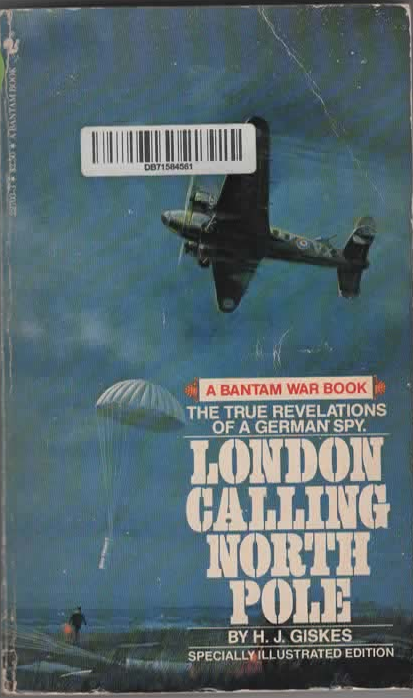
Given how contradictory these accounts were, I had to go and inspect what Giskes wrote in his 1953 book about the ‘Nordpol’ deception campaign against SOE, and his follow-up with Lindemans. At the end of 1943, Giskes had been appointed head of FAK (Frontaufklärungskommando) 307, with responsibility for military counter-espionage in Holland, Belgium and Northern France, so he was somewhat removed from the action. He was in regular contact with Lindemans thereafter, and he cites a report from him dated August 25, 1944, when Lindemans asserted that the Allies ‘had the intention of advancing via Namur in the direction of Eindhoven so as to seize the river crossings at Nijmegen and Arnhem’. Thus, even though this thrust was part of the abandoned COMET Operation, the Abwehr had been warned about the enemy’s geographical objectives.
Giskes’ story is garbled. He introduces a new officer, Wiesekötter (who does not appear in Verkaik’s fable) – an officer whose FAK265 unit had been separated from Giskes’ command earlier that month, but who worked out of Kiesewetter’s HQ in Driebergen. On the night of September 15 (when Giskes writes that the airborne landings in Nijmegen and Arnhem had already started!), Giskes received a telephone call indicating that Lindemans had arrived there, reported, and already left. Giskes was unable to make contact with Wiesekötter, however, and it was not until the end of the month, when he received a report from Wiesekötter that relayed what Lindemans had said about a coming airborne attack. Giskes never learned what Lindemans had told Student’s intelligence officer at Vught, but Wiesekötter passed on to him what he himself had been told. Giskes’ conclusion? “In any case there was no mention of Arnhem – King Kong had not mentioned it probably because he simply did not know in what area the airborne attack was going to be made,” and he continued by declaring that Lindemans was not the betrayer of Arnhem because he was not in a position to betray it.
Giskes never saw Lindemans again, and he learned in November that he had been captured. Thus, in his memoir, Giskes directly contradicted what he reputedly told Huntemann in February, that Lindemans had personally given him information about the landings, and that Lindemans (his best agent) had been primarily responsible for the debacle at Arnhem. Several persons were not telling the truth here, but the inquisitors did not appear to know how to break them down.
The interrogations of Giskes and Huntemann at Camp020, in June 1945 (available in KV 2/961 and in HS 6/750), give a slightly different account. In Appendix IV, Giskes claims that it was only weeks later that he received incomplete reports of what Lindemans had communicated. Essentially, they ran as follows: “Reckon with an English attack, direction Eindhoven, timed for Sunday. Airborne troops, in large numbers, are in readiness to start.” The Camp020 officer who wrote the Interim Report on Giskes wrote, however: “ . . .it is interesting to note the claim that LINDEMANS was responsible for supplying advance information to the FAK about the Allied airborne landings in the Arnheim [sic] and Eindhoven areas”, an observation that goes beyond what Giskes and Huntemann apparently said. (It is in this file that Huntemann’s testimony about Muenster/Duelmen, what he learned from Kiesewetter, can be seen.) That prompted A. B. Stamp, of W.R.C.1/A, to question the testimony:
Some of the information given regarding LINDEMANS is new to us. There had hitherto been no evidence that LINDEMANS gave away or could have given away any Allied military plan. The theory that he had been responsible for passing information regarding the Arnhem operation was based on a mis-reading of the information from most secret sources. Nor were we aware that of the fact that LINDEMANS had been put in touch with agents who were parachuted into the northern Dutch province.
Very tantalizing. It would be nice to know what that ‘mis-reading’ had been about. On the other hand, Stamp and his colleagues may not have been aware at that time of the whole HARRIER (Peter Baker) episodes. But why did the interrogating officer augment what Giskes and Huntemann had said by introducing Arnhem?
Arnhem 1944
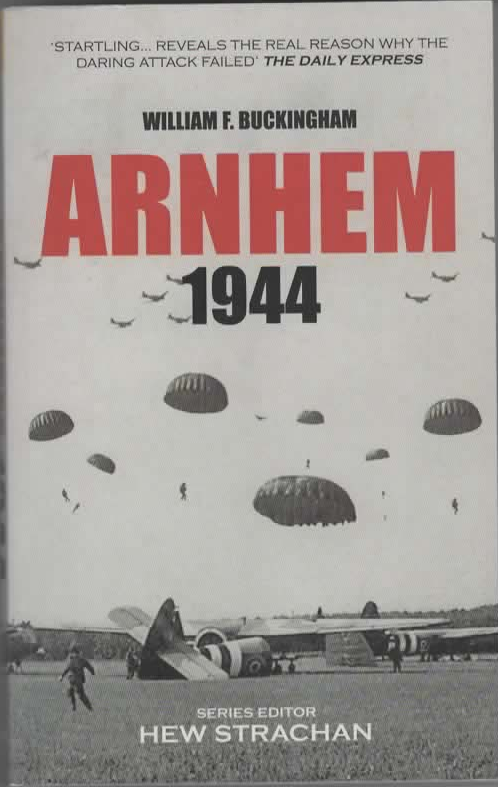
Buckingham’s book is all business – military business. There is no mention of betrayals, espionage, or counter-espionage. You will not find Kraemer or JOSEPHINE, Lindemans or Baker, in the Index. Instead the author brings a deep knowledge of military structures, of the politics behind the appointments, and of service rivalries, to shed light on the reasons why Arnhem went so horribly wrong. Most of the book consists of an analysis of the field operations, familiar from other accounts, but he laces his text with much sharper insight, and he is not afraid to state his opinions quite baldly.
The first part of the book shows Buckingham’s withering assessment of the culpable Allied military leaders. He considers Montgomery, Brereton, Browning, Horrocks, and Urquhart all totally unsuited for their jobs, whether from lack of relevant experience, over-promotion, vanity, ambition, or illness, and he is scathing about the poor decisions they all made. He is bitter about the domination of the RAF over the whole planning cycle: “The result was an airborne planning machine totally controlled by the RAF, in which the planners formulated their schemes totally divorced from any operational considerations but their own, and with no requirement to act upon, or even acknowledge, those of the airborne soldiers tasked to carry them out.” This meant that the Air Ministry made the decisions about the selection of the landing areas, with those resolutions being meekly accepted by the MARKET GARDEN planners. It is quite extraordinary.
He also makes the strong point that one of the major reasons that the paratroop and glider operation was set in motion was that those assets had been sitting idle for too long. Between the Normandy landings and September 5, fourteen airborne operations had been moved forward to an advanced stage before being cancelled, mostly because ground troops had made more progress than expected. It was important to deploy the highly trained personnel and specialist equipment, otherwise they would have been wasted. Of course, they were ‘wasted’ in a much crueller fashion. He also draws attention to the much abused Poles, who were not properly consulted, whose advice was rejected, and whose landing plans were shoddily messed around. The result was that their efforts were for naught, with much loss of life. And then Browning took it out on them, blaming Sosabowski and his troops for the overall failure. It was a shameful performance by the dandified Browning.
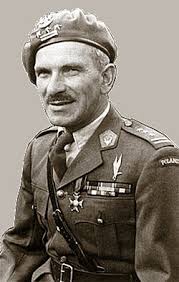
I thought that Buckingham was less incisive over the change of plans to drop the troops north of the Rhine rather than on the south side. True, he demolishes the RAF’s arguments as to why the zones further from the Arnhem bridge were chosen, but he does not appear to have internalized the contradictions in tactics that derived from the final plan. He quietly observes that a glider coup de main on the south side of the bridge would probably have been successful, but he never follows up this point adequately, referring to schemes to find boats to cross the Rhine from the south side (to support Frost’s defense of the north side of the bridge) without acknowledging the irony of the situation. Meanwhile, the Poles had landed at a site further from the bridge, but nearer the supposedly available ferry crossing to get to the north. He closes by reinforcing the fact that ‘putting the entire first lift south of the bridge would have avoided the problems that ultimately doomed Frost’, yet he ends rather weakly by almost apologizing on Montgomery’s behalf: “In the narrow sense, however, it is clear that Market Garden could have achieved all its objectives, if only because despite all the errors, needless and otherwise, it was such a close run thing.” His text suggests otherwise.
Betrayal at Arnhem
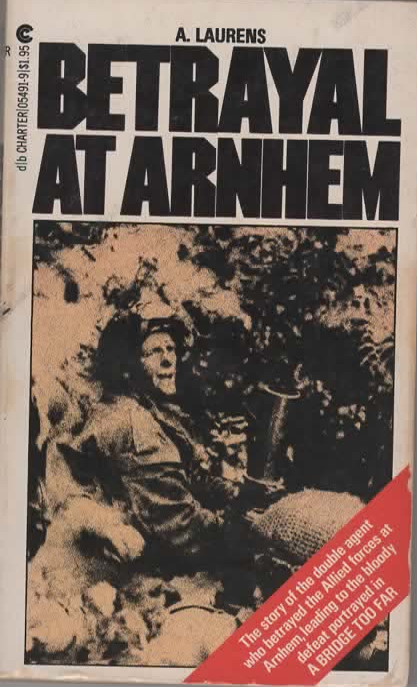
I was prompted to read this book by a few references that Verkaik made to it. It was written in 1969 by a Frenchwoman, Anne Laurens, was translated by Sarah C. Crouch, and appeared in English in 1971. In his Appendix 2, Verkaik cites Laurens as writing that Lindemans had not only met General Student’s intelligence chief at Vught, but also Student himself, and he gives a page reference. If that were true, it would solidly refute Student’s postwar claim that he had known nothing about the impending attack. And on page 281, he claims that Laurens suggested that Lindemans may have been working for another unnamed third power. This time, he offers no page number.
The book was overall disappointing. Laurens had apparently interviewed members of Lindemans’ family after the war, and had spoken to some Dutch officials. She was overall sympathetic to Lindemans, seeing him as being pushed into a double-agent role, and then being sacrificed afterwards because the British needed a scapegoat for Arnhem. There is much invented dialogue in the book, which is an overwrought compilation. As for Student, the passage concerned does not indicate that Lindemans had had a face-to-face meeting with Student: it describes only that Student had read Lindemans’ report by the morning of September 17. (The extract appears on page 14 of the English edition, which suggests that Verkaik had been working from the French edition: then why does he refer to the book by its English title?) As for the assertion that Lindemans may have been working for a foreign power, I did not notice it. If Laurens seriously wanted to reinforce that point, she probably would have made much more of it.
Yet the most disappointing aspect of the book is that, in her eagerness to exculpate Lindemans, Laurens stresses that General Bittrich was warned about the Arnhem Operation as early as September 8. Her final sentence runs: “Official documents concerning the battle of Arnhem will see the light. On that day we will know who warned Willy Bittrich, and Christiaan Lindemans will be cleared.” That supposition is based on a complete misreading of the situation. As Verkaik himself writes (p 181), Bittrich had heard from Lindemans about the coming COMET Operation in August. COMET was subsequently cancelled. Eisenhower did not approve the MARKET GARDEN plan until September 9, so the whole argument of Laurens’ book was flawed.
Finally, I had hoped to gain some information about Baker and Pinto from Betrayal at Arnhem, but Laurens was so confused about the set-up that she has Baker working for ‘General Neave’, leading one of the PHANTOM ‘advanced reconnaissance’ units, and elsewhere has him working directly for Pinto. Luckily this was no more than an evening’s read: the pickings were few, although the process helped to reinforce for me Verkaik’s shaky and very selective use of sources.
Fight Another Day
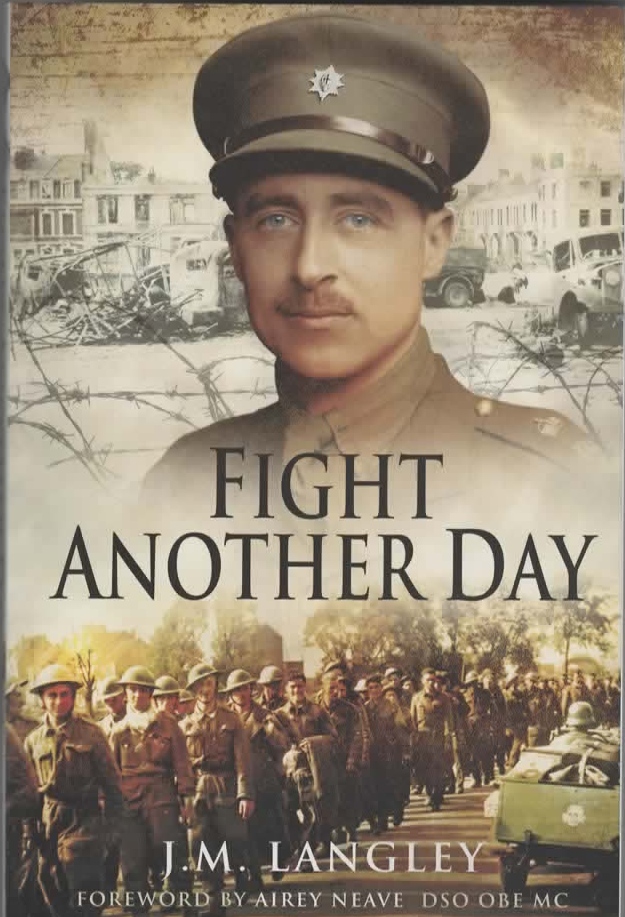
Langley had provided some extra detail in his memoir, published five years before the MI9 history. It offers a slightly different perspective, in that Langley openly accepts responsibility for Lindemans’ subsequent action. Despite receiving Pinto’s suspicions, he did not act upon them. “In requesting a final security clearance I made no reference to these suspicions and received authorization for the mission to go ahead”, he writes (p 227). Langley expresses uncertainty as to whether Lindemans betrayed MARKET GARDEN. He himself was officially exonerated (suggesting that an official inquiry took place), and he states that ‘no one in IS had any knowledge of the plans for operation “Market Garden”’, adding that the ‘exhaustive enquiries’ that followed indicated that Lindemans may have been in contact with individuals who knew about the plans to use airborne divisions, but that he could not possibly have discovered the actual dropping zones. Thereafter, he trusts the assertions by the German generals that they knew nothing.
Concerning the ‘Harrier’ incident, Langley is a bit more forthcoming here than in what he later recounted with M. R. D. Foot. Likewise, he does not identify ‘Harrier’ (nor does he name Evans, his officer who told Baker’s father that his son had been shot by the Gestapo). Yet he does describe how Evans, without informing Crockatt or Langley of his action, contacted Baker’s father to inform him that his son was dead. And then Baker senior, without attempting to verify the facts – he must have been distraught – referred the whole matter to his MP. Langley writes: “On security grounds Norman Crockatt was able to stop a Question in the House, but there was a long time-wasting inquiry which engendered much recrimination before Airey [Neave] and I were fully cleared, just prior to Harrier being reported safe and sound in a POW camp”.
I wonder what the exact terms of the inquiry were, and who its members were. Was it merely investigating operational irregularities that should strictly have been of concern for the Army? Why did Neave and Langley have to be cleared, if it was obvious that Baker had disobeyed orders? Was it related to the Lindemans business? Or did it go into deeper affairs, since Baker’s actions probably cost the lives of other would-be escapees? Langley writes that, soon afterwards, when matters were not helped by a loose-lipped, smooth-talking journalist who managed to get wind of Neave’s Top Secret report, and leak information about the PEGASUS operation (which was designed to retrieve the remaining stranded men) to the London press, 120 men were ambushed by the Germans on the Arnhem-Ede road, with several deaths. This is another aspect of the Arnhem Betrayal that has not had its full story told. Yet, if the Members of the House of Commons had had an inkling of what errors and misjudgments had plagued Operation MARKET GARDEN, they could have initiated Inquiries that would have consumed their entire parliamentary lives.
Peter Tennant
I must mention the memoir by Peter Tennant, press attaché at the Stockholm Embassy, and undercover SOE chief in the capital. Somewhere (I forget where) I picked up a reference that Tennant made to Falk and Kraemer in his 1992 book Touchlines of War, and I tried to acquire the volume. Yet it was extraordinarily elusive: no copies available on amazon or abebooks. Had the book perhaps been withdrawn, and all extant copies pulped, because of some security exposure or libelous statement, I wondered? It had been originally published in Swedish, a language in which Tennant was fluent, so maybe it had escaped the radar beforehand? I thus posted a request on the SOE on-line chat group, and my longstanding colleague Robert Pearson in Norway immediately replied, saying that he owned a copy. He graciously agreed to scan the relevant pages for me, and I was able to inspect yet another version of the story.
The exercise was quite a revelation. Tennant has a radically different spin on the events. First, Oxenstierna. Tennant reports that Oxenstierna was recalled at the request of the British authorities ‘who discovered that his reports were being relayed to the Germans under the cover name of ‘Josephine’ by a Doctor Karl Heinz Krämer of the Abwehr’. This, again, is a weird way of phrasing it; Kraemer himself was a German. Tennant adds that a pair of girls in the Swedish General Staff slipped him copies of Oxenstierna’s reports, unknown to the naval attaché himself. An intensive investigation took place, with all conceivable sources, including one of Sir William Strang’s domestics, being looked into, and eventually Oxenstierna, after going to Stockholm on leave, was asked not to return. Then the author cryptically states that ‘we succeeded in penetrating Krämer’s office and obtained copies of his messages’ without giving any indication of who had achieved that breakthrough. And was Oxenstierna guilty of passing on secrets, or were there in fact dangerous leakers who were never found? Tennant offers no opinion, only to add that Kraemer was properly duped over the Normandy landings, but ‘guessed right’ over Arnhem.
Yet his account of the infiltration into Kraemer’s home is even weirder. It runs as follows. Tennant became acquainted with a verbose Norwegian named Egil Rønne-Petersen, who provided him with intelligence. Tennant was not able to exploit this until Peter Falk arrived to replace Pincher Martin as the MI6 representative (not a strictly correct statement), at which time he handed R-P (or ‘R.P.’ as he also calls him) over to Falk. Tennant also passed on an anti-Nazi Austrian woman code-named ‘Riga’, whom, rather oddly, he claimed never to have met until 1951, although he had promised her a British passport for her services when he was in Paris. When they reminisced, it seemed that Riga had penetrated the German Legation, obtaining information including the activities of Kraemer. He repeats the account of the girls at the Swedish General Staff providing Kraemer with Oxenstierna’s reports. Yet the ‘mystery’ of how the British had continued to intercept Kraemer’s ‘so-called Josephine reports’ after Oxenstierna’s departure was, for Tennant, finally clarified ‘when Falk managed to get Riga to take an impression of Krämer’s key which R.P. had copied and future access to his papers was secured’. Just like that. How had R.P. gained a copy of the key, for example?
This seems to me to be absolute nonsense. The real mystery was not how access was gained to Kraemer’s messages (which was obviously through ULTRA intercepts), but who the source was now that Oxenstierna was no longer in London. Elsewhere, Tennant tantalizingly records how he was able to use Riga to pass on disinformation to Doctor Wagner, the head of the Abwehr in Stockholm, thus perhaps giving substance to Hesketh’s claims [see above]. Yet, at the same time, Tennant’s fanciful explanation simply throws even more doubt on the varieties of stories that Falk put together. I do not believe that these passages could have constituted a security risk, but they merely reinforce the theory that a large number of tall tales were being woven around Karl-Heinz Kraemer, and his woefully vulnerable apartment.
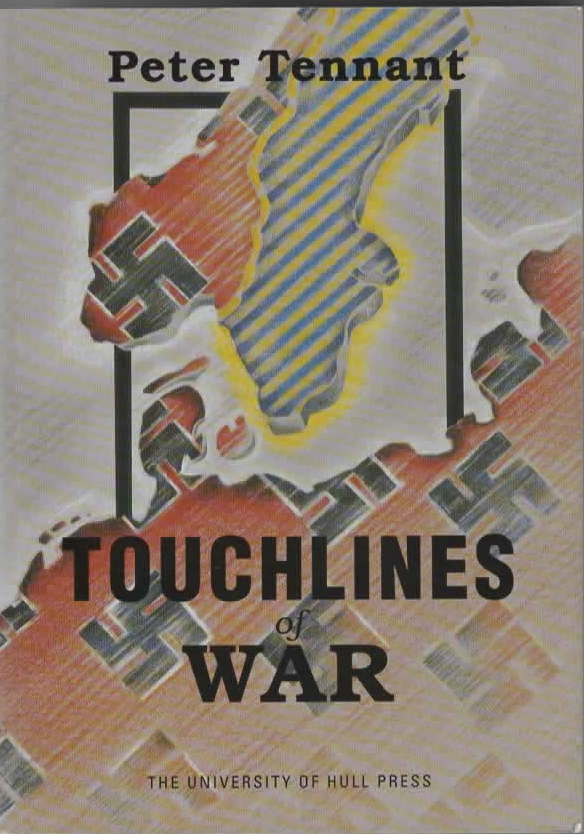
[I have since managed to acquire a copy of Touchlines of War, which I am currently reading. I note, also, that Tennant (born 1910) followed Anthony Blunt (born 1907) from Marlborough to Trinity College, and that the Counsellor at the Stockholm Embassy, William Montagu-Pollock (born 1903) was also an alumnus of both institutions. I see nothing ominous in these connections, however: the Bletchley Park hero Gordon Welchman (born 1906) pursued the same academic route. Nevertheless, the institutional ties probably facilitated arrangements between the Stockholm outpost and MI5 and the TWIST Committee.]
Lastly, Robert Pearson generously provided me with another bonus – an electronic version, in English, of Tore Pryser’s Norwegian book on Kraemer, published in 2015, titled Storspion, dobbeltagent eller svindler?, translated as Great Spy, Double Agent or Scammer? It is an extraordinary work. The author has performed some stupendous feats of research, yet he has produced something utterly indigestible. Every conceivable ‘fact’ about Kraemer has been assembled, and the Abwehr officer’s activities are surrounded by a cavalcade of names that left this reader exhausted. Overall, Pryser treats each source with equal respect. He lists conflicts, but he does not attempt to resolve them. One or two nuggets about Kraemer appear, however, for instance that the courier service between Great Britain and Sweden was not active at the time of MARKET GARDEN, which would challenge the Verkaik theory that Blunt slipped some vital documents into the Swedish diplomatic bag for them to arrive before kick-off. Pryser is also explicit that Kraemer’s main sources came for the pool of talent at the Swedish Ministry of Defence, but the proper study of this 300-page work is beyond my capabilities for now.
Summary and Conclusions
What to make of this mélange of unreliable memoirs and admissions? Whether out of ignorance, or driven by a mission to prove a point, or deriving from a need to conceal a clandestine role, or from political pressures, or because of a personal deep secret, none of the various contributors to this saga can be relied upon for a thoroughly truthful account. Yet, just because they all lied occasionally (or at least concealed some of the truth), it does not mean that they were mendacious all the time. I see an Unman, Wittering and Zigo-type roll-call of dubious sources: Baker, Bittrich, Blunt, Boeree, Brereton, Christmann, Falk, Giskes, Hesketh, Hinsley, Horrocks, Howard, Huntemann, Kiesewetter, Kraemer, Langley, Lindemans, McCallum, Neave, Onodera, Pinto, Schellenberg, Stainsforth, Student, Tennant, Verloop, Wiesekötter. They all had reasons to distort what actually happened, and it is a challenge to pick from their testimony what sounds plausible and is indeed verifiable. Without spending an exorbitant amount of time going through the sources that Verkaik used – and a lot more, besides – it is impossible for me to come up with an objective and comprehensive assessment of exactly what occurred.
Yet one aspect of the case cries out for crisper analysis – the role of Kraemer. So many clues undermine the narrative that presents him as an effective Abwehr spymaster. The identity of JOSEPHINE dominates the discussion. As McCallum wrote in her conclusions of her report: “One thing is certain. Had JOSEPHINE been a real agent, she would have had to be a member of the deception staff!”
Consider the following:
- Hesketh and Howard described Kraemer as a ‘uncontrolled agent’, similar to OSTRO, but suggesting he was acting at least partially on the behalf of the Allies.
- Hesketh wrote that Kraemer ‘was taking his cue from us’.
- Hesketh, a member of the Ops (B) Committee that planned deception for FORTITUDE, failed to follow up the paradoxes and contradictions in Kraemer’s activities.
- Much of the intelligence that Kraemer supplied to his German masters corresponded with what the controlled agents BRUTUS and GARBO were reporting.
- Hesketh described Kraemer as passing information ‘to the Germans’, even though Kraemer was a German himself. (So did Tennant.)
- Several German intelligence analysts (including Von Posadrosky and Krummacher) thought that Kraemer might have been working for the British.
- Blunt, Liddell and Menzies planned to use the Swedish attaché Cervell in London as a means of passing disinformation to Kraemer.
- In the report he compiled for Moscow regarding the TWIST Committee, Blunt stated that one of his roles was to pass on disinformation using ‘suitable foreigners as unwitting channels’.
- In a report of April 4, 1944, John Marriott of B1A stated that ‘the evidence [related to a possible connection between Kraemer and Agent TREASURE] would not compromise the JOSEPHINE run by Stopford, nor would it affect the JOSEPHINE who appears on Secret Sources’. (see KV 2/145-3, p 24: Stopford was in B1L)
- MI5 failed to follow up seriously the possibility of leaks from the Air Ministry and other government organizations.
- Liddell failed to press for Cervell’s expulsion, expressing to the JIC his concern for not upsetting the Swedish government.
- MI6 was ‘lucky’ in being able to insert an agent into Kraemer’s residence in Stockholm, and to discover documents in his safe.
- Peter Tennant admitted to passing on disinformation to Kraemer via the mysterious Riga.
- A Czech report stated that Kraemer was working as much for England as he was for Germany.
- Peter Falk made a suggestion to his bosses in London that Kraemer should be bribed to work for the Allies (a suggestion that was nonetheless turned down).
- At the end of the war, the Swedes threatened to disclose Kraemer’s treachery to the Germans.
- Kraemer lied under interrogation at Camp020 without any punishment.
- Kraemer’s critical message of September 15 somehow was delayed, with impunity, suggesting that he had an Abwehr collaborator in Berlin.
- The leader of the Abwehr, Admiral Canaris, had been supplying intelligence to the Allies via Madame Symańska in Switzerland.
What this leads me to conclude is that MI5 and the London Controlling Section (with their various deception committees) treated Kraemer as an asset and a medium through which they could pass disinformation. He was not a ‘controlled’ agent, of course, unlike the XX members, whose communications were tightly managed by B1A officers. Kraemer had other sources, and that fact may have helped his overall disguise. Yet Blunt, Liddell and Menzies could aid the process by passing on, alongside the disinformation, ‘chicken-feed’ that would bolster his genuineness in the eyes of the Wehrmacht, and the Swedish Foreign Office was an excellent medium for carrying this out. It had been the occasional practice of the Double-Cross operation to pass on accurate information that ‘fortuitously’ arrived too late to be of use – a technique deployed with GARBO, for example. That would preserve the credentials of the agent for further deceptions.
But why would a deception committee pass on such critical information as the targets of paratrooper divisions if it would help the German defences? The fact is that the Germans were expecting an assault from the air. They knew that the three parachute divisions had been idle for too long, and that Allied generals were anxious to deploy them. Eindhoven and Nijmegen were obvious targets for a possible move towards the Ruhr. Arnhem lay just north of them, and the inclusion of Arnhem in the list would not have been a shock. They had received early warning through the abandoned COMET Operation. Yet they expected that, in order to secure the Arnhem Bridge on the Lower Rhine, the landings would take place on the south side of the bridge, not to the north. The decision to have the First Airborne Division land its gliders on the far side of the river was not taken until September 13. Kraemer’s message of September 15 mentioned only the environs of Arnhem, and it did not declare any location north of the river. In that sense, there was no ‘betrayal’.
And how did the British manage to exploit the Swedish Embassy in London? The depictions of Major Cervell, the air attaché at the time, present him as inquisitive, cantankerous, and disenchanted with England. (An excellent portrayal appears in McCallum’s report, at KV 2/157-4.) British officers who hosted him were frequently indiscreet, and he passed on what seemed like significant assessments of military capabilities and plans for future weaponry, to the degree that some called for his ouster. Naval Attaché Oxenstierna had indeed already been forced out in 1943 after British interception of messages from Kraemer to Berlin showed that the intelligence therein derived from information acquired by him. Secretaries in the Intelligence unit of the Swedish General Staff (Fst/U) in Stockholm were copying reports, and sending them on to Kraemer. (See John Gilmour’s article in Journal of Intelligence History, December 2023). After this event, Cervell was warned by his superiors to restrict his inquiries.
But he did not. John Bevan, the head of the LCS, had always been keen on using foreign diplomatic missions for deception purposes, and I suspect Cervell came into his orbit. His behaviour may well have been a charade, his affiliations still closely with the British, and Liddell and company may have encouraged him to present an antagonistic front while abetting the British propaganda cause. Cervell was made an Honorary Commander of the Royal Victorian Order in June 1956, which strongly suggests that he had been a solid ally in wartime. Thus his frequent communications to the Swedish government back in Stockholm may have been carefully curated by the deception committees. The insouciance of MI5 towards Kraemer’s disclosures, as evinced in his files, reinforces a familiar theme in my studies of British counter-espionage: senior officers were privy to secrets that could not be divulged to juniors, who must have wondered at the lack of urgency shown by their superiors.
As for the various ‘betrayals’, I have to classify them carefully. The scenario is reminiscent of the ‘Third Man’ fiasco, when the authorities could conveniently speak at cross-purposes about the source of tip-offs to Burgess and Maclean. First, there was the matter of revelations about the stillborn COMET Operation, which hinted at landings in the Arnhem area, and reached German generals before MARKET GARDEN was even conceived. Second came two aspects of betrayal of the Arnhem attack, namely concerning its timing, but also the exact location of the landing-sites for the leading force, i.e. north rather than south of the Rhine. Third is the post-Arnhem debacle involving the undisciplined behaviour of Peter Baker, and the subsequent embarrassment to the Dutch and British authorities.
How would I rank the seriousness of the betrayals? Without doubt, the primary guilt belongs to the MARKET GARDEN planners, and the generals who led it. While Lindemans’ actions were treacherous, the primary damage he caused had already taken place before the Arnhem assault. If he was passed information by Peter Baker, he probably did not understand its implications. It may have helped the Germans prepare a better defence to the MARKET part of MARKET GARDEN, but the Operation was doomed, anyhow. A large cloud of guilt must hang over Baker, however. He may have been foolish and too trusting when he passed on to Lindemans the details of the attack, but we do not know exactly what he told him. His conduct later was reprehensible, and the cover-up over the inquiry, and the elaboration of the Boeree story, point to dire misdeeds with appalling outcomes. JOSEPHINE in Stockholm is a mere side-show of little import.
The remaining mysteries loom around the missing evidence. Oxenstierna’s PF was destroyed, but what happened to that of Cervell, a critical link in the JOSEPHINE story? McCallum’s report cites it several times, but MI5 has chosen not to release it. (I have asked the Security Service about it, but I have not had a reply.) Was General Student interrogated? I cannot find indication of such. We rely on third-party accounts: his testimony could be critically useful. Similarly with Kiesewetter, an important witness and participant. There should be a file on him, but it does not appear to exist. What happened to him and Wiesekötter? And were Giskes’ lies investigated properly? What happened to the official enquiry into Peter Baker’s insubordination? There should be a report hidden somewhere in the vaults. Finally, Oreste Pinto. Is there an objective account of his activities to be found anywhere? We have his self-aggrandizing memoirs, and a record of some deprecatory remarks made about him that may or may not have been justified, but that is all.
So where does that leave The Traitor of Arnhem? I judge it to be a work of pure charlatanry. It adopts a guise of indulging in deep scholarship, using a broad set of archival sources, but all presented in a melodramatic way. Some (such as the Falk memoir) are unverifiable. In fact the references are mostly used very selectively, and frequently distorted. The claim that Blunt was the embodiment of Kraemer’s JOSEPHINE is pure fiction, and the major hypothesis that Verkaik presents, namely that the ‘betrayal’ of Arnhem was a plan concocted by the Soviets to ensure their successful conquest of Berlin a complete fantasy. The only real ‘betrayal’ at Arnhem was the incompetence of the Allied planners. It is highly regrettable that a book of such poor quality should be allowed to be promoted so vigorously onto an unsuspecting public. Critical ‘memory’ is now so degraded that it takes an exercise like this to debunk the whole fabric of Verkaik’s adventure. I know – I was half taken in on a superficial reading.