Contents:
Introduction
JOSEPHINE
The Sources (i to xix)
Summary of the Literature
The Krämer Archive
Parts 1 through 6
Part 7: The McCallum Report
Conclusions and Further Questions
Introduction:
This is a complex and demanding report, definitely classed as ‘A’ (Advanced) material. (WordPress informs me that it is ‘136 minutes read time’.) It serves as a follow-up to my earlier investigation into JOSEPHINE (see especially my ‘Summary and Conclusions’ at https://coldspur.com/verkaiks-traitor-of-arnhem-part-2/). I set out with the goal of shedding light on the existence and identity of the putative Abwehr spy with that name, but I soon concluded that that was a pointless exercise, because of the statements made by Karl Heinz Krämer under interrogation. (Krämer had frequently referred to JOSEPHINE as a source in his wartime messages from Stockholm to Berlin). My attention quickly switched to the methods by which MI5 and MI6 learned about Krämer’s actions and messages, which expanded the area of my research. I fell upon the bewildering phenomenon of ISTOC, which sounded like a Bletchley Park abbreviation, but turned out to be a creation of MI5 used to describe intelligence from Stockholm. During that process, however, I encountered a raft of misleading material.
Thus I ask the reader to be patient as he or she follows my methodology. I started out by recording my analysis of the written sources concerning Krämer that I had identified as important, studying them in chronological order, and carefully assessing what information the authors had access to at the time they wrote their accounts. It turned out, however, that instead of tracking a steady clarification of a puzzling phenomenon, I was faced with some bewildering and contradictory stories. When I arrived at a tentative hypothesis to explain the anomalies, however, I had to set out on an entirely new line of research, focusing more on telecommunications and Britain’s relationship with the Swedes, and I identified previously unconsidered works to locate and read. I then had to insert my analysis of these items in the proper place, chronologically. I was, however, not aware of the total effect of those paradoxes until I came to the end of the exercise, took stock, and came to some conclusions that have not been expressed anywhere else (so far as I am aware).
I then decided that it was important to go back and annotate my analysis with further comments made with this benefit of hindsight, in order to put the various sources in better context, and to correct some early misapprehensions that, as a relative novice in this domain, I had expressed. This process, I hoped, would give my piece greater coherence, but the fact that so many of the accounts I read have turned out to have been a mixture of guesswork, bluff, and deliberate obfuscation has meant that my merging some immediate responses with my retrospective editorializing may occasionally make my thread difficult to follow. (There may still be passages that jar: please inform me of them.) I believe, however, that it is important that the process and results of my investigation are laid out comprehensively for the benefit of posterity. I start below with the original introduction that I wrote as I set out on his task.
Readers who are interested only in the conclusions may prefer to jump to that section, rather than follow this lengthy exegesis.
JOSEPHINE:
This month, I return to my investigation into JOSEPHINE, the codename used by the Stockholm-based Abwehr officer Karl Heinz Krämer to conceal the persona of one or more of his informants. I believe that the key to identifying the various sources attributed to JOSEPHINE is closely tied up with the term of duty in London of Johan Oxenstierna, Swedish naval attaché, and former gold medal winner in the pentathlon at the Los Angeles Olympics. That is because of the evidence that Oxenstierna was being manipulated by the British authorities, and also derives from the popular equivalence in some quarters (encouraged by one or two intelligence experts) that JOSEPHINE was actually Oxenstierna himself.
As I explain below, the sources on JOSEPHINE are notoriously unreliable: those on Oxenstierna only slightly less so. Yet the survival of two critical Foreign Office files makes up for the fact that Oxenstierna’s Personal File, maintained by MI5, was destroyed – an event that provokes even greater curiosity on the part of the historian. Thus a summary of his relatively short term of duty can be made, a spell in which the aristocratic, debonair, and popular official felt that his honour had been severely attacked by British movements against him.
The bare bones of the story (mostly discoverable in FO 188/412 and FO 371/37132) run as follows. Oxenstierna, as the naval intelligence representative of an overtly neutral power, who arrived in London in 1942, enthusiastically applied himself to gathering information from official and unofficial sources in the UK, taking care that nothing he undertook could be construed as espionage. Many UK officials – especially in the Admiralty – harboured doubts as to how neutral a power Sweden was, since it appeared to be assisting Nazi Germany in manners beyond mere trade, such as helping German troop movements across the country to occupied Norway. There were pockets of strong fascist sympathy in the Swedish government, especially in the Navy, since the country had in the past few decades been much more concerned about Soviet encroachments than Nazi threats. The Finnish War of 1939-1940 was fresh in their minds. Yet the Admiralty had a complementary naval attaché in Stockholm, Henry Denham, who was involved with some sensitive missions, and it understood how delicate the balance was.
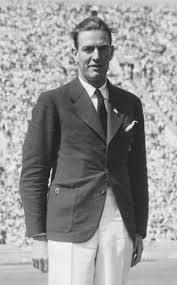
In the summer of 1943 Oxenstierna, in the eyes of the Admiralty, crossed the line, whether by harassing junior officers with persistent questions, or gaining access to sensitive technology information that should have been kept secret. Somehow, the British authorities (the Admiralty and the Foreign Office) learned that Oxenstierna’s reports had reached the Germans, and reacted with alarm, as if Oxenstierna had been responsible for the leakage. In September 1943, they requested that he be recalled, which led to some heated and not always very diplomatic exchanges between Victor Mallet, the Minister in Stockholm, and the Northern Department of the Foreign Office. Mallet had to negotiate with some irate Swedes without much help from London. The Swedish Foreign Ministry regarded the decision with amazement and disgust, not judging that anything confidential had been passed on, and treating Oxenstierna’s potential recall as a grave insult. It did mean, however, that the Swedes discovered a spy in the Ministry, who had forwarded Oxenstierna’s bulletins to Krämer. The Swedes demanded strict countermeasures as a tit-for-tat – namely Denham’s recall. Eventually, by December, a compromise was worked out, by which Oxenstierna was allowed to return to London for a few months more, while Denham stayed in place.
Of course, there was much more going on behind the scenes, and the exercise became more fraught because very few persons knew the full story. And the German spy in the Foreign Ministry was not the only penetration agent at work. For reasons of security, the British authorities could not furnish explanations that would have cleared up the whole business, because of fear of the Nazis getting hold of the story. In turn, this meant that minor functionaries blundered around in the dark. I shall return to this intriguing histoire after I provide an analysis of the major sources that have influenced the presentation of the JOSEPHINE affair.
The Sources
- The Game of the Foxes by Ladislav Farago (1971)
In his 1971 work, The Game of the Foxes (subtitled The Untold Story of German Espionage in the United States and Great Britain During World War II), Ladislav Farago, a US intelligence officer, dedicated a whole chapter to JOSEPHINE. It is both a useful and an irritating book. The title is flabby: Farago provides a rich and long list of sources at the end of his text, but the text itself never indicates which sources contributed to any particular segment. The author is too often vague about dates (when dating is especially important), and he relies too much on interviews – such as when he tracked down Krämer himself, and succeeded in asking him many questions. But why did he believe that Krämer would tell him the truth? Thus Farago’s many valuable insights are interwoven with much hearsay evidence and incorrect assertions. Moreover, Farago knew nothing about ULTRA, the secret of which was revealed a few years later. Thus his work is a valiant effort for 1971, but by no means a reliable account.
Farago essentially starts his story with the reports sent from London by Major S. E. Cornelius, the Swedish air attaché. Since these reports primarily concerned the raids of the Battle of Britain, one can assume that they were sent as early as 1940. Farago claims that ‘a pro-German member of the Combined Intelligence Staff of the Swedish High Command’ pilfered the reports, and passed them on to Heinrich Wenzlau, who worked for the more scrupulous German air attaché, Colonel von Heimann, one who declined to stoop to skullduggery. Wenzlau was able to send the reports, enciphered, to Berlin by teletype, to Goering’s delight. Farago gives no dates for how long this scheme went on: we hear no more of Cornelius, who (according to Gilmour – see below) lasted in the post until he was replaced by Frank Cervell in 1943. Instead, Farago immediately switches to Krämer’s discovery of the ruse, and to the methods the new Abwehr officer used for exploiting the Swedish attachés in the United Kingdom (which was certainly over two years later). Yet the conclusion is clear: this set-up (pro-German spy in the Swedish Command, and teletype contact with Berlin) clearly antedated Krämer’s arrival.
Thereafter, Farago offers scattered glimpses of the JOSEPHINE operation that may resemble the truth. After his arrival in Stockholm at the end of October 1943, Krämer was allowed to use what Farago described as ‘GLYST, the scramble telegraph’ (or, more accurately, the ‘enciphered teleprinter system’) of the air attaché. Farago represents JOSEPHINE as ‘a vast espionage cartel’, that included HEKTOR, one of his major informants, and SIEGFRIED A, who worked for Lufthansa at Bromma airport. He claims that the British knew there were spies inside their institutions, but MI5 and MI6 could not identify the agents. When Oxenstierna showed an ‘avid interest’ in the Royal Navy in the summer of 1943, Cyril Tower, who was head of the Scandinavian Branch of Naval Intelligence, took offence. In a remarkably casual aside, Farago attributes Tower’s knowledge to the fact that the British had broken the teletype code used by Krämer, yet he does not explore the ramifications. In fact, as I shall describe later, the British never broke this particular cipher, known as Sturgeon of the Fish family: it had significantly been broken by the Swedes as early as 1940.
The analysis struggles a little after this. Farago glosses over the Oxenstierna-Denham retaliation issue, but then asks himself the question: ‘How did the Germans gain access to Oxenstierna’s despatches?’ He then reveals that Krämer had penetrated the Swedish Defence Staff by befriending girls who worked there. The girls were interviewed, but gave nothing away. On the other hand, Farago states that Krämer claimed he had agents in London, to whom he sent requests for information, and he even suggests that it might have been Onodera, the Japanese attaché, who maintained spies there. Information was passed through the London-Bromma [sic: actually Leuchars near Edinburgh-Bromma] air-routes. Here Farago runs out of steam, and wraps up his story – completely eliding over D-Day and Arnhem – by describing Krämer’s recall to Berlin for ‘consultations’ in the autumn of 1944, where he was able to convince Mueller of his genuineness.
ii) Bodyguard of Lies by Anthony Cave-Brown (1975)
Anthony Cave-Brown relied largely on Farago for his 1975 study of Operation Fortitude, but his main thrust was on the aspect of the operation (FORTITUDE NORTH) that provided rumours of a planned assault on Scandinavia, as a method of keeping Nazi troops away from the chosen area of re-entry into the European continent. In his research, Cave-Brown discovered what the German spy Fritz Kolbe had told Allen Dulles of the OSS during his visits to Switzerland. Kolbe worked for Ritter in Berlin, and thus had access to information on Abwehr officers. Dulles wrote in his memoir Secret Surrender that in November 1943 Kolbe told him about two important spies in the ‘British Command apparatus’, namely CICERO [in Ankara] and JOSEPHINE, citing reports that came to Berlin with the introduction ‘Josefine meldet’ [‘Josephine informs us’]. When Dulles approached MI6’s man in Switzerland, van den Heuvel, the latter begged Dulles to take no action, which suggested that both entities were being played in some degree by the British, but also betrayed that JOSEPHINE was considered a real personage by the Abwehr in Berlin, and that the ‘authorities’ in Britain were happy to sustain that fiction.
The author exaggerates the situation by stating that Krämer, without any Vertrauensleute in Britain, had been able to tap the secret services of other countries [sic, plural] that still maintained agents in Britain. He mainly follows the Farago line thereafter, emphasizing that Cornelius and Oxenstierna were the most valuable sources, but adding that the London Controlling Section (which had overall responsibility for deception operations) decided to keep that pair and others untouched. “Cornelius and Oxenstierna were not expelled; they were allowed to continue their visits to British military establishments. But at the same time their reports were deliberately seeded by LCS agents with false but plausible information designed to impress the Swedish government with the belief that the Allies would open land warfare in 1944 with a descent upon Sweden”, he wrote. That was obviously a misrepresentation: Oxenstierna’s reports could not be tampered with, as it would eventually become obvious, but he could have been fed disinformation, and an expert in Swedish could have inspected them to verify that the data had been incorporated. Cave-Brown was obviously wrong about Oxenstierna’s status, and knew nothing of Cervell, but he provided another arrow in the quiver for the case that Krämer’s intelligence from England was a mixture of carefully massaged facts and deliberate disinformation.
iii) The Mirror of Deception by Günter Peis (1977)
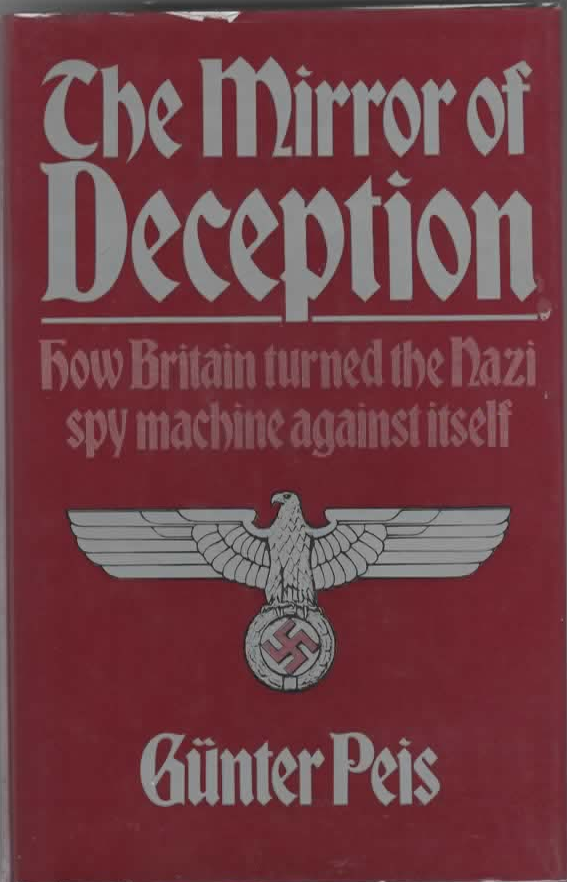
Peis was a German journalist whose mission was to discover exactly what role Wulf Schmidt (agent TATE in the Double-Cross System) had played in the deception campaign. His work is somewhat haphazard, since he was frequently diverted from his track, and his statements are occasionally contradictory, but he did gain some useful interviews with former Abwehr and Wehrmacht officers that shed some fresh light on Krämer. For some reason Pies identified Krämer by his cover name Kahle (or Kahler), which is likely to confuse, as the real Hans Kahle was a German Communist who had been interned with Klaus Fuchs, and had built up a friendship with him.
He asserts that ‘Kahler’ was known to MI5 as early as 1940, since the interrogators of Gösta Caroli, another Abwehr spy parachuted into England, threw out his name as someone they knew was working in Hamburg for Nikolaus Ritter (Krämer’s boss in Berlin when he later operated in Stockholm). But Pies’s main contribution to the saga consists of three threads: i) the contention that the British carried out several disinformation exercises to support the notion of an invasion of Norway – including giving advance notice of the disastrous Dieppe Raid, in order to boost the credentials of their agents; ii) the idea that the ‘intelligence’ provided by Kahler and others was viewed with disdain by such as Zetsche in the Luftwaffe High Command, who told Pies that he threw out stacks of reports from ’our agents Hector, Josephine, Ivan and Ostro’ into the waste-paper basket, since their answers to the Luftwaffe’s purely invented catch questions proved that they must have been under enemy control, well before D-Day; and iii) rumours of a mysterious Soviet connection behind the affair, probably involving Philby in Lisbon and his interrogations at Nenndorf, as well, perhaps, as the German agent Vera Erikson (of Russian extraction), since Earl Jowitt had told Pies that she had been let off because she had already been recruited by MI6. This last thread may be purely fantastical, and may have been ignited in Pies’s mind by a confusion over the Kahle/Krämer mix-up.
One can understand Pies’s struggles. His bibliography is a useful guide as to what was available to the public at the time, including Masterman, Cave-Brown, Cookridge, Masterman, Muggeridge, Popov, Schellenberg, and even Ritter’s memoir, but it would have been a challenge to make sense of it all from such notoriously unreliable accounts. (So far as I can tell, Ritter’s memoir Deckname Dr. Rantzau, makes no mention of Krämer.)
iv) Hitler’s Spies by David Kahn (1978)
Kahn’s compendious study of German military intelligence allocates a few pages to Krämer and Josephine, but he struggles to frame them in a credible context. While largely dependent on Farago, he also uses German military records, as well as some US archival material. He introduces JOSEFINE [sic] in ‘legendary’ terms, so that the reader is not sure, when Kahn describes him as ‘an unwitting agent’, and states that he ‘did not himself realize that he was delivering information to Germany’, whether this is what the author thinks, or whether it was part of Krämer’s mythology ‘in army, air force, and OKW circles’. In a figure reproducing a cover sheet from a report by Krämer to the Auswärtiges Amt (Foreign Office) in August 1943 (page 309), Kahn describes JOSEFINE as ‘Germany’s most famous secret source in the west’, an assertion that does not clarify matters.
After spending time on other agents, such as SIEGFRIED A and SIEGFRIED B, Kahn returns to the identity of JOSEFINE, as the primary supplier of intelligence to Krämer. He answers his own rhetorical question ‘Who was JOSEFINE?’ by responding: “JOSEFINE . . . was not one man but several: the Swedish military and naval and air attachés in Britain”. He does not discriminate, nor does he provide any dates for these multiple persons, but records simply that they were able to collect quantities of information and pass it on to the Defense Ministry in Stockholm, after which Krämer was able to obtain it. Thus, having dispensed rather awkwardly with the notion of these innocent individuals as being part of Hitler’s Spy Team, Kahn moves on to the mystery of how Krämer accessed the intelligence, and presents the case that Krämer wined and dined three young women who worked in the Ministry, and that they were able to hand over secret documents at the trysts he set up. It is amazing that Kahn presents this whole tale as fact when it would have been more sagacious to simply admit that he did not know the background and details.
v) British Intelligence in the Second World War by F. Hinsley et al.: Volume 2 (1981) and Volume 3 (1990)
This multi-volume official history is an impressive feat of research, analysis, and synthesis. Yet its lead author, Professor Hinsley, could be very cautious and evasive at times. It is sometimes difficult to gauge whether his elliptical observations derive from ignorance or from a heightened sense of security. Nevertheless, in a few places he offers some vital insights concerning the Krämer story.
In Volume 2, Chapter 19, where Hinsley describes the war at sea in 1942, he adds a startling addendum to a sentence that relates how the Naval Attaché in Stockholm (Henry Denham, of course, but inexplicably unidentified) on June 18 sent the Admiralty a message that warned of German plans to attack the next Arctic convoy. That might itself be unremarkable, but the note ran as follows:
This was the first information obtained from a source subsequently graded A2 by the Admiralty (Enigma was graded A1) via the Naval Attaché Stockholm. He had succeeded at this point in obtaining via the Deputy Chief of the Swedish Combined Intelligence Staff decrypts of German operational orders passing from Berlin to the German naval commands by land-line, presumably in the Fish cipher (see above, p 29)
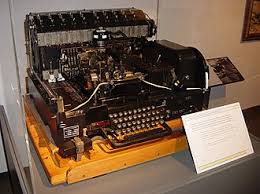
The Geheimschreiber
These sentences themselves generate further references. The description of Fish on page 29 reminds readers that Fish was the generic term used to describe the ciphers of the various models of the Geheimschreiber (a teleprinter with built-in cipher mechanisms). Fish was much harder to decrypt than Enigma. The second points to Morgan’s NID History 1939-1942 [the History of the Naval Intelligence Department, available at ADM 223/464] as the source of this intelligence.
This admission is remarkable for several reasons:
- It shows that the Swedes were far advanced of the British in tackling Geheimschreiber machines.
- It proves how important Denham was to the Admiralty, and why it was so determined to keep him in place when the Oxenstierna affair came to a head.
- It provides shocking evidence that a senior officer in a neutral power broke the rules in passing on source intercepts derived from one combatant to its enemy.
- It suggests that Denham might have been involved in passing on other intelligence that the Swedes had gained, and which would have been inaccessible to the British (such as messages passing over German land-lines in Sweden). [In this respect I anticipate a comment made by the historian Frode Weierud in an article in The Rutherford Journal of December 2005 (analyzed below): “It is not clear if BP had irrefutable evidence that the intelligence Captain Denham obtained from his Swedish sources came from German teleprinter traffic passing over Swedish telegraph lines. However, British Intelligence apparently knew or strongly suspected that the information came from codebreaking. In his book [see below] about his years in Sweden during the war Captain Denham mentions several times that the intelligence must have come from codebreaking.”]
In Volume 4, Chapter 12, Hinsley comments vaguely on the acquisition by the OSS in Switzerland of authentic telegrams sent to Berlin from Stockholm. Again, no mention of the background, no identification of Kolbe, or Dulles. He writes:
They were signed by Kraemer, an Abwehr officer who was known to have been posted under diplomatic cover towards the end of 1942 and who had been identified under three cover-names in the ISOS decrypts.
Too much in the passive voice. Who knew? Who identified? What cover names? Which ISOS decrypts? When and whence? Hinsley might have trusted that the telegrams were authentic, but, if he had checked the Krämer PF, he would have found that their content matched exactly what Cowgill informed White about at the same time. He continues: “Similar messages then appeared with increasing frequency among the ISOS decrypts.” That strongly suggests that Bletchley Park was soon able to intercept and decipher Krämer’s traffic from Stockholm to Berlin which would mean i) that that traffic would have had to have been pre-enciphered via Enigma, and ii) that it had been being picked up by wireless (since the land-line was inaccessible). But can we trust what Hinsley states when he offers no dates, and no evidence or supporting detail? It appears that Hinsley was not comfortable with these matters.
Lastly, Hinsley offers much commentary on Krämer’s activities after July 1944. He writes little about Arnhem, but does disclose that the incident of Krämer’s delayed message was first reported by the German defector whom MI6 recruited in January 1945, and who gave the service carbon copies of the Abwehr officer’s telegrams. Thus Hinsley provides a useful date for the spy’s recruitment (showing that he could not have been responsible for earlier leaks). He also draws attention to the fact that Krämer’s intelligence was looking very stale and derivative after that time.
vi) MI6 by Nigel West (1983)
Nigel West’s contribution to the story was a mishmash of vague rumours and mangled facts. Yet he has been much quoted. It is West, I believe, who first gave noise to the Falk-inspired stories about Krämer’s maid, the stolen key, the butter impression, and the (locally made) duplicate, all of which allowed the local MI6 battalion to gain access to original messages. For good measure, West declared that ‘much of J’s [JOSEPHINE’s] material was sent to Berlin via teletype/landline, which made interception impossible’, as if that phenomenon provoked and enabled the daring subversion of Krämer’s premises. (As I shall explain later, the switch from land/submarine cable to wireless, and Enigma-generated encryption, probably represented the start of Bletchley Park interception of Krämer’s traffic, but it occurred much later than the period at which Hinsley hinted.) That conclusion needs to be qualified, however: the traffic was not interceptible by the British, which is an important distinction. (Other sources do indeed indicate that the land/submarine link from Stockholm to Berlin was well-established by the time Krämer arrived.) While there had been a long gap in intense interception during 1944, it seems that the airwave-based process picked up again at the end of that year. Yet West gives the antics of Agent 3674 (the maid) as the only way for the British to tap into the Abwehr product. He ignores the fact that, while the British were obviously not able to intercept the Abwehr’s electronic material, that option was clearly available to the Swedes, and he offers no explanation for the messages that were received before Peter Falk sent in his infiltrators.
Thereafter, West also loses his way. He describes the alarm over the MARKET GARDEN leakages, and claims that MI5 was very concerned at the possibility of Krämer’s having agents in the UK. MI5 was quite blasé, in fact: it was MI6 who was the more credulous, and challenged MI5. He also alleges that Anthony Blunt was given the task of identifying who JOSEPHINE was, and that Blunt concluded that it was Oxenstierna – in September 1944 – who was responsible. Oxenstierna was reputedly given a ‘barium meal’ of traceable information, and then ordered home, after which Josephine ceased to operate. This is all nonsense, of course, since Oxenstierna had been recalled at the end of 1943. West also provided an intriguing story about William Strang and his possible involvement as HEKTOR, that eventually required MI5 to offer an apology to Strang. West might have been on to something with Strang’s connections (as I shall explain later), but I am confident that no one ever identified Strang as HEKTOR.
Incidentally, in his 2008 publication Historical Dictionary of World War II Intelligence (published by the Scarecrow Press), West sticks largely to the Oxenstierna/Falk story in his entry for ‘JOSEPHINE’, adding the problematic observation that Falk had ‘solved the mystery of JOSEPHINE and a subsource, HEKTOR’. He further implies that Frank Cervell had been suspected of being HEKTOR, and had been placed under surveillance. West thus reinforces the idea of JOSEPHINE as a real person: Krämer has no separate entry in the dictionary. In a companion volume, Historical Dictionary of German Intelligence, published by the same press a year later, however, the author Jefferson Adams offers a much more accurate and pragmatic summary of Krämer’s career, and reports that both MI5 and Krämer’s colleague in the Abwehr, Friedrich Busch, maintained serious doubts about the presence of any genuine spies in England, with Busch even stating that what Krämer delivered represented an ‘intelligence swindle’. JOSEPHINE does not therefore merit an entry in Adams’s work. MI5’s files on Krämer were released in 2000: it appears that Adams had studied them, while West had not
vii) Inside the Nazi Ring by Henry Denham (1984)
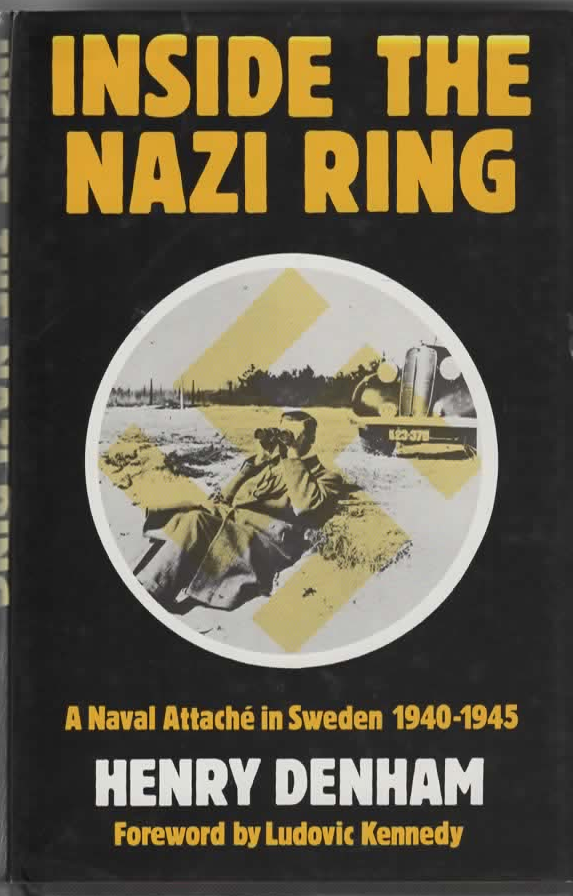
Henry Denham was the British naval attaché in Stockholm who, at the end of 1943, came close to being recalled in a retaliation exercise by the Swedes for the recall of Oxenstierna. He thus had a close connection to the Oxenstierna business, and he complemented his personal experiences with what Farago told him (maybe not reliable information) and with what the ‘wartime MI6 representative in Stockholm’ told him, shortly before he wrote his book. The informant could have been Cyril Cheshire, who was the nominal head of the station from 1942 to 1945, but that would be an unusual way of describing the head of station, and I suspect that Cheshire was deceased by 1984. It was more probably Peter Falk, who had been sent out on a special assignment in April 1943 to track Krämer. Given how Falk had apparently embroidered his account elsewhere with the 1943 shenanigans with the housemaid and the thefts, I found the representation of what Denham learned very significant, and I thus reproduce the bulk of the relevant paragraph:
According to him, a great part of what Kraemer reported to Berlin was of negligible value and consisted of thinly disguised information about British aircraft derived from articles in British publications, approved by our censor for export to Sweden. ‘Josephine’ continued to report almost to the end of the war, so that after Oxenstierna’s departure from London, the Swedish Ministry of Defence secretaries must still have found other reports, which they considered worth passing on. Some evidence strongly suggested that Kraemer had a source working in England and was able to communicate with him via the British courier plane. He also indicated to Berlin that he had other sources in Stockholm, to whom he referred in his correspondence by numbers only, but whom it was impossible to identify by their movements. It was extremely difficult throughout the investigations to distinguish between fact and fantasy in Kraemer’s reporting, but though this made the identification of his sources uncertain it was also of value to us. For the last six months of the war, we were in a position to see all his telegrams to Berlin and this traffic reached our command in Paris very soon after it reached the German High Command. The verdict from our side was that, while it revealed no leakage of information, it seemed to be valued by the Germans and so provided us with a useful warning of the way the enemy was thinking.
What to make of this? Did Denham really accept it all unquestionably? If his source was Falk, why did Falk write his ‘memoir’ and share it with Hugh Thomas for The Unlikely Death of Heinrich Himmler, published in 2001? (see https://coldspur.com/verkaiks-traitor-of-arnhem-part-1/). Falk was obviously acquainted with the facts about the secretaries at the Ministry of Defence who passed on messages to Krämer, but why did he claim that that the very vague ‘we’ were able to see all his telegrams to Berlin only in the last six months of the war? Krämer had been tracked since 1941 (although there is a very enigmatic gap in the record for almost the whole of 1944, a phenomenon that I shall return to later). It thus sounds as if Falk was hinting at other unorthodox ways of accessing Krämer’s messages for the whole period before December 1944, and that he was then starting to issue his variant explanations (see West, above). Either he held back from telling his tale to Denham (who might have challenged it immediately), or else Denham decided to withhold the picaresque tale. Or maybe Denham was really out of the picture, and had no idea what was going on. Yet Denham had earlier recorded (p 45) that, in the Oxenstierna era (1943), Bletchley Park was intercepting the messages that the German air attachés used, and was deciphering their content. While it appears that he was simply being careless and inattentive, it is more probable that he was simply writing deviously, in order to conceal his relationship with Swedish Intelligence. Codebreaking had occurred, and he wanted to suggest that the agency responsible was GC&CS. Up until the end of 1944, certainly, Bletchley Park had no direct access to Krämer’s messages to Berlin.
Yet Denham shed further light on the Oxenstierna affair, suggesting that the Swedish attaché was in fact used by the London Controlling Section (what he calls the ‘Deception Committee’). His reasoning was illogical, since he attributed the opportunity to the radio ‘breakthrough’ at the end of 1944, while the Oxenstierna affair was closed at the end of 1943. He claimed, however, that the Committee took advantage of the success to allow Oxenstierna to make his regular visits to naval and military establishments, while at the same time they gave him ‘plausible, but false’ information as a barium meal. “The main purpose was to impress upon the Swedish Government the startling news that the Allies intended to open a new front by invading Scandinavia in 1944”, he wrote.
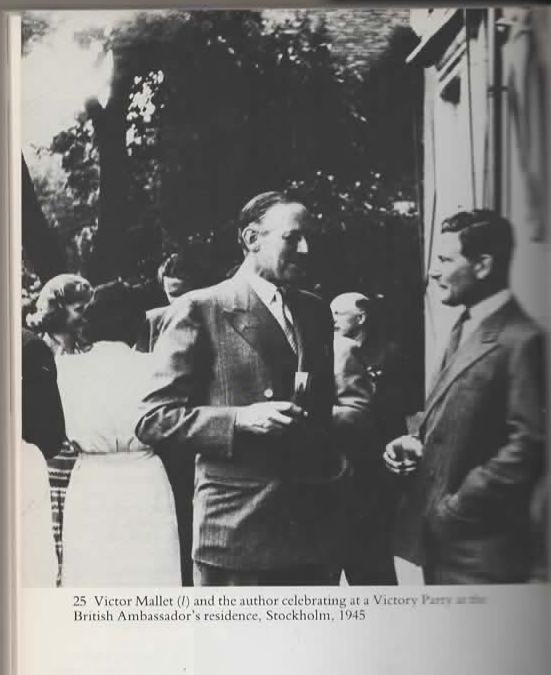
If the essence of the story is true, however, it clearly points to the fact that the whole Oxenstierna business was indeed a frame-up, that the deception exercise antedated Cervell, that Oxenstierna had a right to feel aggrieved, and – probably most important of all – that the LCS and the Admiralty wanted to show the Germans that, by expelling Oxenstierna, they had once and for all plugged a critical leakage in their wall of intelligence. In the summer of 1944, after the Normandy landings, the Foreign Office, when resisting the Swedes’ demand for Denham’s recall, issued threats about releasing information concern the improper behaviour of ‘Swedish Service attachés’ [note, plural]. The FO instructed Mallet to read a dispatch to the Swedish Foreign Minister, Dr Christian Günther, which described how these attachés were occupied ‘obtaining, and in seeking to obtain, information regarding forthcoming Allied operations, to which they were, for obvious reasons, not entitled’. How to handle the inquisitive Swedish ministries, in which both Allied sympathisers and pro-Nazi agitators served, without giving the game away, was a perennial problem for Whitehall.
viii) The Krämer Case: A study in three dimensions by C. G. McKay (Intelligence and National Security, 1989)

The author is the same McKay who helped Tennant write his comprehensive (but maybe flawed) account of the Krämer case [see below]. He uses the English-language sources above (i.e. Farago, West, Denham, Hesketh), as well as G. Peis’s Mirror of Deception and David Kahn’s Hitler’s Spies, and he exploits a few works written in Swedish. Unfortunately, McKay is not a rigorous investigative historian, and thus does not explore the numerous conflicts and contradictions that appear in these works, nor does he explain why he appears to trust them all as equally sound. Thus his paper is more useful as a means of picking up possibly accurate factoids rather than as a source of an overarching explanation of the events.
McKay, contrary to other writers, firmly states that Krämer arrived in Stockholm on permanent assignment as early as November 1941 (although he distorts the dates when describing Falk’s arrival in May 1943). He quotes some messages that Krämer sent in the first half of 1943, but the reader needs to inspect a Footnote to learn that the evidence for these came from German archives opened up in 1946. Regrettably, McKay is not very precise in following up and naming sources. He refers to further messages concerning leakages in London that were recorded in June and July, but he was obviously unaware at this time that the very first entries in MI5’s Personal File for Krämer show that Cowgill of MI6 was also receiving these telegrams from ‘a most unusual channel’, since he wrote to Dick White to that effect on September 11, and enclosed transcripts. Whether that channel (Kolbe-Dulles) provided much more, whether the pilfering of telegrams from Krämer’s flat became the main source, or whether the British gained access through another medium, should be a question of great importance. McKay reports that Krämer’s apartment had been penetrated as early as August, but he does not follow up the investigation.
The writer offers some useful observations about the BOAC air courier service between Leuchars (near Edinburgh) and Bromma, and reminds us of the shutdown in communications, and restrictions on travel, that were invoked on April 19, 1944 in the run-up to D-Day. He records the early challenges that Major Friedrich Busch, assistant to the air attaché, made on Krämer’s reliability, noting that they were ignored or deflected because senior Abwehr officers were concerned about a takeover by the Sicherheitsdienst should any flaws in the Abwehr’s policies or procedures come to light. Krämer was fortunate to have an ally and defender in the SD’s Schellenberg. But McKay echoes much of the muddle over the discovery of Krämer’s telegrams, trying to make sense of West and others, and does not pursue the question that he set himself: How did the British know that the information from Oxenstierna had reached the Germans?
Moreover, he places the arrival of the source in the German Legation shared with the British (presumably the unnamed Riga) not until 1944, thus contradicting Tennant – but gives no precise month in that critical year, attributing his information to the Swedish source Englich. Similarly, he cites Carlgren as the writer who had written that the British government, in connection with the Oxenstierna affair, had informed the Swedes of a possible leak, and had pointed out to them that information from the naval attaché had come into the hands of the Germans. “Although they did not admit the fact at the time”, McKay writes, “the Swedes were well aware of this leakage of information.” Thus what should have been a predictable action from the British, and a similar reaction from the Swedes, appear to be confirmed here for the first time.
His account of radio interception offers new twists, however. When Oxenstierna on November 15, 1942 reported on a large combined operation involving Norway that was underway, and followed up on January 23, 1943, the German Legation recorded it in a radio message of January 23 sent to Berlin. Yet the Swedes intercepted and decrypted the message themselves, showing that they were more advanced than the British in handling the traffic exchanged by the Siemens T52 machines (the Geheimschreiber) used by the Abwehr. (These were known to the British as ‘Sturgeon’: yet Bletchley Park struggled in their decipherment.). McKay then states that the Swedes assumed that the Germans had picked up Oxenstierna’s radio telegrams rather than considering that there might have been a leak with the Defence Staff. Yet, by all accounts, the Swedes had no authorized wireless facilities, and the messages would have been sent as cables by the GPO. It was indeed much more likely that a Nazi-sympathizer on the Defence Staff had passed on the information,
Did the Swedes thus change their codes, or insist that Oxenstierna’s intelligence should thereafter be carried by a courier? McKay asserts that new cipher keys were indeed distributed to all Swedish military attachés abroad. I still do not know what messages were sent by the air courier, and which by cable, and, if so, whether the British were routinely intercepting all Swedish communications from London. A wireless option seems very improbable, as the Swedes were not allowed diplomatic wireless transmissions, and any illicit transmissions would have been picked up by the RSS. That idea has not died, however, with Guy Liddell himself asking Stewart Menzies (perhaps disingenuously) whether the Swedish Embassy was deploying illicit radio.
ix) Touchlines of War by Peter Tennant (1992)
Peter Tennant’s official role in Sweden was Press Attaché, but he was in Stockholm representing the SOE. His account of the Oxenstierna incident and the disinformation exercises is again rather ingenuous. In a clumsily written passage, he wrote:
The object was to make them [the Germans] keep as many troops as possible in Norway in the belief that major allied landings were to take place. When I returned from a visit home in December 1943 I let the Germans know that I had instructions to start a propaganda campaign about British landings in Norway. Wagner [the local Abwehr chief] swallowed the bait hook, line and sinker and I have a Swedish intercept of one of his cipher telegrams reporting my preparations to the OKW.
Tennant should have used a different formulation from ‘I let the Germans know’, since it sounds as if he had been in direct contact with the Abwehr when a far more subtle approach was obviously undertaken, using Swedes as intermediaries. That there were sympathetic Swedes is clear from the successful activities of Denham. But why would Tennant have had to rely on Swedish interception if he believed that the Abwehr traffic was being picked up by Y Services and sent to Bletchley Park? That factoid would appear to undermine Hinsley’s assertions, suggesting that the British were still beholden to the Swedes at the end of 1943.
He next asserted that Oxenstierna was recalled because the British discovered that Krämer was relaying his reports to the Germans [sic! Was Krämer not an obvious German?] under the cover name of ‘Josephine’. “He communicated with Berlin through the air attaché’s cipher which we intercepted and cracked”, wrote Tennant, finessing the obvious point that one might have expected the Swedes to inquire: “How do you know that Oxenstierna’s intelligence is being passed on to Berlin?” (He carelessly contradicted his implicit claim above.) The truth is that Bletchley Park was assuredly not ‘intercepting and cracking’ Krämer’s messages at this time, since the messages themselves were being transmitted by land-line, and GC&CS had also not cracked the cipher known as Sturgeon that was used by Krämer. Tennant was writing very deceitfully. Thus there were three supposed ‘puzzles’ to pursue: i) how was secret British information reaching the Swedish Foreign Ministry; ii) how confidential Swedish messages were getting into Krämer’s hands, and iii) how the British knew of the leakage before the Swedes learned of it. Tennant probably knew the answer to all questions, but danced around the issue.
Yet his explanation awkwardly combined two separate efforts: “Two girls in the Swedish General Staff slipped him (Krämer) copies of Oxenstierna’s reports unknown to Oxenstierna. All conceivable sources for these ‘Josephine’ reports were investigated, including one of Sir William Strang’s domestics.” The first aspect would have been of interest to the Swedes (although the fact that Oxenstierna would have been ignorant of the process is merely stating the obvious), since they had an internal leakage problem. The second referred to the possible revealing of unauthorized information in London, which might have been a disingenuous charade by the British authorities. At some stage, through traffic interception (but not their own – a subject Tennant finesses), they must have realized that harmless information was finding its way painlessly to Krämer, and they took advantage of the covert channel. Tennant does not explain here how the Swedes were encouraged to initiate their search, not does he enlighten his readers how Sir William Strang became involved as a possible source in the investigation.
After this taradiddle, it is questionable whether Tennant’s further disclosures can be trusted, but he next introduces a fresh coincidence. He takes responsibility for passing on to Peter Falk, the special MI6 representative, the name of a person code-named ‘Riga’ who worked in the German legation, but was an anti-Nazi. (Very oddly, he claims not to have met her in person until 1951.) Through Riga, they [unidentified, nor is any date given] penetrated the German Legation, obtaining valuable intelligence on the activities of the diplomatic and service defence staff. The latter fortuitously included details of Krämer and his contacts with girls in the Swedish General Staff. Tennant then goes on to write: “We continued to intercept Krämer’s so-called Josephine messages to Berlin long after Oxenstierna’s departure. Falk managed to get Riga to take an impression of Krämer’s key which Egil Rønne-Petersen [his source for Riga] had copied and future access to his papers was assured.”
This is a very unconvincing account. Under the noses of the Swedes, Falk’s team manages to contact a spy in the German legation, who, at a time convenient, helps uncover the presence of Swedes spying for the Germans in the Foreign Ministry. Tennant writes nothing of the Swedish investigation that must have taken place after the authorities were informed, the controversy that must surely have arisen afterwards, or why they let the subterfuge continue once it was discovered, and allowed the activities of the ‘girls’ to continue. He then jumps to the dubious tale concerning the assurance of future access to Krämer’s papers (not having disclosed how that access happened previously, or why it was necessary), and then he reintroduces Rønne-Petersen as the provider of a copy of Krämer’s key, after which Riga takes an impression of it. Why was an impression necessary if a copy was already in MI6’s hands, and how did the story of the maid in Krämer’s flat gel with the insertion of Riga into the account?
Lastly, Tennant makes another dubious claim that seems to contradict what he wrote earlier. He writes:
Craig Graham McKay has researched the Swedish wartime archives and has given me a copy of a Swedish decrypt of a secret telegram of 7 May 1942 from Doctor Wagner . . . to the Abwehr Division of the Oberkommando der Wehrmacht in Berlin. This disinformation I had planted on him through Riga. He reported my return on 4 May 1942 from London with full instructions for British propaganda in film and press for the Spring of 1943 in order to prepare for a British invasion of Norway.
This is a strange boast by Tennant. Mid-1942 would appear to be very early to be talking about plans for an invasion in Norway, and in any case was in advance of the Oxenstierna reports of November 1942. The Fortitude planning did not start until December 1943, and the absence of any military ability to carry out such a plan would have made the Germans very dismissive. And why would Wagner trust Riga as a source? Might it not have blown her cover? Moreover, did Tennant trust her to carry out the deception without having met her? And Riga was in place a full year before Falk arrived in Stockholm? Why was Tennant, of SOE, handling her? The anecdote about McKay and the Wagner message sounds genuine and authentic, but I’d like to see the original. And did Tennant learn at the time that his planting of disinformation had been successful? His text suggests that McKay recently showed him the evidence, but that may be a diversionary tactic. Yet an inescapable truth emerges from his comments: the Swedes were decrypting the Abwehr’s despatches from Stockholm.
x) From Information to Intrigue by C. G. McKay (1993)
McKay expanded on his previous paper by writing a study of Swedish Intelligence. It is a convoluted story, with threads unfinished, and an erratic chronology, but the author’s access to obscure sources (e.g. Denham’s unpublished memoir, American archives, Swedish insider reports) means that it offers some rare insights. He provides good Endnotes, for instance referring to the ‘microfilmed collection of Krämer telegrams in rolls T 120, 98 and T120, NA’ [Washington], as well as material in the Imperial War Museum that I have not seen. Both would be fruitful sets to inspect.
His coverage of Krämer is otherwise traditional, relying largely on Farago, Hesketh (to which he had privileged access), Kahn, and Tennant. He records how Krämer in November 1941 was installed in Stockholm with Ribbentrop’s firm support, which gave him privileged teleprinter access. The Washington archive offers good examples of his communications in 1942 and 1943. McKay is rather coy about the identity of the ‘Swedish information-gathering sources’ in Britain. Neither Oxenstierna nor Cervell appear in his Index. He reports how the assault by his colleague Busch on Krämer led to Busch’s own downfall. While not dabbling in the various infiltration exercises (despite collaborating with Tennant), McKay does offer a rather hesitant opinion about the manipulation of Krämer: “However, if Krämer was perhaps an indirect participant in British deception plans, in the sense that he may have embroidered reports to which he had access, he was certainly not an agent controlled by the British.” But who had suggested that?
He expresses uncertainty about the way in which the British authorities had been able to monitor Krämer’s reporting, citing in his Endnotes only the connection with the OSS in Switzerland. One might expect this controversy to have been central to his main text. He sits on the fence concerning Krämer’s main sources, superficially excluding the Swedish diplomatic bag and the Swedish airline, as well as illicit use of radio by the Swedes. He covers Krämer’s interrogations, and his evasive replies, but replies exclusively on Hinsley for his treatment. Again, he leaves provocative observations about Krämer’s real role (e.g. that he was helping the Russians) to an Endnote, which suggests that he was not comfortable with the more controversial aspects of Krämer’s role in Stockholm.
McKay is more enlightening on the Denham affair. He explains that, after the spring of 1942, Denham was able to counter the restrictions placed on him concerning cryptanalytical intelligence by the Swedish C Bureau when he built up a delicate relationship with the chief of the Foreign Section of military intelligence, Count Björnstjerna. He highlights the warnings about German attacks on the convoys, but suggests that there were many other important disclosures. These irregular activities resulted in Björnstjerna’s resignation in the autumn of 1942, but Denham was able to replace his ally quickly with Commander Daniel Landquist, the new Swedish Intelligence chief. McKay hints that that relationship landed Landquist into trouble as well, but he does not resolve the issue. The author does describe the embarrassment that occurred when Denham’s activities came to light after the British ‘in due course . . . called for the withdrawal of the Swedish naval attaché in London’ (all very vague), and he simply remarks that the Admiralty insisted that he stay. The matter was not as simple as the way that McKay presented it.
There follow some interesting observations on Denham’s relationship with the Danes in 1944, when a radio link between Copenhagen (under the Germans’ noses), and a cable link over the Sound permitted naval intelligence to be brought more rapidly to Denham in Stockholm, ‘who was then able to radio the Admiralty without delay’. The actual mechanics of all this sound a bit dubious to me (here McKay relies on an internal Swedish report supplied by one Berg), but in any event the antics help build up Denham as a more formidable character than he has been conventionally described. Again, in his Endnotes, McKay hints at fascinating stories to be unravelled, but fails to grab and analyze them in his main text. He leaves Denham hanging here.
xi) Fortitude by Roger Hesketh (2000)
I refer to my study of this work in a previous report at https://coldspur.com/verkaiks-traitor-of-arnhem-part-2/. I remind readers that, whereas the report was not published openly until 2000, it was available to internal researchers such as Pat McCallum when she wrote her report in the early 1970s.
xii) Swedish Signal Intelligence 1900-1945 by C. G. McKay & Bengt Beckman (2003)
This work, despite being poorly organized, provides some good insights into the Swedish efforts to crack Abwehr ciphers – crucial analysis for understanding why the source appeared to dry up in 1944. In May 1940, the task of monitoring German teleprinter traffic was handed over by the Telegraph Administration to the Codes and Cyphers Section of the Defence Staff. Thereafter, that group made steady progress. By December 1940, 7,100 telegrams had been solved and distributed, rising to a total of 41,000 in 1941. By December 1942, the number reached a peak of 100,000 decrypted and distributed. The process was abetted by poor disciplines among the Geheimschreiber operators.
On July 21, 1942, the Germans put a new model, the T52C, into service. At first, the Swedes were successful in understanding its characteristics, but the Germans, aware of security exposures, introduced new mechanisms and procedures that thwarted their efforts. More messages were being encoded using unbreakable One-Time Pads. During 1943, only 71,000 messages were successfully processed, and the German section of the Signal Traffic Division suffered a two-thirds reduction in staff. From February 3, 1944 German cable traffic was no longer broken on a routine production basis. It was not until November 1944, when a disillusioned teleprinter operator in the German air attaché’s office (who was also in touch with the British) handed over copies of the inner key settings of the T52D (Dora) model, that the project was resuscitated. Leading cryptanalyst Carl-Gösta Borelius was even able to inspect the machine at the attaché’s premises. Unfortunately, the account by McKay and Beckman fades away at this point, and they do not explain whether decryption of traffic resurged after these events.
xiii) A Spy at the Heart of the Third Reich by Lucas Delattre (2005)
The contribution by the French author Lucas Delattre (whose work first came out in French in 2003) exploits US sources, as well as personal papers from the heirs of Fritz Kolbe. Kolbe was an official in the German foreign ministry, a solid anti-Nazi who, starting in 1943, engineered visits to Switzerland, where he was able to pass on valuable information to Allen Dulles of the OSS. Among these were transcripts of Abwehr telegrams that referred to both HEKTOR and JOSEPHINE, thus alerting multiple parties to the probable existence of German spies in the United Kingdom.
Kolbe had been rejected when he approached the British Embassy in Bern, since the officials feared a plant, but he found a more enthusiastic response from the Americans. The dossier he had smuggled in contained many items of much value to them, but Kolbe also described a spy named Hektor ‘who had first-hand information coming from London’, including direct access to Stafford Cripps, the minister of aeronautic production. Now this gobbet was in itself contradictory: if Hektor received information from London, he was presumably based in Sweden (the origin of the relevant cable), and he thus could not have enjoyed personal access to Cripps, or any other official. That was an important hint that was not apparently picked up.
The Americans immediately shared the knowledge they had acquired with the British, since they were using the latter’s transmission lines between Bern and London as a more secure medium. David Bruce, the OSS chief in London, handed it to Claude Dansey of MI6, who was very dismissive, partly because he thought that the Americans had intruded on his patch, and partly because he was still burned over the Venlo incident. Yet one of the two messages he was shown was clearly attributable to intelligence from JOSEPHINE, dated June 24. Kim Philby was asked by his boss, Felix Cowgill to review the Kolbe dossier, and Philby of course nosed around to determine what might be useful to his Soviet masters. Delattre implies that Petrie of MI5 was brought in, although he is not explicit:
The heads of the British secret services had for their part decided that ‘George Wood’ [the codename for Kolbe] was an impostor, even if some of his information was noted with great interest. Who were Josephine and Hektor, they wondered, when they found out that important leaks had passed through Stockholm.
Delattre claimed to have resolved the issue by engaging in correspondence with Nigel West. In a notorious passage that has probably gained much friction, the writer lays out his conclusions, as guided by West, as follows:
In particular, Fritz Kolbe had provided material to help identify ‘Josephine’, a mysterious mole well placed in London who was providing high-class information to the Germans. Thanks to ‘Wood’ and the Ultra machine [sic], the British identified the spy, about whom they knew that he was supervised at a distance by the Abwehr office in Stockholm. The British secret services discovered that ‘Josephine’ was the Swedish naval attaché in London, Johann Gabriel Oxenstierna, a diplomat who was particularly well informed about the movements and preparations of the Royal Navy.
Of course this statement was a great distortion, and it does not perform justice to the exercise that the British (through the LCS) had already initiated. Yet Delattre applies his coup de grâce: Hektor was unveiled as Krämer; Oxenstierna’s recall was demanded in August 1943, and eventually took place in the spring of 1944. And ‘a certain number of high British officials who had been particularly talkative in their discussions with “Josephine” were disciplined’. In his endnotes, Delattre singles out one William Strange [sic: ‘Strang’], the assistant Undersecretary of State at the Foreign Office. According to Delattre, Kolbe continued to supply Dulles with cables until 1945.
xiv) ‘Bletchley Park’s Sturgeon, the Fish that Laid No Eggs’, by Frode Weierud, in The Rutherford Journal, 2005 (see https://www.rutherfordjournal.org/article010106.html )
This extraordinary – occasionally very technical – article contains a number of very illuminating insights. While it focusses on the struggle that Bletchley Park had with deciphering the Siemens T52 Geheimschreiber (the teleprinter machine used by Krämer in Stockholm), it provides some vital background material. I highlight the following points:
- German teleprinter machines were on-line machines, containing their own embedded cipher mechanisms (unlike Enigma). They could be switched from land-line to wireless circuits.
- Bletchley Park first noticed T52 traffic, generically named ‘Fish’, in the summer and autumn of 1942, and gave the name ‘Sturgeon’ to the Sicily-Libya link. Several other variants were found over the next eighteen months, but most turned out to be unbreakable until June 1944.
- In early 1944, Bletchley Park decided to cease interception of Sturgeon traffic as it was too unprofitable.
- In October 1942 the Germans mentioned that the new T52c model had inadequate security. Further concerns were raised in February 1943: an order was given that top secret messages had to undergo previous encipherment by Enigma.
- The Germans learned in June 1942 that the Swedes had enjoyed success in breaking the T52a/b. They did not respond quickly enough, and the unaltered machines were deployed through 1944.
- A Traffic Analysis review of Fish links by Bletchley Park in January 19 made no mention of a Stockholm-Berlin connection.
- While Bletchley Park started working on Sturgeon traffic, it probably had no knowledge of the Swedish success.
- British naval attaché Denham had regular contact with Colonel Carl Björnstjerna, the chef of Foreign Intelligence at the Swedish General Staff, as well as with the Norwegian military attaché, Roscher Lund.
- Denham gained intelligence that came from German Geheimschreiber traffic, but Bletchley Park may not have known that it derived from German traffic passing over Swedish telegraph lines.
- Hinsley reported in his history of British Intelligence [see above] that Björnstjerna had passed on to Denham ‘decrypts of German operational orders’ concerning attacks on convoys.
- xv) Triplex by Nigel West and Oleg Tsarev (2009)
Triplex is a vital source of information on the management and distribution of an important source – what Nigel West in his Introduction describes as ‘material extracted illegally from the diplomatic bags of neutral missions in London’. The Swedish Embassy features largely in this operation, and the records show that Stockholm was one of the leading targets of disinformation as the Chiefs of Staff and the London Controlling Section started to plan how they might deceive the Germans on the various plans for re-entering Continental Europe. What is remarkable is that the documents collected in the book derive from the Russian (Soviet) archives, and have been translated back into English – a process that sometimes shows. They arrived in Moscow courtesy of Anthony Blunt, who was not only responsible for the whole exercise, but was also a member of the TWIST Committee, which was responsible for the implementation details of most deception plans.
The various reports show that it was considered a standard rule of business that neutral embassies would be exploited to carry disinformation to the enemy. In the reports that Blunt sent on concerning MI5 structure, the role of B1(b) is specifically described as follows: “Runs counter-intelligence operations based on radio intercepts. Also runs special operations for examining diplomatic bags and clandestinely removes documents from foreign missions. It also processes the take from Special Camps 020 and 020R, where the most important foreign intelligence agents are held. Run by [Herbert] Hart.” Blunt appears to have downplayed his role in this operation, since one of his descriptors is also ‘B1(b)’, and he is identified by this moniker in several places in the Triplex texts. He was the leading force in the interception of diplomatic bags.
One of Blunt’s reports carefully reproduces the minutes of a Joint Intelligence Committee (JIC) Meeting in September 1943, when the JIC decided to review security safeguards in the light of the Oxenstierna episodes – reinforced by incidents involving Cervell, which analysis seems very premature for a recent arrival. A very significant passage runs as follows:
The danger this represents is not that the attaché will pass the information on to the enemy directly, but that in being forwarded to his government, the information can leak to the enemy via German agents or through intercepts of neutral communications. There is, unfortunately, very clear evidence that information reaching Stockholm or Madrid reaches both the Germans and the Japanese.
Given that this channel was being positively exploited by the LCS at this time, this is either a very naïve, or a very disingenuous, observation. I favour the latter. Official minutes were being used to conceal what was approved policy.
Later in the specific report on MI5 (undated) appear the following damaging observations:
The British use a wide variety of techniques in operations against foreign missions: agents (foreign sources, agents on the mission’s staff), technical methods, external surveillance, telephone taps, bugging of embassy premises and of public places visited by foreigners and of their private homes, interception and reading of plain-language diplomatic mail, the clandestine removal and replacement of codes and other secret documents, deciphering of coded correspondence, radio intercepts, using agents to ‘honeytrap’, or compromise, individual foreign mission staff members, etc.
It was not a gentlemanly business. The report goes on to describe how the Swedish Embassy in London had been infiltrated, including both military attachés, von Rozen and Marlom, their secretary Miss Maxwell, the former [?] air attaché, and an employee named Dig.
The Swedes were considered one of the most important channels because of the need to keep German troops in Norway by the threat of an invasion there – which strategy clearly antedated Operation FORTITUDE (North). And that leads directly into the Oxenstierna affair. Nigel West describes Blunt’s report on the naval attaché as ‘Blunt’s first document’, but whether that means it was the first he delivered, or merely happened to be the first selected for publication, is not clear. West’s prose is occasionally very elliptical, and he follows up by writing:
Oxenstierna had been responsible for the leakage of secret information, but the Foreign Office was not prepared to be specific beyond a reference to his inquisitiveness about a naval stabiliser recently installed on destroyers. Certainly there was no mention of TRIPLEX, or the illicit copying of the naval attaché’s dispatches in the Swedish diplomatic bag, and the issue has remained a mystery to this day.
What are West’s sources here? The roles of the Admiralty and the Foreign Office are very opaque: the Foreign Office was presumably leading the charge over Oxenstierna’s recall. But why would West expect TRIPLEX to be mentioned in any documentary evidence? What does that ‘or’, which suggests a contrast between TRIPLEX and illicit copying, signify? What exactly was the ‘mystery’ of Oxenstierna’s recall, if an attaché had been found pursuing leads too energetically? It seems that West had not processed the relevant Foreign Office files that I analyzed above. Yet the phrase ‘illicit copying’ suggests that B1b was keen to get hold of original texts so that GC&CS could later use them as cribs when the intercepted ISTOC messages (German teleprinter traffic to or from Stockholm, relayed by the Swedes to the British, and possibly raw texts purloined form Abwehr premises) were analyzed.
In any event, Blunt offered a long and accusatory memorandum on Oxenstierna to his boss, Guy Liddell – undated, but probably submitted in late October 1943. The full text appears as the introduction to a quintet of Blunt’s documents, and presumably could have been found in the Oxenstierna Personal File before it was destroyed. (Maybe there was too much in it that would have had to be weeded.) The memorandum makes no bones about the TRIPLEX operation, naming it explicitly. Blunt coyly describes how ‘a considerable amount of TRIPLEX material consisting of reports by Oxenstierna to his Admiralty has become available to us’, as if it had casually fallen off a lorry driving down Whitehall. His indictment is in fact quite detailed, and points to behaviour where Oxenstierna might well have exceeded his remit in trying to access more confidential information. His conclusion is clear: “a. Oxenstierna is obtaining more information than we would wish, and b. he is duplicitous.” He adds that some of the evidence is not TRIPLEX-related (such as his breach of the export licence law), and could therefore be used openly as a reason for demanding the attaché’s recall.
The document looks genuine – but is it fully authentic? Why would Blunt take so much space to provide a full dossier for Liddell’s benefit? After all, he records what steps the Admiralty is already considering concerning Oxenstierna’s probable recall. It sounds as if the matter is out of Liddell’s hands, although Blunt ends his report with an observation that Liddell might want to protest officially ‘with the aim of warning the other attachés here’. Moreover, Blunt and his boss knew about the tampering of the Swedes’ diplomatic mail, and the fact (as indicated elsewhere) that disinformation was being passed overtly and covertly to the Swedes with the objective that the Germans would eventually receive it. The memorandum could thus have been placed in the archive as a defensible cover for intelligence leakages, although the explicit references to TRIPLEX rather undermine the campaign to show Oxenstierna’s guilt more publicly. The references also tend to reinforce the fact that the Swedish Embassy relied – if not exclusively, then predominantly – upon the diplomatic bag rather than wireless/cable telegraphy to convey the reports of their attachés. The TRIPLEX project would obviously not have been able to tamper with outgoing radio messages. Tracking down records of radio intercepts (known as BJs – Black Jumbos, in MI5 parlance), and ascertaining whether any wireless traffic between London and Stockholm was attempted, is a project for another day. [As I shall show later, Guy Liddell discussed with Stewart Menzies the possibility of the Swedes’ deploying illicit wireless without being detected.]
In any event, Swedish intermediaries were an important part of deception execution. In another report on deception campaigns from early 1943 (described as the minutes of a meeting of ‘The Committee for the Deception of the Enemy’, no doubt an NKVD formulation representing the LCS), the suggestion of using Iceland as a base for the invasion of Norway is raised. These plans were all very tentative, since they set out to convey the message that a cross-channel invasion of the Continent would be possible in the summer of 1943, a venture that was surely impossible. Hints to it would not have fooled the Germans. Blunt’s secretary, Mrs. A. W. Pitt, reports on the status of agents from all embassies, commenting that LEMON has been invaluable at the Swedish Embassy, but that ‘her situation may become less useful now that Karlson has left’. She adds that Servell [sic: the name was Cervell, and the error reflects the re-translation and lax editing] may be sent home to avoid a scandal. As I mentioned before, the identification of Cervell as a threat this early is surprising, since he did not arrive in London until 1943: I shall return to this point later.
The various reports made by the First Directorate of the NKVD, starting in May 1944 (when confidence in the reliability of the Cambridge Five had been restored) confirm the deception strategies used by the British, of which ‘neutral diplomats in Britain’ are identified as one of the primary channels for spreading disinformation. A further report indicates that, in February and March 1943, detailed ploys for misleading the Swedes about inroads into Norway were forged. Rather oddly, a deception plan for 1944 is included that suggests that the western allies were not ready for a summer assault, as opposed to being committed, but misleading the enemy about its location. In any event, the LCS minuted as follows:
The LCS to transit these legends to Lisbon, Madrid, Stockholm and Bern. Colonel Robertson and Major Blunt are to discuss measures for the dissemination of this paragraph through their channels in London and report to the LCS what has been done in this respect and what can be done in the future.
It all sounds very orderly and predictable, like ‘rounding up the usual suspects’.
Yet Norway reared its head again, and the minutes describe a proposed Anglo-American attack on Northern Norway in the spring of 1944, with co-operation from the Russians. All manner of tactics are laid out to abet the deception, including attempting to convince the King of Norway to take a friendlier attitude towards the Swedes, and determining the possibility of ‘generating a significant increase in diplomatic wireless traffic between Stockholm and Great Britain’. This was all long after the Oxenstierna incidents, of course, but the failure to take note of such manoeuvres earlier may have been due to the credibility problems of Moscow’s spies. One wonders what the NKVD analysts made of all this detail, and whether they were able truly to distinguish between what was deception and what was real.
xvi) Sweden, the Swastika and Stalin by John Gilmour (2010)
John Gilmour compiled an impressive volume on the Swedish experience in the Second World War, complementing familiarity with a broad set of British archival material with an intimacy with multiple articles and books written in Swedish. He offers one chapter (‘Security, Subversion, Spies and Sabotage’) that present several revealing insights into the plotting and conspiracies that characterized the interplay of the various missions in Stockholm. I highlight some of the main stories here:
- Gustav Möller (social minister) and Gustav Bohemann (in the Foreign Office) showed their British sympathies by leading the way in concealing British sabotage efforts from the Germans. Generally the Swedish Navy supported the Nazis, while the Army favoured the Allies.
- In the months before D-Day Mallet enthusiastically took part in Operation Graffham, a project designed to deceive the Germans into thinking that an attack would come through Norway. Quoting from Mallet’s unpublished memoir, Gilmour writes that, on the eve of D-Day itself, Mallet was instructed ‘to give the impression that this invasion is only one of several major assaults upon continent [sic]”.
- Despite the Michael-Strandberg case of 1940, in which a Swedish Nazi was found passing intelligence to a member of the German legation, Swedish counter-espionage efforts slackened under German pressure, until the reversals of 1943 turned the Swedes more strongly against the Axis powers.
- Intelligence chief Petersén approached Naval Attaché Denham in August 1944 offering to exchange valuable intelligence on V2 rockets for information on Allied plans for the re-entry into Norway.
- While the Swedish Naval Attaché in London was suspected by the British of passing information to the Germans, the real source was a German agent who copied his reports in Stockholm and gave them to the ‘Press Secretary’ in the German Legation.
- Swedish decryption of Geheimschreiber messages was advanced. Between June 1940 and May 1943, the Swedes deciphered almost 300,000 highly valuable messages (a number that corresponds to the estimate given by McKay and Beckman). But an agent leaked the fact to the Soviets [really?], who in turn informed the Finns. The news reached the Germans, who then changed all their codes. [‘Codes’? What does this mean? When did they do so?]
Despite this coverage, Gilmour never mentions Oxenstierna, Cervell, or Krämer, and the important figure of Nordenskiold (head of the Swedish Air Force, who features strongly in the Cervell affair) warrants only one short sentence.
xvii) Beyond Diplomacy: German Military Intelligence in Sweden 1939-1945 by Simon Olsson (International Journal of Intelligence and Counterintelligence, 2011)
Olsson’s contribution is relatively short, and sets out to exploit new Swedish sources. He reinforces McKay’s claim that Swedish intelligence was able to intercept Abwehr communications, and had done so throughout the war – a claim that should perhaps be tested. (If Bletchley Park had been able to decode the Lorenz transmitter, however, the Swedes had probably been able to do so as well – as Gilmour claimed above.) Perhaps Olsson’s most startling contribution is to introduce the character of Otto Robsahm, a Norwegian businessman who was recruited by the Abwehr in June 1940, and given the assignment of infiltrating MI6 in Stockholm. Apparently, the ill-fated ‘Pincher’ Martin, who preceded Cheshire as head of station, willingly recruited Robsahm, and gave him the task of leading an existing network of Allied agents in Oslo. Thereupon Robsahm gave false information to MI6, and returned to Oslo with intelligence that was highly useful to the Abwehr. Predictably, you will not find much coverage of Robsahm in the annals and memoirs of MI6 officers in Scandinavia, but Professor Tore Pryser wrote comprehensively about his career in a book published (in Norwegian) in 2009, which Olsson draws on.
The other major insight from Olsson’s paper is the disclosure that the spy in the German Legation was a woman named Erika Wendt, and that she had been Wagner’s secretary. (Olsson uses a book by Tore Forsberg published in Swedish in 2003.) She had been recruited in April 1942, after Helmuth Ternberg, an officer in Sweden’s military intelligence service, had ‘spontaneously’ stumbled into her on a Stockholm Street. They had met before the war in Berlin. She then reported all the legation’s activities to her Swedish contacts. How she achieved this without being spotted or suspected is not described. Yet her luck ran out when her name was mentioned in an intercepted conversation in December 1944 between two officials in the Swedish Immigration Commission who had been leaking information to the Germans, and she had to be whisked away to Northern Sweden to escape her formal bosses. Was Erika Wendt the same person as Tennant’s ‘Riga’? It doesn’t sound like it. And maybe she was not Wagner’s secretary: her Wikipedia entry, apparently drawn from Wendt’s memoir (published under her married name Erika Schwarze), claims that she was employed by August Fincke, the trade attaché, and a deeper profile, available at https://grokipedia.com/page/erika_wendt, suggests that she was recruited by Swedish Intelligence with the codename ‘Uncle’, and that Fincke worked for the Abwehr. Thus it would appear that there were two spies within the German Legation.
xviii) Intelligence liaison in practice; service attachés in the Swedish Legation in London 1939-45 by John Gilmour (Journal of Intelligence History, 2023)

John Gilmour’s first paper (available through Open Access) provides a useful introduction to the set-up of the attachés in London, with names and (imprecise) dates of the tenures of the officers of the three branches. Unfortunately, Gilmour is erratic over chronology, and also rather vague about the methods of transmitting intelligence. When Oxenstierna was informed in May 1943 that the courier service (which Gilmour never explains in detail) would be suspended for four to six weeks, he indicates that the Legation’s diplomatic and cable links could have been used, but Gilmour does not state whether they actually were deployed. This aspect is important, because Gilmour informs us that the unreliability of surface [sic!] mail meant that telegraph was judged more appropriate by Minister Prytz, the ambassador (who had those sensitive meetings with R. A. Butler that I described in Misdefending the Realm). The Swedes believed that their cipher was secure, but the British had in fact broken it by 1939. A fascinating report by Alfred McCormack of the NSA, who visited Britain in 1943, claims that the British had abandoned attempts to decrypt the Swedes’ Hagelin machine by then, but that may be because the Swedes had improved their security in the intervening years. This is a topic crying out for more analysis, but Gilmour walks away from the challenge.
The author briefly covers the leakage of information to Krämer, calling out the women secretaries in the Foreign Ministry, but he does not appear to be alive to the subtleties and deceptions involved. He presents a useful note concerning a warning to Cervell in February 1944, which I shall follow up, but is disappointingly vague on other matters. He writes that ‘a reliable source’ had assured Oxenstierna that a large, combined Allied operation was planned for Norway on 10 December 1942 (presumably he means that was the day the leak occurred rather than the date of the military exercise). That certainly shows that Oxenstierna was being used as a disinformation channel early in his career – an important insight – but who was the ‘reliable source’? Is that all that Oxenstierna said about him? Overall, the paper is a rather disappointing chronicle.
xix) Asymmetries and instabilities: Attaché intelligence Liaison or ‘Legalised Spies’ in Stockholm and London during the Second World War? by John Gilmour (Journal of Intelligence History, 2024)
I include a mention of this second paper by Gilmour since its title superficially suggests that it might have something of value to contribute. Yet the verbose heading, and the question mark at the end of it, indicated to me that the author might be stirring an artificial controversy. The reader has to surmount some strangled syntax, dubious logic, and haphazard chronology before reaching the author’s rather tepid conclusions concerning attachés on both sides:
They required personal qualities of persistence, sociability, and expertise to provide useful intelligence with occasionally less than clear remits from their senior officers. Hey also had to contend with varying levels of support from administration, headquarters and diplomatic colleagues. Against this background, they were surprisingly successful in meeting expectations and exploiting intelligence gathering opportunities wherever possible. Despite the several asymmetries and instabilities, they shared more similarities than differences.
That is hardly an epic finding: was the investigation worthwhile?
The problem is that Gilmour has too much information to take in, and lacks a methodology to sort it all out. I thus trawled through the text, looking for nuggets. The author takes advantage of his Swedish language skills to refer to some Swedish books he has read, but they let him down on their coverage of attachés. He does mention Denham’s memoir, Inside the Nazi Ring [see above], but then tantalizingly informs us that Denham left an account of his wartime activities in the Churchill Archives Centre at Cambridge ‘which contain observations not made in his memoirs’ [see above]. But Gilmour does not disclose what they are! Moreover, he then adds that Denham’s assistant, Dan Harris, ‘no admirer of Denham’, also wrote his memoirs, Observed Secretly. Yet that work appears not to have not been published, and Gilmour has nothing else to say on it here.
Gilmour does offer some useful data about the various attaché appointments, and their terms of service, referring to the paper above (xviii) for more detail. He has also dug out a fascinating item from the Cabinet Office records at CAB 176/2/60, concerning the revised policy towards attachés issued by the Joint Intelligence Committee in 1943. That appears to be the same document No 3 leaked by Blunt, which appears in TRIPLEX, dated September 12, that I described above. The texts obviously differ, since the TRIPLEX version is a re-translation into English, but the essence is the same. Gilmour appears to accept this statement of policy literally, without considering that official minutes often serve to cover up sensitive policies and decisions, and that the report might have been issued to assure less important persons in intelligence and in the political arena (and for posterity) that no unseemly activities were going on. Hence the supreme security over the whole TRIPLEX operation. Yet Gilmour, through reading TRIPLEX, concludes that the Swedish attachés were targeted with well-organised and credible misinformation.
Summary of the Literature
Overall, a depressingly familiar pattern has evolved. Journalists, memoirists and amateur historians all take a selection of facts, anecdotes and observations, and carelessly slap them together in the hope that the resulting story sounds plausible. Sometimes they set out to deceive. They borrow items from each other without analyzing them properly, or fitting them into any scheme. Even the official, professorial historian is vague about dates and agents. In any event, it will be up to the reader to make sense of it all. Furthermore, much of the official archival material surrounding such highly confidential and controversial events was produced with the objective of concealment rather than enlightenment, which means all manner of contradictions and paradoxes remains.
The Kraemer Archive
A total of fourteen bulky folders (KV 2/144 to KV 2/157) constitutes the Personal Files of Karl Heinz Krämer, whose records are conjoined with those of his secretary Nina Anna Siemsen. They were released as long ago as 2000. All the folders are further broken down into two or three (and in one case, four) sections, each of which holds on average about seventy-five pages. Thus a total of about three thousand pages have to be studied – an exercise that I found occasionally very illuminating but frequently rather tedious.
Like many entities on this planet (but unlike Gaul), the set can be broken down into seven parts. Part 1 (KV 2/144 to 2/147-02) covers the intense analysis of Krämer’s activities from the time his name was notionally first picked up by ‘unusual sources’ in June 1943 to his closedown in April 1945. (MI5 in fact knew about him much earlier.) Part 2 (KV 2/147-01 – information is entered chronologically in reverse order) consists of an exhaustive appreciation of Krämer’s intelligence reports compiled by G2 in Washington. Part 3 (KV 2/148-02) covers the arrest of Krämer and Siemsen in Flensburg, Denmark, and their arrival in London in May 1945, with Siemsen going to Royal Holloway, and Krämer to MI5’s Camp020 in Richmond for interrogation. Part 4 (KV 2/148-02 to KV 2/154-02) includes the intensive interrogation of Krämer undertaken by Colonel Stevens’ team at Camp020, with co-operation from MI6 and CSDIC, ending with Camp020’s closing the case, and Krämer’s returning to Germany, in October 1945. As more facts come to light, further interrogation of Krämer by BAOR in Germany is required in Part 5 (KV 2/154-01 & 02), an exercise that carries on spasmodically up until July 1948. Part 6 (KV 2/155 to KV 2/157-03) contains a motley assortment of intercepted messages, many translated, with a few originals captured from the OKW. The final Part 7 (KV 2/157-03 to KV 2/157-04) contains the McCallum Report on the case, compiled in the early 1970s.
Before I embark on my analysis of the files, I want to make an important point concerning interpretation, and it has to do with what I call the Imbalance of Knowledge, arising from the sensitive question of ‘Who Needs to Know What?’. It may be reassuring for the general reader to imagine that all British services and ministries (MI5, MI6, SOE, the Foreign Office, GC&CS, the Ministry of Information, the Chiefs of Staff, etc. etc.) were working in harmony, sharing information and expertise in order to beat the Hun. Yet that was far from the case, because of secrecy constraints, personal and departmental rivalries, and frequent lack of trust. As we read the Krämer files, we may encounter situations that seem anomalous, and it may well be that many contributors and writers had a far from incomplete insight into what was going on. For example:
- ULTRA was treated with utmost caution. Only senior intelligence officers would have known about it. It was sometimes referred to as ‘MSS’ (Most Secret Sources) in memoranda, but its true identity was heavily protected.
- Disinformation campaigns, such as those managed by the TWIST Committee, were likewise heavily guarded. MI5’s Blunt, Masterman and Robertson, as members of TWIST, would not have passed on details of its activities to colleagues, and the same applies to MI6’s Foley. Their bosses would obviously have known about it.
- The same applies to the highly secret TRIPLEX operation. It is probable that Blunt did not even inform his partner in B1B, Herbert Hart, of the full story.
- The fact that disinformation was being planted on Oxenstierna as early as December 1942, and continued through the summer of 1943, would not have been known by junior officers in MI5. Likewise, except at the very top, MI6 would have been in ignorance of this scheme, which explains their suspiciousness and resentment when MI5 did not follow up leads to Hektor and Josephine assiduously.
- The details behind the Oxenstierna affair (passing on disinformation, inspection of diplomatic mail, placement for the Germans, verification of receipt) were so sensitive that it is highly unlikely that the Admiralty, the Foreign Office representatives and the Ambassador in Sweden who negotiated Oxenstierna’s fate at the end of 1943 had been indoctrinated into them. They might, however, have seen the product.
- MI6 (in the person of Cowgill) was very protective of its ownership of intercepted German traffic, as retrieved from GC&CS. Lack of access to source cables was a constant complaint by Liddell and his officers. It is still unclear to me how much of the ISTOC (Stockholm Abwehr traffic) was seen and kept by MI6 during the course of the project, and how much was shown to MI5 in order for the Security Service to verify that its disinformation was reaching the Germans. Of course, it may have had another origin . . .
Part 1
[I shall not attempt a comprehensive assessment of the files in this section, as I shall be discussing their implications when I investigate Part 7, the McCallum Report. I shall merely highlight some key events.]
The project begins with Cowgill, in MI6, on September 4, 1943 drawing the attention of Dick White to some Abwehr cables ‘which have come into our hands from a source other than usual’. They are obviously translations of the cables that Kolbe passed to Dulles, have dates of June 25 & 26, and July 14, 1943, and refer specifically to JOSEPHINE and HEKTOR. Three are in the form of summaries: the fourth consists of the actual (translated) text, and Cowgill shows interest in following up in order to determine the identities of JOSEPHINE and HEKTOR. In a memo to file, White is shown to have done his homework: he confirms the link with OSS in Switzerland, but he is suspicious that the ruse may be a deception exercise by the Germans. Nevertheless, he describes MI5’s interest as being confined ‘to the question of whether or not JOSEPHINE and HEKTOR messages represent a genuine leakage of information from this country’. Note that he specifically avoids suggesting that the two names may represent real German agents on British shores. Marriott of B1a becomes involved, and gives the game away when, while requesting the original German texts of the messages, states:
We should also be told whether it would be possible for an expert to decide if the texts of these three messages were correct deciphers of the ciphered versions, which might be assumed to be in our possession. It is appreciated that G.C. & C.S. have already stated that possession of these texts would not enable us to break the whole cipher, but they have not said whether they can be matched up with their own enciphered originals.
‘Might be assumed’, eh? Indeed. Marriott might well have been ignorant of what was going on.
Thereafter, MI5 junior officers assiduously track down leads, try to draw up hypotheses about the source of the stories, and check when the Swedish air courier medium was available. Meanwhile White and others try to maintain the charade. On September 11, Dick White writes to Cowgill, acknowledging now that MI5 should try to identify ‘JOSEPHINE or HEKTOR in this country’, and uses that objective as a means of getting Cowgill to hand over more information. On September 28, Hughes in B3B points out that SIS have ascertained that JOSEPHINE is actually based in Sweden. Hart dismisses the reports of both ‘agents’ as being nearly useless. On December 14, Cowgill comes up with the startling news that some papers have been ‘borrowed’ from Krämer’s flat in Stockholm. No one in MI5 appears to be surprised or impressed with this counter-intelligence feat. Translations of further Krämer cables to Berlin in November and December 1943 appear in the folder.
And so the operation carries on into 1944. No recognition of the whole Oxenstierna affair, now wound down, has appeared in the file. J. R. Stopford of B1L, who runs another agent called JOSEPHINE, suggests to White that the Germans may have selected that name for a ‘notional’ spy in the UK. Liddell archly writes to MI6 on March 30, informing his contact that ‘it was found possible [i.e. via Triplex] to abstract a copy of a letter from CARLBERG of the Swedish Legation to A.B.A. in Stockholm’, which revealed that Lord Beaverbrook’s personal assistant, James Stanton, had given Carlberg much confidential information. Beaverbrook summarily fired Stanton. Yet Hart and his MI6 colleague are starting to think that Krämer, aided by his books and newspapers, is making up most of his stories.
There follows the extremely dubious ‘key’ correspondence, when, on April 26, 1944, MI6 asks Hart to have three copies of a key made according to specifications given. The original belongs to Krämer, and MI6 impresses on Hart the urgency of the job. Hart passes the task on to Blunt: on May 3, Hart provides the duplicates to MI6. By the end of the month, Hart is gratified to learn that the key fits perfectly. Whether this whole episode is phony, I really have no idea, but I should not be surprised if the exchange of memoranda was inserted in the file for the sake of posterity, to distract from what actually happened. On the other hand, the exercise seems to have resulted in MI6 in Stockholm gaining access to Krämer’s passports, and to a collection of dollar bills.
In a revealing letter dated July 15, MI6 sends Hart some sample telegrams from the Stockholm-Berlin link. ‘Herewith a further list of what purport to be telegrams obtained by source. Telegrams A & B were apparently obtained from the Kulturabteilung as they were in a pouch belonging to this department,’ he writes. But MI5 is having none of this. Someone has inscribed ‘ISTOC’ above the word ‘telegrams’. The messages themselves were sent in June 1944: the German originals and the translations are on file. These extracts are highly significant, since records down the road show an absence of intercepted traffic between the 1943 and the end of 1944. The exercise prompts MI6 and Hart to investigate how that information may have reached Krämer, and Hart is able to confirm that, because of D-Day restrictions, the Swedish Airline to the UK was suspended for many weeks on either side of July 2. Since wireless traffic by neutral embassies was also forbidden during this period, the evidence strongly suggests that Krämer’s ‘sources’ are in Sweden.
By the end of the year, Naval Intelligence is starting to compare messages transmitted by Onodera, the Japanese attaché, with Krämer’s intelligence. Onodera told his masters that his October dispatch about Fleet Air Arm Squadrons came from “K” intelligence. Courtenay Young of B1B is brought in to provide a deep examination of Onodera’s traffic, and his report dated November 18 concludes by saying: “One is tempted to assume that the originator of such reports is the Swedish Air Attaché, Major Cervell, through apart from the place of origin of the material, there is no evidence, so far, to connect the “K” reports with such material as we receive [sic] from Major Cervell.” ‘We receive’ is a careless formulation, reinforcing the fact that Cervell’s reports are being picked up through TRIPLEX.
MI6 and MI5 certainly see links between the two. Some officers in MI6 are starting to have doubts about Krämer’s having a source in England, although Hart’s counterpart on December 6 still tells him that he thinks that HEKTOR and JOSEPHINE (and SIEGFRIED) are located in the UK. And then a German deserter named Peter Riedel informs MI6 in Sweden that most of Kramer’s ‘UK air information’ is obtained from a contact in the Swedish Foreign Office, as reported to Hart on December 26. The same MI6 officer then declares to Hart, on January 1, 1945, that ‘a reliable source’ has told them that Krämer’s informant in the UK is in the Swedish Military Attaché’s office in London. This leads to a fresh investigation into possible leaks, and the spotlight turns on to Cervell. The Air Ministry analyzes the recent JMAs, and provides comments on their accuracy to Blunt.
An amusing sideshow is provided on January 13, when MI6 informs Blunt that a Major CASLAVSKA of the Czech Legation in Stockholm has sent a report on Krämer to London. ‘According to Colonel HEIMANN [the relationship between Caslavska and Heimann is not described], Krämer ‘works at least as much for England as for Germany’. Furthermore, ‘his source of information is said to be an official in the Swedish Foreign Ministry, who gives him reports which come in about England’. Is that not shocking? That an apparent German spy in the Swedish Embassy would so casually accept Krämer’s probable treachery? One could almost conclude that the British had planted him there . . . In any event, Blunt has by January 18 been given the task of assessing the apparent leakages from the UK showing up in the “K” series, and he and Hart write to Cholmondeley in the Air Ministry, Montagu in the Admiralty, Marsden-Smedley in the Ministry of Economic Warfare, and Major Watts in Ops. for help in gauging their accuracy. Their comments are generally dismissive of the reports’ accuracy.
At the end of January, a long report on Onodera’s intelligence was compiled, which overall concluded that his native sources were far more reliable than what he gained through Krämer. That somewhat alarmed Hart, who noted to Liddell that the paragraphs relating to aircraft production and Air Force matters ‘seem to me the best intelligence derived from this country which I have seen in this office.’ This led to another intense examination of Krämer’s recent messages, although the range of coverage started only in December 1944. It is at this stage that Krämer’s possible acquaintance with Strang is raised, his identity confirmed by his description as ‘former Counsellor in Moscow’. The intelligence came to MI6 via a governess, Hedwig Seebacher, sometime employed by Strang in Moscow, who had witnessed Krämer visiting Strang there in 1934 or 1935. In any event, Guy Liddell was alarmed enough by the latest findings to consider recommending to the JIC that Cervell and Turner of the Swedish Embassy should be removed, and on February 9 he sought the advice of White and Blunt on this issue.
An anonymous proposal (by Blunt?) was made to Stewart Menzies about planting ‘hot’ information on Cervell. Meanwhile, Strang responded that he was not in Moscow in the years mentioned, but his secretary sealed his denial of acquaintance with the rather evasive: “He has never, to the best of his recollection, either met or heard of Herr KRAEMER either in London or in Moscow.” Yet the investigation was winding down fast. Major Hyde in B1A categorized Krämer’s ‘Special Agent’ reports as mostly nonsense. By February 1945, it was obvious to all that the war would be won soon, and that the matter of possible leakages from London was becoming irrelevant. The Americans’ analysis confirmed the assessment that Krämer was probably using local sources and published material, combined with some of his own invention.
In a desultory fashion, MI5 tried to follow up some leads (such as the identities of passengers on the flights to Bromma). By the end of March MI6 reported to Hart that the Swedes were intending to expel Krämer, but had held off pending MI5’s opinions. Using the now time-worn and unenforceable notion that ‘provided Krämer discloses all he knows, the Swedes should tell that he will not be expelled to Germany until the cessation of hostilities’, MI5 went along with the plan. On April 1, Ryde sent a long list of questions to be put to Krämer, including requests for the identities of JOSEPHINE and HECTOR, and how their reports reached Stockholm. And thus Part 1 comes to a close.
Part 2
Dozens of pages are devoted to an appreciation of Japanese reports (primarily based on information from Onodera), concerning their estimate of the Allied Order of Battle. This analysis was performed by G.2 Washington. It has little relevance to the JOSEPHINE investigation, apart from the fact that Washington was not very impressed with the accuracy of the reports.
Part 3
This section covers the hiatus between Kraemer’s arrest and his arrival at Camp020, when desultory investigations were still being caried out. It shows that MI6 was still rather slow on the uptake, with an officer (D. I. Wilson) using the interrogation of a POW to present to Hart, on May 2, ‘evidence’ that the identity of JOSEPHINE is not yet known, nor is his or her gender, nor whether he/she is based in Sweden or the UK. A long follow-up memo on Krämer’s sources from another MI6 officer (identified as Major P. G. Mason, since his secretary signs for him at the foot of the letter) prompts an annotation from Blunt for Hyde’s benefit: “I hope you can make more of this gibberish than I can.” Interest is shown in Siemsen again, since she has apparently confessed all, but has since escaped to Denmark. On May 16, Stamp reports that Siemsen and Krämer have been captured and would be sent immediately to Great Britain.
They arrived at Croydon Airport on May 17, with Siemsen being sent to Royal Holloway, and Krämer to Camp020. Mason provided some guidance to Hart on the subjects they should interrogate Krämer on (advice that MI5 probably did not need), and he confidentially pointed out that the source for some of their information was Krämer’s maid. ‘I would be grateful if every effort could be made to safeguard our source.”, he adds. Nevertheless, a long and useful report (at 312A in KV 2/148-02) discloses that a Swedish woman, Anna Eriksson, had on December 3, 1943, passed on to the MI6 station information on Krämer, information that she had gained from a friend, Helene Fiedler, who had been the Krämers’ maid. Then follows what sounds like a cock-and-bull story about the hunting for chocolate, and the chance discovery of ‘highly compromising secret documents’. Stamp provided a dossier to prepare for the interrogation by Colonel Stephens, which began on May 25.
Part 4
The records of the several interrogations are long-winded. Seven dense files appear in the record. I shall not attempt a comprehensive analysis, since so much of what Krämer offered up was clearly mendacious, and he revised his story several times. Yet perhaps some doubts could have been lain to rest on the first day? Flight-Lieutenant Beddard, in his report to Colonel Stephens, wrote in his first report, representing what Krämer had declared:
KRÄMER states that the main source of his military information was the Japanese military attaché in Stockholm (Lieut. General ONODERA). A mutual exchange of intelligence was established between ONODERA and KRÄMER. Furthermore, he had this to explain a couple of important cover names:
JOSEPHINE: name used to cover all reports concerning strategical and tactical information given by ONODERA. Later HANSEN sometimes alluded to KRÄMER himself as JOSEPHINE. (Hansen was a source in Berlin who died in July 1944.)
HEKTOR: Cover name for information obtained from ONODERA via Switzerland.
Yet doubts immediately set in. Conflicts were identified in what Krämer claimed and what other testimony showed, and on May 31 Stamp minuted that MI6 was willing to show Krämer some of the teleprints in its possession. When Krämer was presented with his appointments book, he started behaving evasively. Siemsen had revealed much, which took him by surprise. MI6 offered some good insights on June 6, when they pointed out that, according to ULTRA material (no longer MSS!), most of the Krämer-Onodera information flow originated from Krämer. Disagreements surfaced between MI6 and MI5 over the accuracy of Krämer’s testimony, and Ryde of B1A had a slightly testy exchange with Stamp of WRC1 over the delay in briefing Camp020 properly. Stamp was siding with MI6 in its positive analysis of Krämer’s reliability.
(Incidentally, the file includes a very provocative statemen from the WAR ROOM, advising caution before using information marked as any of the following:
ISOS, PAIR, RYDER ST. TRACES, MSS TRACES, TOP SECRET “U”, HART’S Material, SNIFF & SNOOP, “From (SIS) most secret and delicate source.”)
The prisoner started to change his tune, now (on June 16) describing HEKTOR as a ‘production-information source of the FULLEP-organization in England, connections to USA, centre in Madrid, Lisbon’. He was forced to admit to knowing Grundboeck (now deceased), showing that he had prevaricated beforehand. On June 22, Blunt complained about the teleprints received from MI6: the translations were seriously inaccurate, and he demanded that he be given the originals. Meanwhile, Krämer was claiming that HEKTOR and JOSEPHINE were indeed ‘types of intelligence’, not cover names for particular agents. His interrogators concluded that he was still concealing information, as he now claimed that most of his information had come from Grundboeck, via Fueloep [sic], not Onodera.
This charade went on for several months. Krämer’s relationship with Schellenberg was extracted, as well as that with the Finnish security chief, Hallamaa. On July 23, Blunt recorded that “S.I.S. have agreed that we can show the entire series of teleprint messages to KRAEMER and ask him to explain any points in them of interest.” MI5 clearly expected that they would come as a shock to him. An up-to-date report on the case was issued but, as it appears in the file, it is a mess, with pages out of order, and Appendices likewise strewn chaotically around. On August 24, the illustrious Helenus Milmo (also of B1W) was brought in, and he concluded that Krämer was still lying. On September 3, Mason complained to Blunt that the OSS had sent a copy of the interim report on Krämer to their agent in Stockholm, which was severely embarrassing. MI5 tried strenuously to follow up all leads they could.
One of these involved the notorious Busch, the Abwehr officer who had criticized Krämer openly, and had been removed by Ritter since he feared that Busch’s remonstrations would mean that the Sicherheitsdienst would step in if they smelled conflict. The Abwehr was not ready to admit that it had no genuine agents in the UK, and JOSEPHINE was a convenient fiction. Busch noticed similarities between Krämer’s reports, and those of OSTRO (Fidrmuc). In addition, Busch’s suspicions were raised when Krämer appeared to gain fresh intelligence from Britain even on days when the weather was too bad for flying. He saw similarities between Krämer and GARBO, (one of the Double-Cross system controlled agents). Busch had clearly been on to something, but had been ignored for political reasons. ‘Spielmaterial’ (‘toystuff’) he called Krämer’s reports, and Busch viewed JOSEPHINE as ‘nothing more than HEKTOR plus Allied and German official figures.’
Camp020 and MI5 generally struggled through the summer. Krämer made further statements, and then ‘corrected’ them. More names appeared, who had to be tracked down. The interrogators were becoming weary, and Krämer’s lawful period of detention was running out. On September 20, Krämer finally divulged what he knew about EISBERG, which he had not volunteered beforehand, describing it as a cover name for intelligence coming from Switzerland. He described the background to the infamous Arnhem Report on September 24, claiming that his information came from FULLEP (as I have shown, an unlikely story), as well as Onodera. The next day he admitted that he had provided statements that were not accurate, in order to protect living colleagues. Further reports were issued, such as on Krämer’s use of secret inks.
And then, following a series of original OKW intelligence reports, covering over one hundred pages, there appears at sn. 514b, dated October 19, 1945, under the name of Lt. Col. Stimson (of Camp020) the following terse announcement:
With reference to B.1.B’s (Major Blunt’s) memorandum of 27.8.45., the papers and teleprints concerning KRÄMER forwarded therewith are now returned, as the case is now closed.
Krämer was on his way back to Germany.
Part V
Whie Camp020 considered the case closed, it was not so for B Division. As interrogation of other captive Germans continued, Krämer’s name came up frequently. (We learn the name of another MI6 officer in Section V, J. B. Wood, since John Noble of B1B addresses a letter to him on October 20.) Krämer was one of four prisoners returned to the B.A.O.R. via Croydon Airport on October 26. The previous day, Captain Henderson of Camp020 issued a Summary Report of Krämer’s interrogation, responding to MI6’s recent inquiries concerning his relationship with Golcher and Brede. The report contains a ragbag of statements from Krämer, ranging from the source of his information concerning Arnhem to a denial that any of his information came directly from the Swedish Legation in London. Noble had to tell Wood that Krämer had left the country, and that any further questions would have to be submitted to Lt. Col. S. H. Noakes, who bore the title ‘C.I.B., G.S.I. (B) at the B.A.O.R. HQ.’. Noble referred to Henderson’s report in submitting a few on October 31.
This arrangement obviously led to some inefficiencies, since B.A.O.R. was not up to speed on Krämer, and needed to be refreshed with previous reports on him. Yet Mason of MI6 was still confused: he was still chasing for a real person in the JOSEPHINE hunt, and used an interrogation of Rittmeister Spiess to suggest that an agent who had supplied information on the Dieppe raid on 1943 might have been JOSEPHINE. A note indicates that it was the B1A ‘double agent’ [better: ‘controlled agent’] FATHER who had been responsible. An Assessment of the Reliability of V-Mann JOSEPHINE, dated September 10, 1944, was extracted from captured German Air Ministry files: it suggested that some of his intelligence may have been passed to him by the enemy. The Americans began to become more involved, and submitted questions based on their own interrogations: the Norwegians were interested, too.
And then Kim Philby enters the scene. On May 20, 1946, he sends to Miss Paine of B1A (with his secretary signing under his name) a further set of questions for Krämer. The first is quite stunning:
It would be of considerable assistance at this end if KRAMER could be shown the complete series of teleprints and asked to state the sources of each one, as it is apparent that his designation ‘Z V-Mann’ covered information derived from the GRUNDBOECK, TOGGENBURG and AARI networks. We would also like to know, for example, which of the FUELLOP reports came from FUELLOP and which from other Hungarian sources in Spain.
Why these inquiries had not been submitted while Krämer was still at Camp020 is unclear, but the suggestion that ‘the complete series of teleprints’ be shown to him is staggering, not only because of the volume, but because of the security exposure. What unsurprisingly happened next is that Brigadier Rydings of the Intelligence Bureau at GSI had to request, on June 17, a copy of the series from MI5. In turn, Vesey of B1 had to write, on July 3, to MI6 requesting that the series to be sent to him, so that he could pass it on.
By July 19, nothing had happened, and Rydings was getting impatient. There was a muddle at MI6. That same day (when he was probably thinking about the necessity of his upcoming divorce from Litzy), Philby issued the following astonishing memorandum to Vesey:
As I do not know Reed’s style and titles I am addressing this letter and enclosure to you. As you will see, the latter encloses two files of the KRAEMER T.P.s. As I told Reed, we have not been able to find the copies which were returned by you, and these are now our only copies. Will you please return them to us as soon as you have finished with them.
What chaos! And Philby is rapidly backtracking on his request concerning ‘the complete set of teleprints’. The lack of discipline concerning such valuable artefacts is utterly amazing. The casualness was echoed in Reed’s communication to Rydings on July 22, where he encloses the teleprints, requesting ‘special care’ as they are the only copy that is available. What the enclosure consisted of is not given.
There follows a lot of information on Fullop (which really does not belong here, since he has his own PF at KV 2/242, under FUELLOP), after which appear several pages listing teleprint messages emanating from Krämer, or from his colleague Wenzlau (PANDUR). (see 567A in KV 2/154-01.) They start at No. 486, and carry on consecutively to 1018 – with a few omissions, and some insertions of numbers from another sequence. Sadly, they are not individually dated, but an entry of ‘Jan 45’ before message 579 suggests that the mere hundred or so preceding all came from 1944. What is extraordinary, however, is that Krämer’s notes on the Source of each item of intelligence are comprehensive. The word ‘JOSEPHINE’ does not appear anywhere. A detailed examination of this astonishing list is an exercise for another time. Rydings returned the teleprints on October 26. On November 4, Miss J. Chenhalls of B2B sent to Philby the report (B.R.R.47) from CSDIC (WEA), expressing the hope that it cleared up all of the queries raised.
Philby thanked Chenhalls in a letter of November 22, opening his screed with: “Many thanks for your latest report on KRÄMER. I found him a most convincing liar both in speech and print!” What emerges from this letter is that Philby had already interviewed Krämer in Germany, since he had wanted to know what agents he had run in Sweden – something Krämer denied he had ever done. And then Philby cites earlier telegrams from February and March 1943, introducing them in a bizarre and probably dishonest fashion, describing the first as ‘a telegram that has just come to light’. How could that be? It sounds as if MI6 had been holding on to vast number of telegrams that anteceded 1944, and had concealed their existence in the previous correspondence. Why do they not appear in the dossiers maintained? Philby follows up with further telegrams from early 1944 – a phenomenon that has large consequences as this story unfolds. Chenhalls passes on Philby’s comments to B.O.A.R., but Lt. Colonel Short does not appear to notice the references to hitherto unseen telegrams, and concludes that Krämer is no longer trying to conceal any information. By January 2, 1947, the Intelligence Division of B.A.O.R appears to be getting wearied by the whole business, and Major-General Williams express the hope that the Krämer case ‘may now finally be considered closed’. By March 26, C.D. Roberts of MI6 declares that the service has no objection to Krämer’s release, and the German regains his freedom soon afterwards.
Part VI
This section is most frustrating. It is introduced as ‘EARLY ISTOC’, ISTOC (Information STOCkholm) being the codeword, one not included in any of the Working Ads which have been released by GCHQ, for the interception and decoding of Abwehr traffic from Stockholm, primarily but not necessarily exclusively, to Berlin. It is probable that ISTOC was a term created by MI5.
The first batch is described as ‘Outgoing Messages. Unnumbered & 400’. KV 2/155-01 is a jumble of messages from early 1945. KV 2/155-02 continues in this vein for about ten pages, and then is interrupted by a few fragments from September and October 1943. A page later, a Section titled ‘EARLY ISTOC. INCOMING MESSAGES FROM BERLIN’ appears. Some messages from late 1944 are visible, in German, presumably native intercepts, and they are followed by some English translations. The file carries on haphazardly like this for dozens of pages, describing messages from as early as May 1944, with hordes of questions for Krämer listed (including questions about Josephine and Hektor). Messages from PANDUR (Wenzlau) are listed. KV 2/155-03 carries on similarly, in a mess, although the distribution lists enclosed here are of value, since they show who had access to them, primarily Montagu in Naval Intelligence, Williams as Director of Intelligence, Watson in Military Intelligence, Hart in MI5, Marshall-Cornwall and Trevor-Roper in MI6, and Ryle in RSS. The disorder continues into KV 2/156 and 1/157: it is not clear where all the material comes from. Some of it may have been taken from overrun OKW offices.
The files are overall a disaster. There has clearly been no discipline in recording messages uniquely, or even dating them, and they have been assembled in an utterly slipshod fashion. Presumably MI6 is responsible for this, as the Service would have been the recipient and custodian of the material received from GC&CS, and Philby hinted at the chaos that probably dominated in the records department, with many telegrams ‘lost’. Yet no one has attempted to make sense of it all, and to bring any order to the archive before it was declassified. And of course, vast amounts of the intercepted messages have been withheld, with only smatterings of messages from 1943, and very little from 1944. We know that continuous monitoring interception, and decryption of Abwehr traffic took place from as early as 1941, but it definitely did not apply to communications from Stockholm to Berlin, which used land-lines and Geheimschreibers (instead of Enigma-ciphered texts and wireless) until a date that is difficult to pin down. I find it the muddle all rather shameful.
Part VII
The final course is the most enticing – Patricia McCallum’s report, starting at page 45 in KV 2/157-03, and continuing or another seventy pages in KV 2/157-04. Its title is revealing: ‘The McCallum Report on the KRAEMER (or JOSEPHINE) Case’, suggesting an equivalence between the two, or at least an intense interest in the identity of JOSEPHINE, and how he or she might have been connected with Krämer. That supposition is reinforced by the first sentence of the report, where the author explains that the correspondence derives from ‘the cover-name he used for one of his supposed agents’.
Why did MI5 authorize this report at this time (probably in the early 1970s, as I declared in https://coldspur.com/spring-2026-round-up/ )? And why did the Security Service entrust it to an employee relatively junior in rank (not age)? The action may have been triggered by the appearance of Ladislav Farago’s largely anecdotal Game of the Foxes in 1971, when a corrective could have been deemed essential, if only for internal purposes. Remember that the early 1970s was still a time when the secrets of World War II were strongly protected. Masterman’s Double-Cross System appeared in 1972, after strenuous attempts to stop its publication in the UK. Frederick Winterbotham’s The Ultra Secret broke the mould in a major way in 1974. Blunt was still unmasked. Maybe institutional knowledge of the Krämer affair was too faint by then. It was surely not a training exercise on the lines of Stella Rimington’s investigation into the Flora Solomon case, which took place in 1971. Patricia McCallum would have been approaching seventy years of age at this time: maybe she was regarded as a safe pair of hands, and perhaps she even remembered aspects of the case when there was no one else around who had familiarity with them.
If she was given a brief, it must have been fairly tight. The only external source that she lists is Farago’s book. She used Hesketh’s work on FORTITUDE (not yet published, of course), and Guy Liddell’s Diaries quite extensively. Intriguingly, she had access to CERVELL’s PF, which has not been released by MI5, even today, but she notes that OXENSTIERNA’s file has been destroyed. She is apparently unaware of the Foreign Office files on Oxenstierna (and maybe MI5 did not know of their existence at the time). She has obviously not been encouraged to speak to any of surviving members of the British mission (SOE, MI6 or strictly diplomatic) in Stockholm during the war, such as Denham, Tennant, or Falk. Thus her interpretation is driven largely by what the files tell her, as well as some special knowledge that she lets slip from time to time. Yet her dedication to taking the archival evidence at face value means she overlooked the possibility that senior MI5 officers might have been withholding vital information from their juniors.
For example, McCallum claims that the whole affair started with Liddell’s diary entry for September 2, 1943, when Menzies tells him about the German visitor to Switzerland (Fritz Kolbe, unidentified, of course) who had been providing intelligence to Dulles (likewise anonymous). In that entry Liddell writes: ‘’C’ was evidently not aware of the fact that we had no official knowledge about the JOSEPHINE messages’, and McCallum does not pick up the point that Liddell thereby insinuated that MI5 had unofficial knowledge of the messages – namely via the mysterious intercepts that had been going on for a few years. Liddell added that Cowgill was doing everything he could to keep this information from MI5, much to Vivian’s embarrassment. That obviously raises the question – how was MI5 receiving its ISTOC traffic at the time, if not from MI6? No doubt the Swedes: Liddell was surely bluffing. Yet, through this analysis, McCallum severely postdates the start of the JOSEPHINE project, something that may well have pleased her bosses of course.
McCallum goes on to speculate on the origin of such messages that did not come from ‘usual sources’, that is they were not radio intercepts. While she reports that MI5 was generally of the opinion (mainly through Hart’s investigations) that Krämer was using names he had found in the press as ‘sources’ of his intelligence, and that his agents were fictitious, Section V was not so sure, and pressed for pursuing the leads to real spies. She cryptically mentions that Krämer’s name was appearing in Stockholm BJs (Japanese JMAs, perhaps?) by February 1944 (pointing incidentally to another vast gap in the telegram archive), but then faithfully records the Erikssen/Fiedler-chocolate incidents with full seriousness, as well as the follow-up with the key imprint and copying, thus releasing a large amount of information from Krämer’s passport, and hence his past travel.
The author also appears to have been taken in by the stories about MI6’s loss of access to Stockholm-Berlin traffic before December 1944. She writes:
The reason for this gap in the chain of communications was that KRAEMER had access to a teleprinter land-line from the Air Attaché’s office in the Stockholm Embassy to Berlin, and though a certain amount of his traffic was reflected in ISOS, by no means all of it came to hand.
This is weak and evasive. If the land-line was used exclusively, the British would have enjoyed no access to it: someone must have been spinning a yarn to McCallum. Moreover, the passage cries out for a fuller explanation of what ISOS (as opposed to ISTOC) revealed, and how, and when, and what McCallum means by ‘came to hand’. Did the Geheimschreibers switch to wireless at some stage in 1944, and thus became interceptible? She repeats the anecdote that, in January 1945, the local MI6 station was able to recruit an agent, a Czech subject employed in the German Embassy, who was able to collect carbon copies of the teleprinter messages. Not just that, but smuggle them out, and deliver them unnoticed to his MI6 contact. But that was very late in the cycle. McCallum asks no tough questions.
McCallum draws some lessons from the tensions. MI5 was acting casually since it believed (justifiably) that it controlled all the German agents in the country. MI6 was still suspicious since it had spent a large amount of time and money infiltrating Krämer, and did not want to hear the news that his ‘contacts’ were not worth investigating. Moreover, she refers to the rivalry between the two services as a factor increasing the division of opinion. An editor has annotated ‘Omit’ against that observation, but the latter endured. McCallum then turns to take a closer look at the contents of the traffic. Thereupon, she broadly follows the drift of the MI5 analysis, indicating that a local London-based agent was very unlikely, but suggesting that the leakage may have occurred via the Swedish Embassy to the Foreign Office or Air Ministry in Stockholm, and thence by Onodera or Grundboeck to Krämer. She attributes Krämer’s continuing to receive intelligence during the communications ban around D-Day to information coming from Fullop in Portugal.
She further makes several points. For example, she records the fact that the Japanese reports (JMAs) contained some accurate information, and may have been used by Krämer. McCallum quotes a large chunk of Hart’s report of February 1945 to cast fresh suspicions on Swedish (or even American) sources in Britain, and notes Liddell’s cautious response about taking action against Cervell. She states that the testimony of the deserter Riedel was wrong, since Krämer continued to receive reports on air information from Portugal, while the ‘steel curtain’ of prohibited communications was in force in the UK. And then matters begin to wind down when MI5 learns from MI6 about the plans of the Swedish Police to expel Krämer. Her narrative over the interrogations follows a predictable pattern, and, again, she emphasizes MI6’s ongoing suspicions about his native spies in England.
For some reason, a whole paragraph has next been redacted. By tracing the Endnote references (61 & 62) also excised, I have tried to reconstruct why this passage was so sensitive. Note 61 in fact consists of four disparate items: i) a report from Camp020 dated May 25, 1945, that indicates that JOSEPHINE was used to cover strategic and tactical intelligence coming from Onodera, while HEKTOR was a cover name for production information, and that Krämer himself was sometimes known as JOSEPHINE; ii) a seemingly innocuous memorandum from Mason to Ryde, dated June 5, that referred to the fact that Krämer’s OTTI was in fact Oberstleutnant Devitz, in charge of Eins C in Berlin; iii) the notorious longer letter by Mason of June 7 that debunked the notion that the majority of traffic flowed from Onodera to Krämer rather than vice versa, Mason showing how ULTRA intercepts confirmed that conclusion; and iv) a further memorandum from Mason, dated July 12, that refers to the fact that Krämer sent his reports directly to Olitz, following an interrogation of Berg and Gathen. Note 62 again refers to a letter from Mason (June 18), with further mentions of Dewitz, while he raises the possibility that Lagerfeldt was one of Krämer’s most expensive sources.
It is not clear to me why these passages had to be censored unless they reinforced an aspect of the story that was in some way uncomfortable to MI5. The fact that all the excerpts derive from Mason in MI6, and arose from interrogations of German prisoners undertaken at the end of the Camp020 cycle may be significant. It will require a thorough inspection of their content to draw any further conclusions.
McCallum then presents a tantalizing introduction to the Cervell case, when she attempts to debunk the Swedish claim that a Swede could never have been involved in a leak from the Foreign Office. In a footnote she observes:
Looked at closely this argument does not hold water. The Swedes had already been told categorically by the British that there was a leakage through their Defence Staff, when an emissary (Group Captain Plant) had been sent to Stockholm, in February 1944, to discuss the case of Major Cervell with General Nordenskold. (See Appendix II.)
I did not believe that this incident has been recorded outside the Cervell file, which, I remind readers, has never been released. I then discovered a significant Foreign Office file. I shall return to these matters when I arrive at Appendix II.
The twist and turns of the Camp020 interrogations are followed faithfully by McCallum – Toggenburg, Aari, Douglas, etc., until Krämer’s release on October 26. Her conclusions at this stage are significant (although the anonymity of her agencies is disappointing):
It is unfortunate that the last few papers should invalidate all the careful and painstaking investigations that had gone into the case by repeating parrot-fashion a bad-tempered letter from SIS [570A from Philby, dated November 11, 1946!], without any understanding of what had gone before. Undoubtedly SIS went on believing blindly in the existence of JOSEPHINE and HECTOR as real agents, in spite of all the evidence against the theory. They believed, and continue to believe, that KRAEMER was a liar and was protecting real sources. This was not the view of his interrogators either at Camp020 or Rhine Army.
Yet I believe that that judgment distorts the picture. Not all of MI6 believed that JOSEPHINE and HECTOR were real people, and MI5’s experience was that Krämer was indeed a liar. On the other hand, he was probably trying to protect his German colleagues rather than ‘real ‘sources. In addition, McCallum is scathing about the MI5 officer who was ‘in the end, able to get his views accepted, and repeated verbatim’. Her reference, however, points to Miss Joan Chennals of B2B who joined the case late in the day, but who refused to send the final report on Krämer to the Americans since ‘he was an inveterate liar’.
McCallum’s summary is disappointing, since she appears to want to come to Krämer’s defence over his mendacity, and she regrets the lack of evidence that led to the premature conclusions. (Why she regarded the full record of Krämer’s statements at Camp020 as inadequate is a mystery.) She then turns to Hesketh’s FORTITUDE Report to claim that much of the missing Krämer material came to light only in 1946, when it was written. That is, to me, a surprising assertion, since Hesketh had little to say about JOSEPHINE and HECTOR, footnoting only that they were probably ‘notional’ sources in Stockholm. McCallum picked up the fact that a good deal of the deception material that had been passed to the controlled agents was also appearing in the Krämer reports. (Her Appendix 1 covers the FORTITUDE angle in more detail.)
Thereafter McCallum speculates over where Krämer received his FORTITUDE material, concluding that much must have come from Fullop in Madrid – or even from GARBO. She states that the identity of HECTOR was cleared up by Fullop’s confession in 1946. She carries on, rather weakly, with the Arnhem affair (the fuller story appearing in Appendix 3). Again, she claims that Krämer ‘told substantially the truth’ – an odd verdict – while concluding that JOSEPHINE and HECTOR were types of information, not real agents. She sums up Krämer’s various sources, and concludes the main body of her report by pointing out, as an aside: “It was also suggested that he was a British double-agent which in view of the FORTITUDE material he was reporting, was not without its amusing side.” Was that the message that her bosses at MI5 wanted to promulgate?
Appendix 1: Kraemer and Fortitude
This is a brief four-page report. Its main disclosure is the fact that Hesketh ‘discovered a great number of JOSEPHINE messages which had never come to light in the wide investigation carried out by MI5 and Section V into Dr KRAEMER’s activities’. Furthermore, ‘These messages, which were very highly rated by the Germans, may have had a considerable influence on German military tactics.’ In an Endnote, McCallum describes these as appearing as Supp. A., Vol 4. of the Hesketh Report. An extensive Appendix XIV lists all the messages transmitted by controlled agents, complemented by an extensive column headed LBW, standing not for Leg-Before-Wicket, but for Lagebericht West of the German High Command. Unfortunately, it is not clear which of the items listed can be attributable to the corresponding controlled agent entry, which to unidentified other Abwehr sources (such as JOSEPHINE), and which to others, such as prisoners-of-war.
McCallum re-presents the role of Colonel Krummacher , who acted as a liaison officer between the Abwehr and OKW, making judgments about the relative importance of incoming telegrams. In her assessment , she appears to have access to information not published in the book, since she asserts that an inspection of Krummacher’s files after the war showed that OSTRO and JOSEPHINE ‘held the stage during the crucial first six months of 1944’. “Between 1 January and 6 June these files contained sixty-five messages from JOSEPHINE and twelve from OSTRO, while GARBO and BRUTUS only rated one each”, she continued. That is not what Hesketh’s Appendix implies. Yet she criticizes Hesketh for being misleading, stating that he emphasized JOSEPHINE’s access to the FORTITUDE story at a time when MI5’s knowledge of JOSEPHINE during 1943-1944 was ‘sparse’, and declaring that Hesketh wrote ‘with hindsight’. That is a bizarre judgment. The Appendix ends abruptly, with McCallum posing a number of questions – mostly irrelevant, in my opinion – that she judges still remain unanswered.
Appendix II: The Swedish Leakage
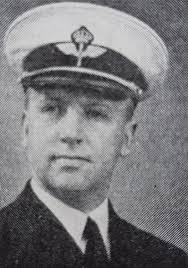
McCallum’s analysis of whether there was a genuine leakage of information to Krämer from London makes for absorbing reading, since so much of it derives from unavailable sources, namely the CERVELL PF. It is accompanied by some citations from Liddell’s diaries, but her story is essentially unverifiable, although if she followed her rather literal interpretation of the Krämer files, we can probably rely on her account. But in one aspect is her report severely at fault: she scarcely mentions Oxenstierna, although his case came to a close only a few months after Cervell arrived in London. Apart from some observations in reference to Plant’s visit to Stockholm, all that McCallum says about Oxenstierna is:
CERVELL was extremely lucky to survive being sent home, the Naval Attaché, Count OXENSTIERNA, was not so fortunate. It is difficult to discover what actually happened since his PF has been destroyed and the Farago account is patently untrue.
This was a deceitful action by McCallum’s bosses, deliberately concealing from her a significant precedent, and one can only assume that they wanted Cervell’s case to appear distorted and out of context.
I shall thus recapitulate the Cervell story briefly. He had arrived in London as Air Attaché in March 1943. B1B’s spy at the Swedish Embassy, LEMON, was able to report to Blunt how well-informed he was, and how he boasted of his contacts. He was accordingly watched, and his telephone tapped. MI5 concluded that he was exceeding his brief by sending on information that could help the Germans, knowledge that they gained through TRIPLEX (though the source has been redacted). The matter was raised at the JIC as an example of how all attachés should be more closely monitored. One complication was Cervell’s close relationship with General Nordenskiold, the head of the Swedish Air Force, whose protégé he was.
Cervell continued to ferret, and in January 27, 1944, he even started to speculate to his bosses on the probable dates for the re-entry into Europe – an outlandish move. B1B consequently wrote a brief for the JIC that recommended that Cervell be recalled. Here the case becomes foggier, since Liddell reported that Chairman Cavendish-Bentinck was against any drastic action against Cervell, instead deciding to restrict his movements. Steps were taken to brief Group Captain Plant before a visit to Stockholm to alert General Nordenskiold, but the local Air Attaché, Group Captain Maycock had already pre-empted him, in a move for which he was rebuked. Nordenskiold agreed to limit Cervell’s explorations, and his instructions were passed to him at the end of February 1944. Warnings were issued to his principal informants: Stanton was fired.
Yet Cervell continued to nose around, and drew fresh criticisms from MI5 in the summer of 1944, and McCallum lists some of his new contacts, including Colonel Milton in the US Embassy. MI5 complained that he had been treated too leniently, but the direction of the war was now certain, and the Air Ministry seemed beholden to the Swedes since the latter had given it information (and material) on V2 bombers. Cervell continued to play off the Americans against the British, and vice versa, and he returned to Sweden in 1946 without any official steps being taken against him.
Guy Liddell’s Diaries
For the record, I summarize the relevant entries from Liddell’s Diaries, up until D-Day, a few of which are cited by McCallum:
1943
September 2: Liddell reports on the meeting with Menzies and Cowgill concerning the disclosure by Kolbe (unnamed) to Dulles (also unnamed) of the JOSEPHINE messages.
September 7: Hart reveals false information circulated by the Abwehr from Lisbon and Madrid which purports to come from the UK. “All of it is fantastic and totally inaccurate.”
October 21: Liddell describes how Swedish Naval and Air Attachés have become more inquisitive, and he asks Blunt to present a paper alerting the JIC.
October 22: In a lecture, Liddell points out Abwehr’s failings in continuing with questionable intelligence to protect themselves.
October 28: The MAP leakages, and their relationship to the recent HECTOR report are discussed.
November 3: Jo Archer says that the Chief of the Air Staff has taken particular interest in the MAP case.
November 4: B5 has started an investigation into MAP case, and will present a report to Archer.
November 16: JIC holds a meeting to discuss curtailment of attachés’ visits to places of importance.
December 1: Liddell speaks to DMI about information disclosed in BJs as being sent from attaches. Care is needed for Swedish MA (Cervell).
December 2: The MAP case. Only a few people knew about Spitfire information, including FATHER. There are questions about FATHER’s loyalty. Liddell thinks information probably went via attachés to Stockholm or Madrid.
December 3: FATHER practically exonerated. “We have seen the contents of the letter go right through to Berlin.” (How this was achieved is not explained.)
December 6: Blunt shows that Cervell has been passing confidential information about engine construction. US Colonel Turner maybe a source. One hundred people must have known about Spitfire matter. Blunt and Liddell try to assuage Air-Commodore Buss over Cervell’s report. Buss ‘worried about more confidential information which is to go to Sweden about the middle of the month’. MI5 will try to intercept it. [!!] Liddell wants to refer the matter to the JIC.
December 14: Report came in from officer who conducted Cervell, Carlbom & Prince Bertil at Bristol aircraft factory. Cervell left alone: hopeless task to try and prevent leakage to enemy. [!!]
December 17: Pollock, consul in Sweden, knows about Cervell and Oxenstierna. Local Swedes in London seemed sympathetic. Archer to see Buss about Cervell. Liddell sanguine: he blames Turner. He suggests another paper to the JIC.
December 18: Buss thinks Inglis (A.C.S.I.) is taking Cervell case too lightly: “He does a good job”. Inglis must know that any information Cervell gets ultimately reaches the enemy. Archer wants to clamp down on factory visits.
December 21: Liddell discusses MAP case with Archer, and possibility of communicating with enemy from aircraft.
December 28: Inglis is convinced that Cervell and Turner are menaces. They conspire. Problems with trying to neutralize Turner. Inglis likes Cervell, but admits he is too efficient. Blunt reports that Cervell has succeeded in getting his most secret information away. “This comes out on special material.” (Again, a cryptical reference.)
1944
January 17: Cervell has written dispatch speculating on date of opening of Second Front. He has been friendly with Czech officer. Liddell says concerted action needed between British and Americans.
January 18: JIC discusses paper on attachés. Visits to factories will be refused. Turner to be warned.
January 24: Liddell discusses with Blunt and Stopford the suggested re-opening of the Swedish Air Line. Cervell has special means for getting special stuff to Sweden by fast motor-boat. They bring in ball-bearings: Cervell probably in on the racket. Laycock, air attaché in Sweden, has foolishly sent letter to Cervell saying he is under investigation.
January 26: Blunt has learned through LEMON that Bartlett is Cervell’s contact in Bristol aircraft company.
January 28: Cervell puts in account of his successful visit to American Maraude station. Cervell’s removal will have to be seriously considered.
January 30: Laycock sees Nordenskiold, who advises Cervell to hold back on his enquiries.
January 31: Paper sent to JIC recommending Cervell’s removal. Officer of high rank to go to Stockholm to explain. Confirmation of Cervell’s involvement with the motor-boats, even exporting parts of aircraft.
February 1: JIC meeting discusses papers on Cervell and on attachés in general. Liddell very equivocal: travel restrictions to be applied.
February 10: Liddell dines with LEMON, Robertson and Blunt. He is impressed.
February 17: Liddell does not want total stoppage of Swedish flights.
February 18: Complications of imposing restrictions on the Swedes, because of ball-bearings, etc.
February 24: The Spitfire case at MAP: Robertson to prepare a paper which will not disclose secret sources and will put case in its proper perspective.
February 29: Investigation of Czech Knorr, who had disclosed information to Cervell.
March 10: Nordenskiold has written to Cervell, telling him to watch his step, and Cervell is arranging to talk to Plant.
March 28: The case of Stanton, a journalist on Beaverbrook’s staff, who revealed information to Carlberg. Stanton, who had also been in touch with Cervell, was sacked. Liddell regrets opportunity to pass information through Stanton was missed.
March 30: Liddell describes friendly relationship that [redacted] in the office had with Carlbom, who is assistant to Cervell. Both very charming.
April 20: Liddell discusses with Menzies the possibilities of Swedes’ having an illicit wireless set. Cervell had remarked that there was a way around restrictions. Mobile units watching, but concern about reciprocal action.
Two later items should be noted:
August 22: Blunt informs Liddell that the attempt to get rid of Cervell has been stymied by the Air Ministry, who was influenced by the fact that Swedes have given it parts of the V2 that recently dropped in Sweden.
October 21: RSIC interested in generating XX traffic on Madrid-Berlin route, so that a crib may be obtained.
There may be other items in 1944 that I have overlooked.
Another Foreign Office file sets out, however, to whitewash the whole Cervell affair completely. It is FO 371/43510, belonging to the Northern Department. It starts only on February 11, 1944, when the FO writes to Mallet in Stockholm, expressing mild dismay about Cervell’s behaviour. since he had reported some ‘valuable and secret information’ in one of his dispatches. Yet the responsibility is clearly declared to have been that of persons who had freely communicated to him information, and these persons are going to be interrogated, and probably reprimanded. There is even talk of courts-martial. Cervell has done nothing wrong, it seems, but even so, the Foreign Office is trying to engineer Cervell’s recall. It all ends happily, nevertheless, since Group Captain Plant is sent out to assuage Cervell’s boss, General Nordenskiold. Nordenskiold is full of admiration for the British, respects their need for total secrecy concerning in invasion plans, and reassures Plant that Cervell should not be seeking information about such, and that his investigations should be restricted to gaining information about aeronautical technology that might be useful to the Swedes. The report takes on a farcical nature, since Nordenskiold reads from a letter from Cervell, ‘including a statement from Major C. that the officer who had accompanied him to the Bristol aircraft factory was an archaeologist and, not being a technician, probably thought that the information imparted by the company was more secret and important than was actually the case.’
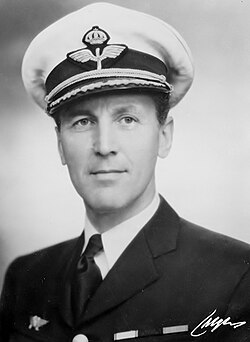
In the light of McCallum’s report, this must be a colossal joke. Perhaps the Foreign Office thought that there would be no other record, and that Cervell’s PF would not survive in any form.
Appendix III: The ‘Arnhem’ Report
The third Appendix does not reveal anything of real significance. McCallum uses the Krämer files and the Hesketh report (with one selection from the Cervell PF) to describe the bizarre way that Krämer’s intelligence regarding Arnhem was received and then mysteriously delayed when it reached Berlin. She speculates that Cervell, who was in Sweden for six weeks from the beginning of August, may have passed on information, but no details about MARKET GARDEN would have been decided that early. She comments on the letter from M6 to Hart, of December 1m, 1944, which attaches the latest batch of messages obtained ‘from the usual sources’, while indicating that there had been an interval of about three months (September to December 1943) in intercepting his messages. No one seems to question why this was so; no one in MI5 appears to have asked MI6 to explain why the stream stopped.
Her account continues with Hesketh’s declared belief that Krämer must have seen the report by BRUTUS, and she observes that Hesketh was concerned ‘mainly with the BRUTUS ploy to cover Arnhem rather than investigating the KRAEMER traffic’. She describes the muddle in Berlin, according to several German sources, including the evidence of the sceptical Busch, from KV 2/152-01 (sn. 468b). She reports that Fullop denied having anything to do with it (understandably), but she then credits Krämer with receiving ‘a precise and accurate report of the pending Arnhem operation from the FULEP Organization in the Peninsula’, an assessment that completely ignores the chronology and logistics. She then adds to her muddle, however, by saying that Krämer probably received the information form Onodera, who likewise acquired it from the Hungarian contact in the Peninsula, rather than the Swedish General Staff. In fact she has to admit that the timing was impossible, and concludes that ‘two JOSEPHINE messages were run together’.
It is all very unhelpful, and sheds little light on the affair. Her last words were:
Probably because details about the ‘Arnhem Report’ were only fully disclosed by KRAEMER long after the event, and that in any case it was known that his message failed to arrive in time, no specific investigation sems to have been carried out.
She provides a brief footnote: “Or at least I have been unable to trace anything in either the MI5 or War Office Archives”. No doubt, Ms. McCallum.
Conclusions and Further Questions
I present a set of major conclusions from all this testimony. My breakthrough occurred when it became incontrovertibly clear to me that Bletchley Park had no access to the Abwehr signals from Stockholm, and no means of decrypting them. Everything fell into place: the role of Swedish Intelligence, the admissions from Hinsley, the cultivation of influential Swedish contacts by Denham, the cover-ups by Tennant and co., the ISTOC phenomenon known only to MI5, the appearance of transcripts in December 1944. The overarching conclusion is that British Intelligence and allied sympathizers in Swedish Intelligence collaborated in a highly clandestine and dangerous operation to exchange valuable information. JOSEPHINE was a sideshow. In detail:
- The personification of JOSEPHINE existed in several guises – as Krämer himself, as a ruse to cover a variety of sources, and as a type of intelligence. It never represented a real unambiguous agent. The term HEKTOR was similarly deployed.
- The London Controlling Section and the TWIST Committee used Oxenstierna as a channel for disinformation. That he passed on such intelligence was verified through TRIPLEX, leaked via the Swedish Foreign Office, and checked for further dissemination (to Berlin) through an interception process. Oxenstierna was innocent: the British used him as a scapegoat to suggest that they had closed a significant source of leakages.
- MI5 half-heartedly pursued Cervell, who was also exploited to send disinformation. MI5 knew that there was no JOSEPHINE as an Abwehr agent in London. MI6 was generally more suspicious. The whole Cervell exercise was sanitized by the Foreign Office.
- Krämer was a slippery and evasive customer. There was much German evidence (from such as Busch and Zetsche) that he was a tool of the British – if not a controlled agent, someone who was being manipulated. Senior Abwehr officers closed their ears to such notions so as not to show any weakness to the feared Sicherheitsdienst. Krämer’s interrogations have the appearance of being a charade. (See also my analysis in ‘Summary and Conclusions’ at https://coldspur.com/verkaiks-traitor-of-arnhem-part-2/.)
- British awareness of Krämer’s messages after he arrived in Stockholm at the end of 1941 until the end of 1944 had remained a very puzzling phenomenon. British interception services did not have access to German land-line connections in Sweden, nor was Bletchley Park able to decipher traffic based on Sturgeon. Swedish Intelligence, on the other hand, was able to intercept the traffic, and had been able to crack the Geheimschreiber cypher. It is thus probable that Björnstjerna very clandestinely passed on many messages to the naval attaché Denham, including the confirmation of disinformation placed through the Swedish attachés. The alternate explanations (infiltration of Krämer’s dwelling, spies in the German Legation) are mostly fictions designed to cover Denham’s highly irregular exchanges with Swedish intelligence.
- ISTOC may have been MI5’s codeword to describe its ‘unusual’ supply of Abwehr messages from Stockholm. It had occasional access (via MI6) to ULTRA transcripts derived from other sources in Europe, through ISOS and ISK, but there is no direct evidence of such traffic from Stockholm until the end of 1944. At some stage the Abwehr may have modified its deployment of Sturgeon teleprinter devices in Sweden to use Enigma and wireless, as it had earlier recommended, thus enabling Bletchley Park to start interception and decryption successfully. That would explain why the archive of transcripts starts from December 1944.
- As a pattern, TWIST frequently disseminated accurate information, as well as disinformation, through its controlled and manipulated agents as a way of boosting their credibility for later occasions. Such exploitation of Swedish attachés had its parallels in the treatment of SOE agents, and with the MARKET GARDEN operation.
- The existence of many of the secret projects (TRIPLEX, ULTRA, TWIST, XX) had to be withheld from junior officers in MI5 (and elsewhere) who did not ‘need to know’. This desire for secrecy led to some confusing archival material.
- The threat of an attack on the Germans through Norway (and/or Denmark) was an enduring concern for the British, anteceding Operation FORTITUDE NORTH by a couple of years. Thus they encouraged this notion in order for a large number of German troops to be kept in Scandinavia.
- Great Britain and Sweden maintained an intricate dance during the first few years of the war, with Britain highly critical of Sweden’s appeasement of the Germans, yet being reliant on it for such material as ball-bearings. The Admiralty and the Foreign Office wanted to protect the Naval attaché, Denham, who was providing such valuable intelligence gained from his Swedish contacts, but risked his recall when they prosecuted the Swedish attachés.
Further Questions
Yet a few puzzles remain, of which I highlight the following:
- Deception Techniques:
The dominant part of the argument of the British concerning leakages of confidential information by the Swedes to the Germans was that they knew that it was getting through. (See Conclusion 2 above.) For them to make that case, even if the intentions of the supposed culprits had been innocent, they also had to point out to the Swedes that they were harbouring a leakage in the Foreign Office. The obvious proof of the verification (as it often appears in the sources) superficially lies in the supposition that Bletchley Park had intercepted radio messages that confirmed that Krämer was sending on the intelligence to Berlin. Yet it is now evident that British Y services could not pick up Krämer’s transmissions – let alone Bletchley Park decrypt them. They must have been reliant on Swedish interception.
That would explain why the Swedes never challenged the British Foreign Office on the method by which they made the claim. It also indicates that key personnel in the Swedish Foreign Office knew about the exercise, and that their secret was closely guarded. Moreover, the Germans knew by 1942 that the Swedes had cracked the Geheimschreibers. They presumably assumed that the Swedes, as a neutral power, would never share the results of their work with the British. That is why it was such a sensitive project for Denham and Björnstjerna, as well as their bosses. Indeed, one wonders, also, whether the so-called Nazi sympathizer in the Foreign Office had been planted with the connivance of the British, in order to ensure the transmission of the critical information to Krämer.
This is probably the most dramatic of my theories in the JOSEPHINE case, but I see no other explanation. I had originally concluded that MI5 had been receiving a very irregular set of telegram transcripts from MI6, with Cowgill being his normal niggardly self, through 1943 and 1944, and that they had unaccountably been lost, but I am now very confident that ISTOC was the highly confidential source of Henry Denham. To what degree his intelligence was transmitted to the UK by diplomatic bag by plane, or by wireless, I have no idea.
- The Deployment of the T52
The late summer of 1943 shows a convergence of several events. Fritz Kolbe visited Dulles in Switzerland in June, bringing copies of Krämer’s telegrams that immediately gained the attention of Cowgill and White. Peter Falk of MI6 had arrived in the spring of that year specifically to watch Krämer, and by September he had reportedly managed to insert a spy in Krämer’s apartment. The Germans had begun to question the security of the T52 models, and were making plans to order that the Abwehr reject its built-in security mechanisms, and use Enigma encipherment and wireless transmission to achieve a process less likely to be intercepted. If they had done so, then the ULTRA programme would have captured a large amount of traffic passing between Stockholm and Berlin. Yet, for some reason, the Germans did not switch to that format, which meant that for more than a year, British Intelligence must have been reliant on Swedish co-operation to pick up Krämer’s traffic. It must have been dispatched to Britain via the Bromma-Leuchars link. That was an extraordinary long time to maintain such a perilous undertaking.
The delivery was probably erratic, and underwent delays, which meant that it was less than timely when it arrived. Scattered messages were indeed collected: the McCallum report refers to a few in September and October 1943 and Guy Liddell mentions in December 1943 that an important item of Krämer traffic was recorded as having recently arrived in Berlin. According to the Krämer Personal File, details of messages during the critical period of the Normandy landings and Operation Market Garden in 1944 were not gathered in real time, but were recovered from OKW files after the war. Whether MI5 kept a file of ISTOC messages from this period will probably never be known, but it is strange that so few have survived. Moreover, hints such as Gilmour’s suggest that German reactions to possible security breaches in early 1943 retarded the Swedes’ efforts to keep up with mechanical and procedural changes. McKay and Beckman reinforced this opinion by reporting the hiatus that occurred during 1944 when German efforts to improve the security of the machine, and enforce better operator disciplines, thwarted the energies of the Swedish cryptanalysts. The conundrum remains, of course, as to how many ISTOC messages were able to be exfiltrated through the enterprise of spies and infiltrators.
- The Cervell Case:
The case of Major Cervell is highly enigmatic. The primary obstruction to determining exactly what happened is the fact that his Personal File has never been released. (It may have been destroyed, as was Oxenstierna’s, but it was obviously extant in the early 1970s, when McCallum wrote her report.) McCallum describes a very troubling series of events in the second half of 1943, when Cervell’s reputed inquisitiveness was leading to multiple demands for his recall, and also to the fierce controversies over whether Denham would be expelled in retaliation. Yet that account is in sharp contradiction to the story put out by the Foreign Office, when only in February 1944 were mild expostulations made about Cervell’s behaviour, and it was clear that he had not been at fault, and the matter was calmly resolved.
It is probable that the whole Cervell incident was partly a charade, that the TWIST Committee was ‘exploiting’ him, that Cervell himself knew about his role in disinformation, and that the Swedish Foreign Office knew what was happening. The slurs addressed to him that appear in the McCallum report may have been manufactured, as he was said to be a firm supporter of Britain, and indeed he received an award from the British for his services after the war. In the same way that the Oxenstierna case was concealed from McCallum, so have the nitty-gritty details of the Cervell case been locked away, apart from what McCallum herself re-presented.
- The Infiltration of Krämer:
Perhaps the most puzzling aspect of the whole affair is the reported success of the local MI6 station in Stockholm in gaining entry to Krämer’s desk, and purloining valuable papers. It is unlikely that the true story will ever be known, but the anecdotes supplied by Peter Falk, and echoed elsewhere, have the aroma of true farce. Searching for chocolate, and taking moulds of keys with borrowed butter, belong more to the world of fiction. Yet, if the events were imagined, the archival material (the Personal File) contributed to the sense of authority by showing with all seriousness a presumed correspondence between Stockholm, MI6 and Blunt on the mechanics of creating a substitute key. Even this story, however, was contradicted elsewhere, when the key was supposedly manufactured locally in Stockholm. I continue to maintain that this unlikely business was a diversionary exercise
So how did MI6 and M5 gain ownership of Krämer’s old passports and his appointments book? There must have been some skullduggery, or perhaps Krämer obliged his pseudo-masters by providing them with useful information. Maybe some clarifying resource may turn up to explain it all, but I seriously doubt it.
(Latest Commonplace Entries can be seen here.)